953 - Grand Cruise from Japan to Taiwan
Japan and Asia, 4/30/2027 – 5/18/2027




953 - Grand Cruise from Japan to Taiwan
Japan and Asia , April 30, 2027 - May 18, 2027
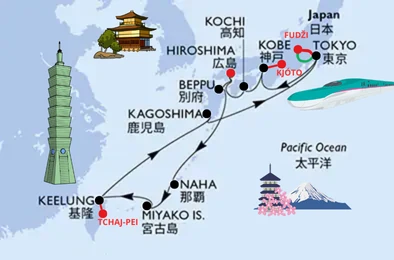
Your cruise route
1. day
Riviera Tour transfer (for an additional fee of CZK 1,390) on the route Lidečko - Vsetín - Nový Jičín - Frýdek-Místek - Ostrava - Olomouc - Vyškov - Brno... to the airport. Gathering of the whole group, check-in and departure to Japan with transfer.
2. - 3. day
Arrival to Tokyo, transfer to hotel, accommodation and overnight stay (transfer and accommodation included in tour price).
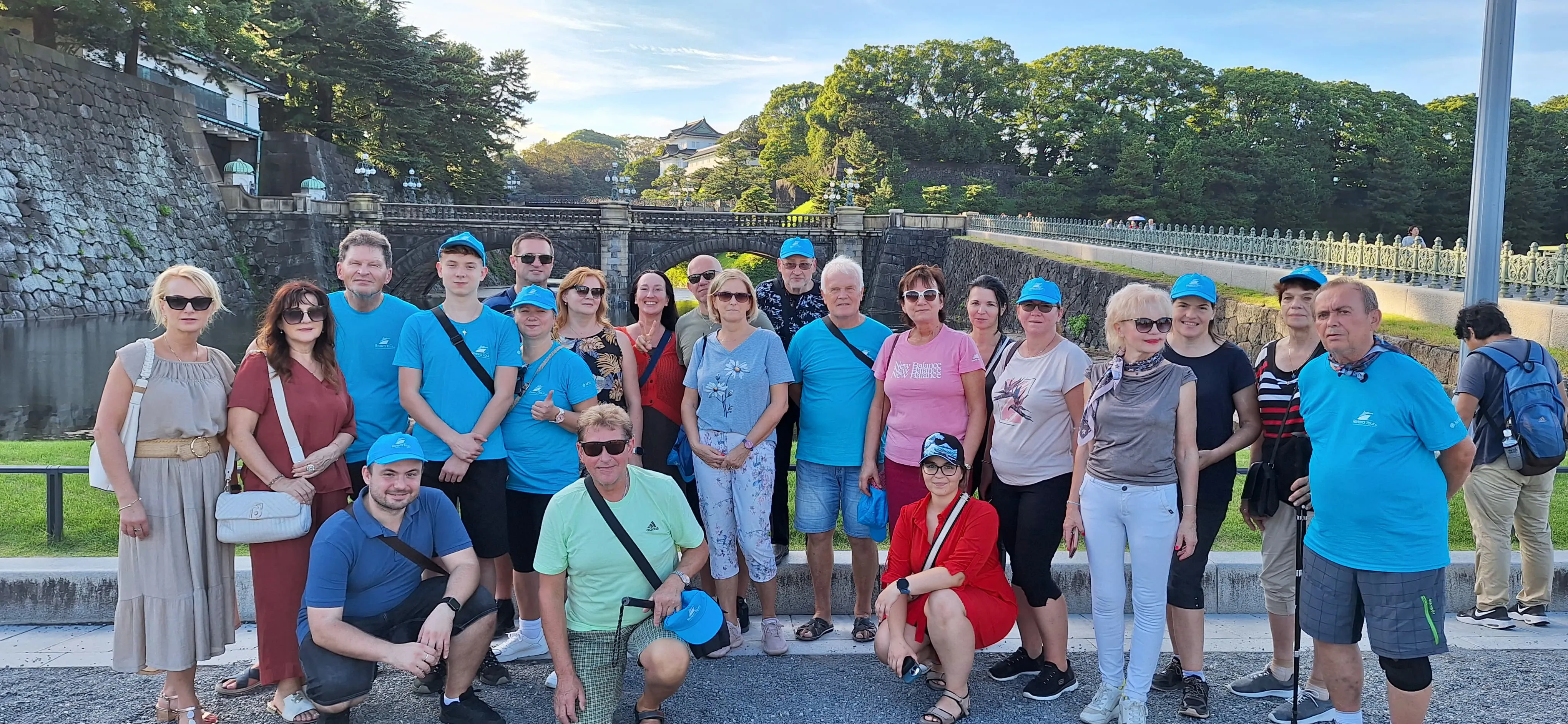
On the first day after breakfast at the hotel day trip with a local Czech-speaking guide around Tokyo (included in the price of the tour). Visit the symbol of the city, the famous Tokyo Tower, combined with a visit to a nearby Buddhist shrine with the opportunity to buy scented sticks (climb the tower on your own). Stop at a traditional fish market with lunch. Imperial Palace and Ginza, the most expensive district in Japan. In the evening, Shibuya district with the statue of Hachiko the dog and a view of the legendary crossroads. Individual dinner.
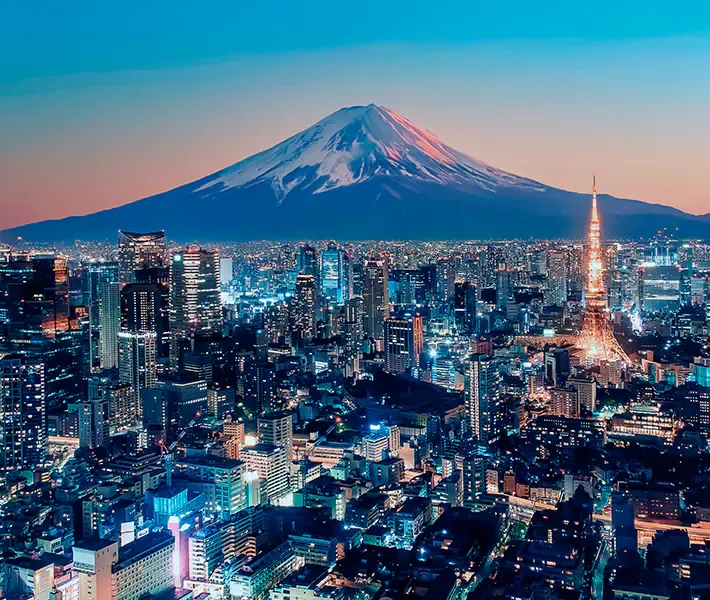
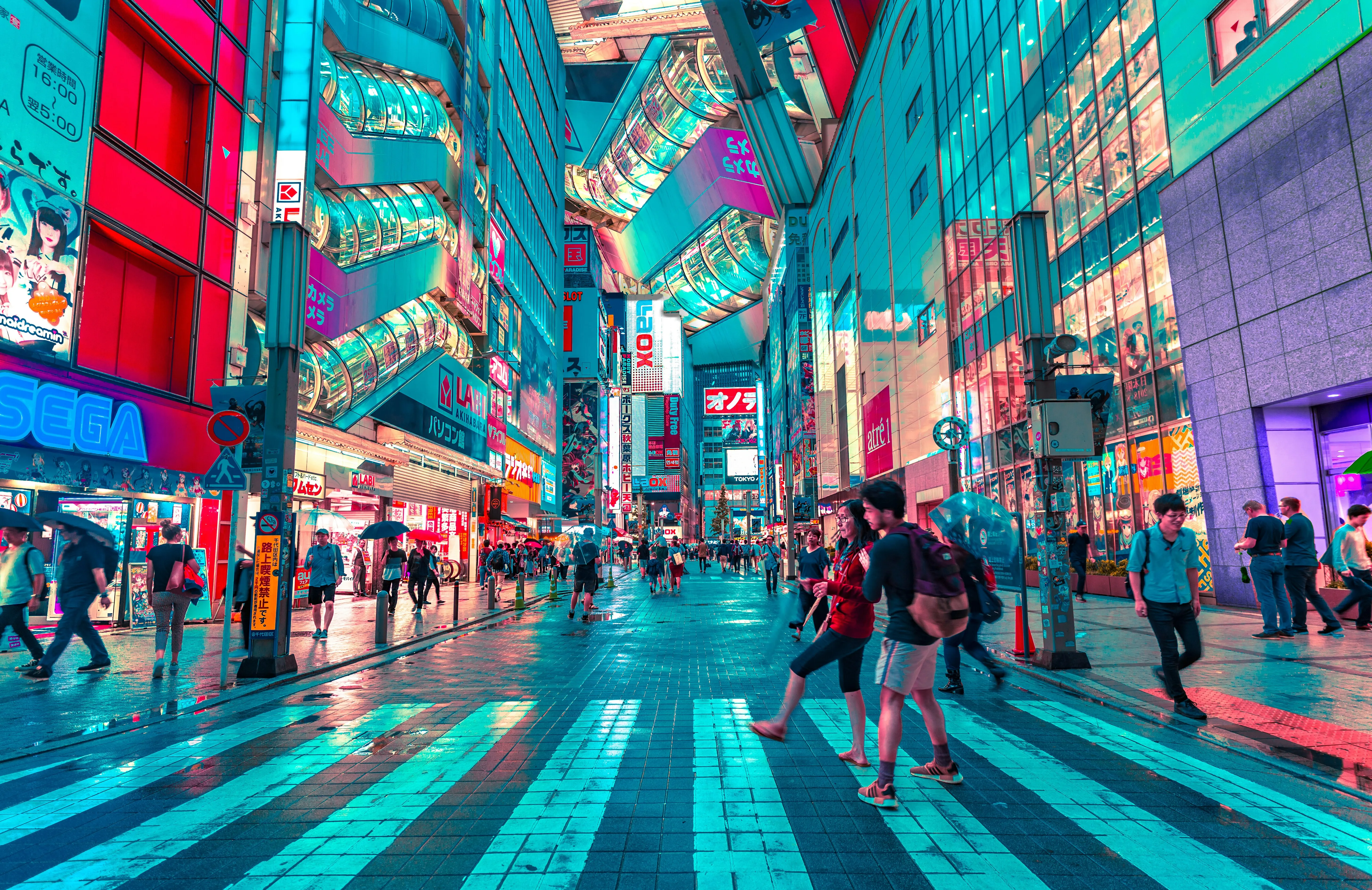
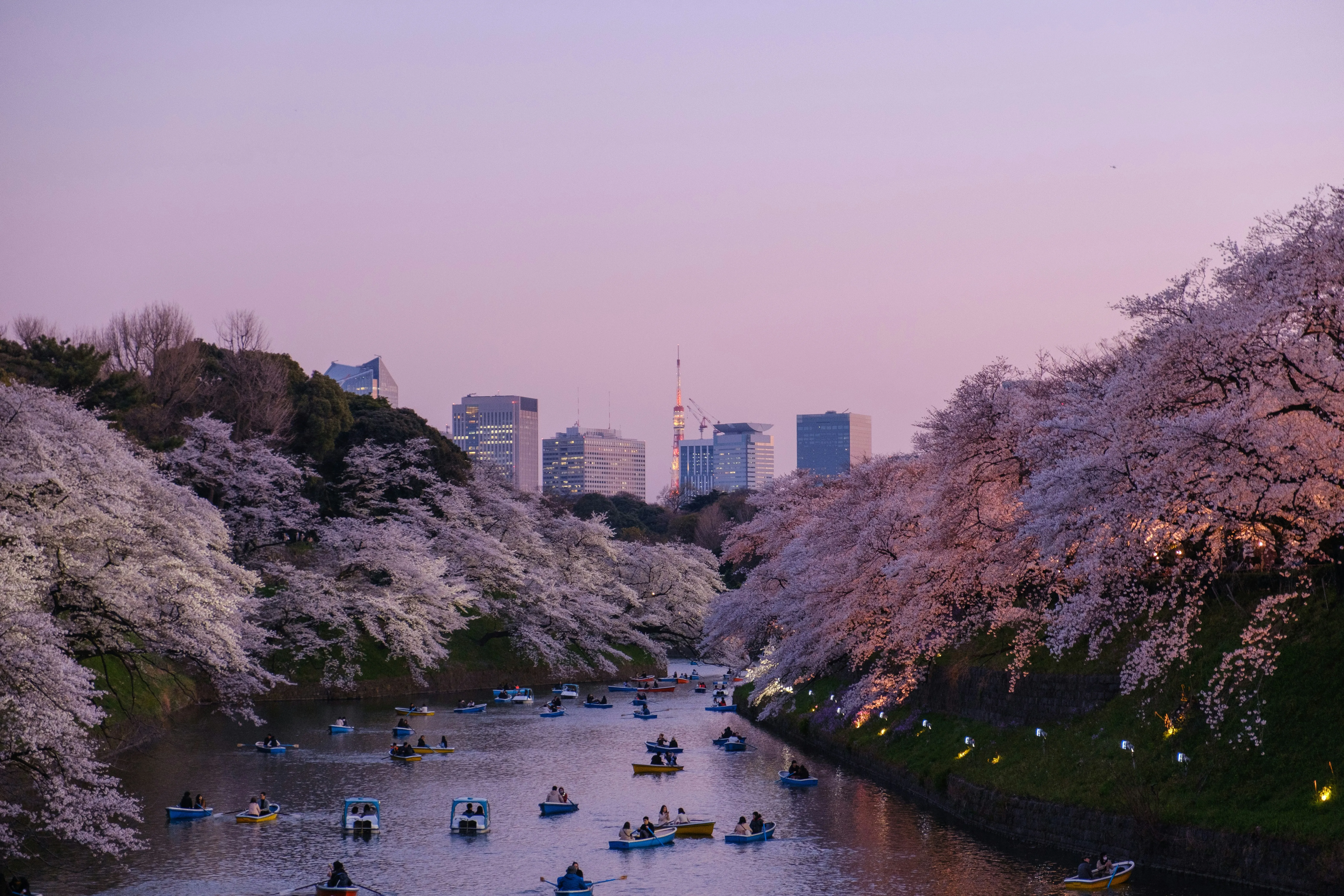
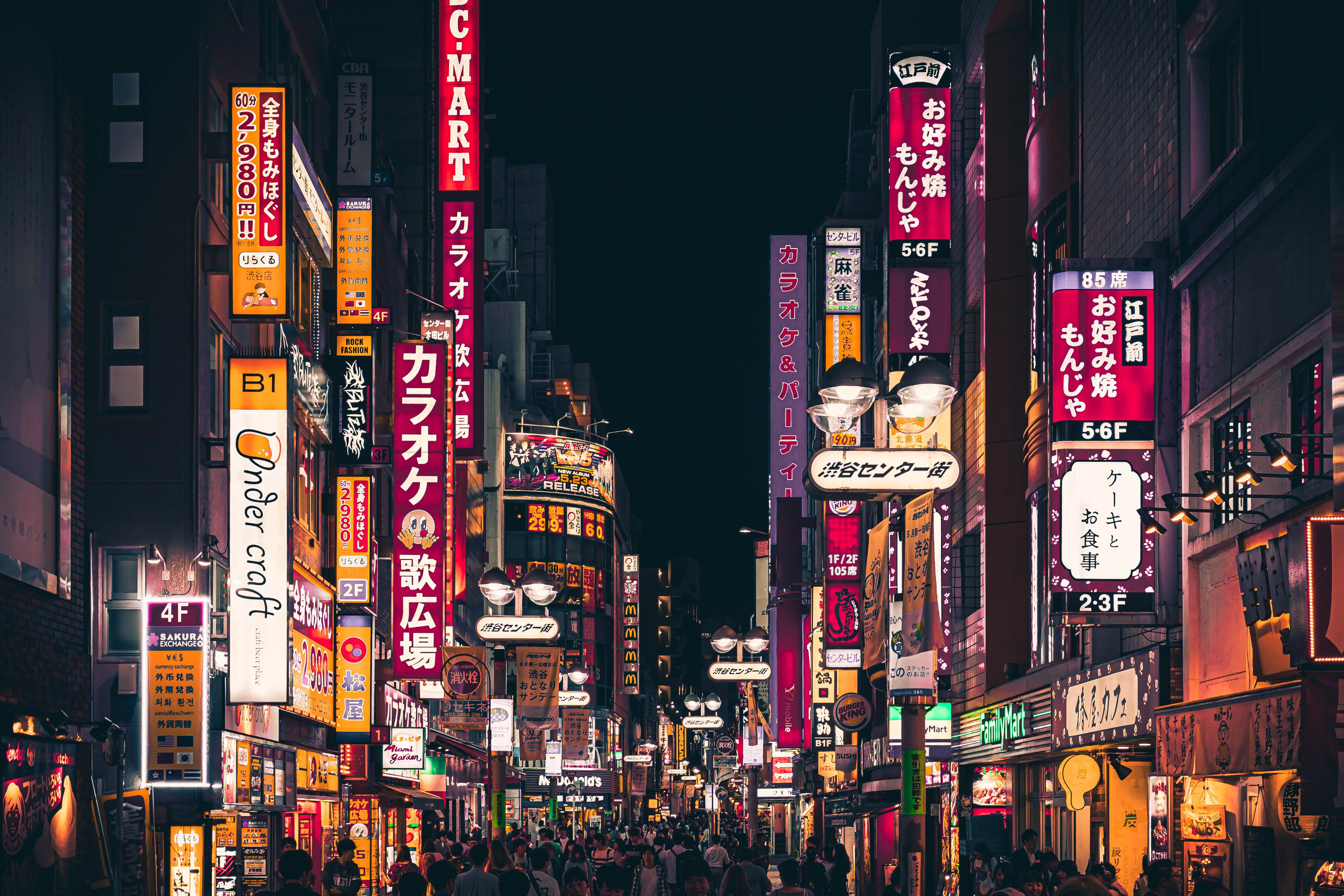

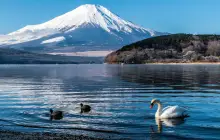
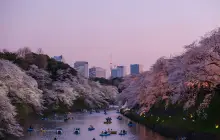
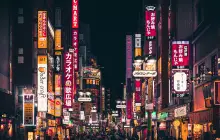
Tokyo's history is a fascinating story of transformation and resilience. Originally a small fishing village known as Edo, it became the seat of the Tokugawa Shogunate in the 17th century, beginning its journey to greatness. Under the rule of the shoguns, Edo developed into one of the world's greatest cities, filled with samurai, merchants and artists. This period, known as the Edo era, left the city with a rich cultural heritage that can still be admired today in historic districts such as Asakusa or in traditional gardens hidden among the skyscrapers.
In 1868, with the onset of the Meiji period and the transfer of the imperial seat from Kyoto, Edo was renamed Tokyo - "Eastern Capital". This era began the rapid modernization and westernization of Japan, of which Tokyo became the center. Despite the devastating earthquake of 1923 and the bombings of World War II, the city has always managed to rebuild itself, stronger than ever. This indomitability is evident in every aspect of modern Tokyo, which has become a symbol of Japanese innovation and progress without losing touch with its rich past. A walk through the streets of Tokyo is thus a time travel, where every corner tells the story of a city that is unafraid of change, yet honoring its roots.
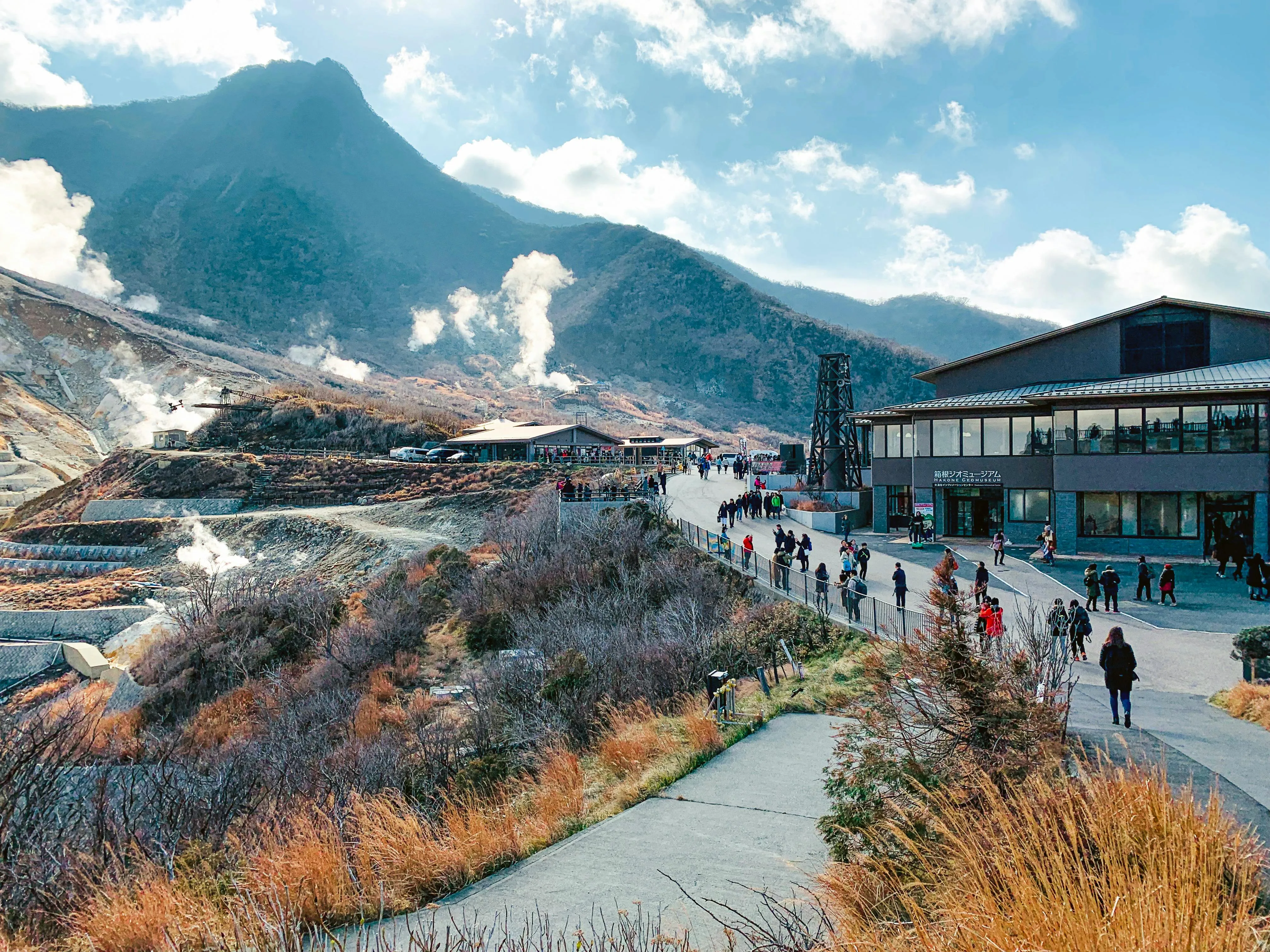
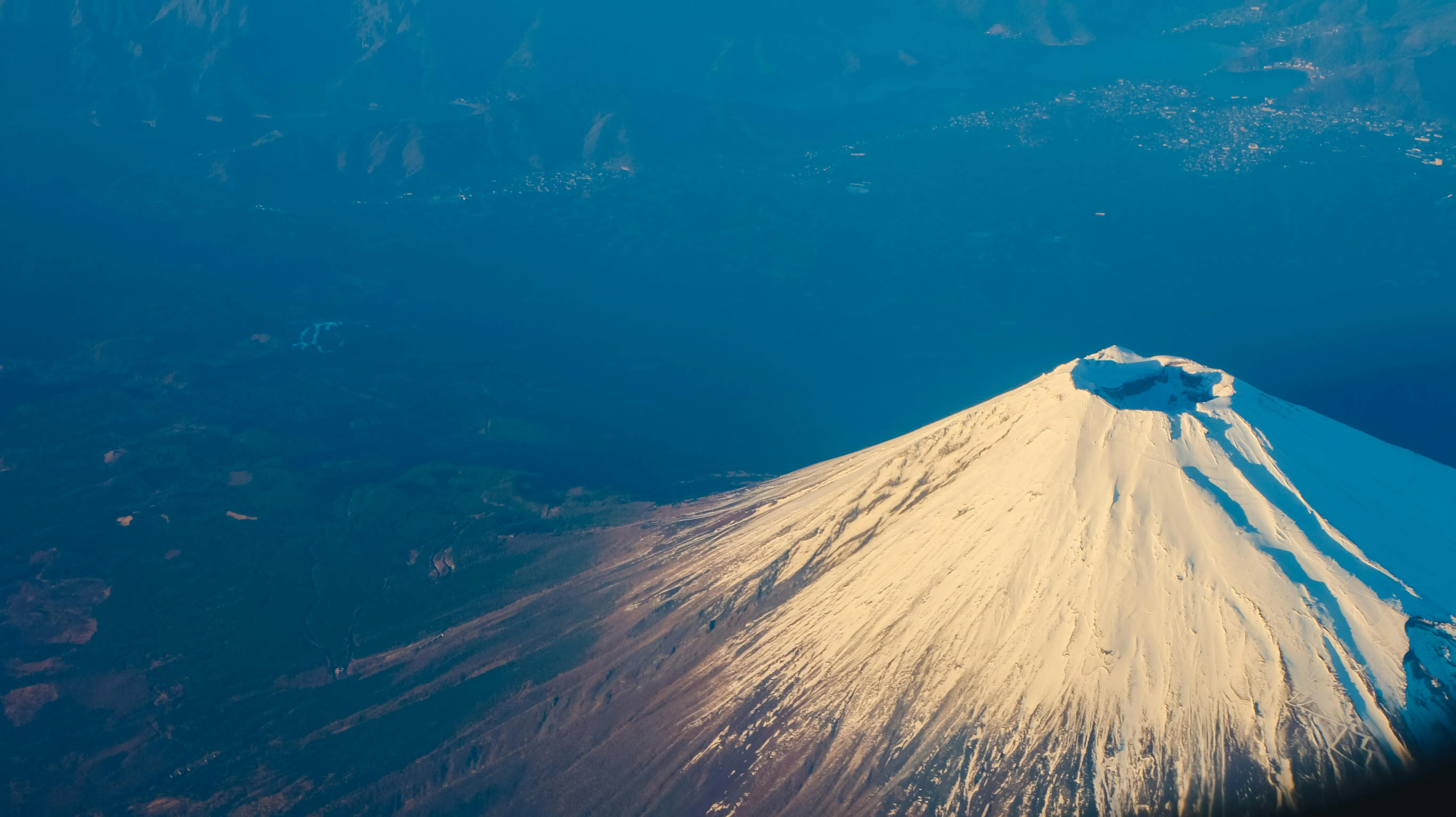
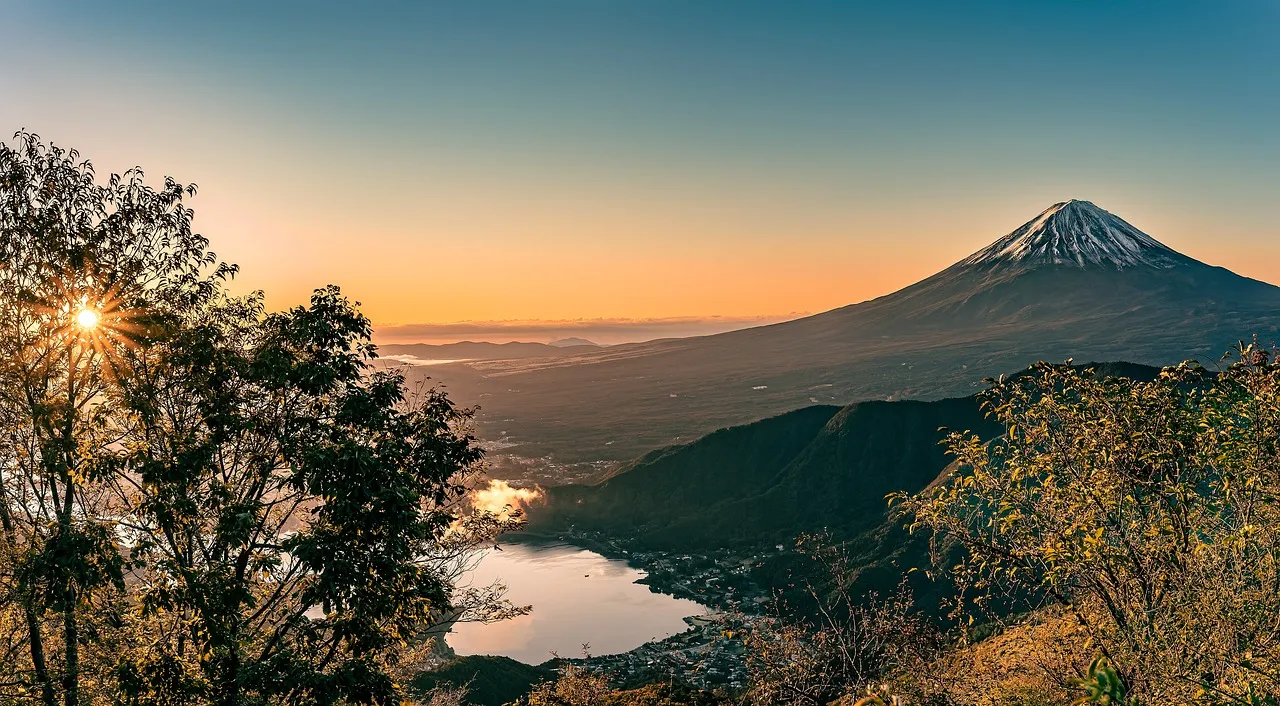


Tokyo area: recommended to visit
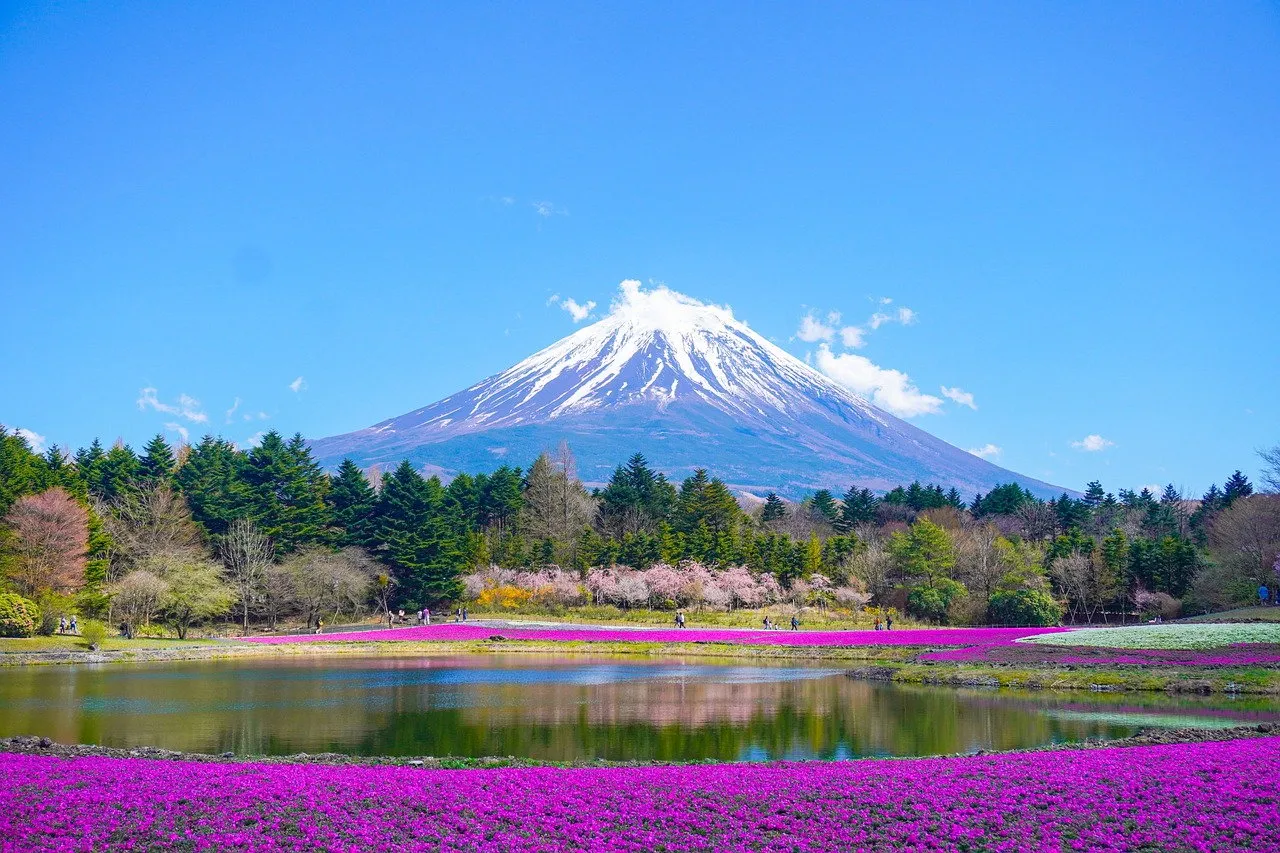
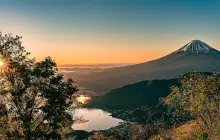
Mount Fuji
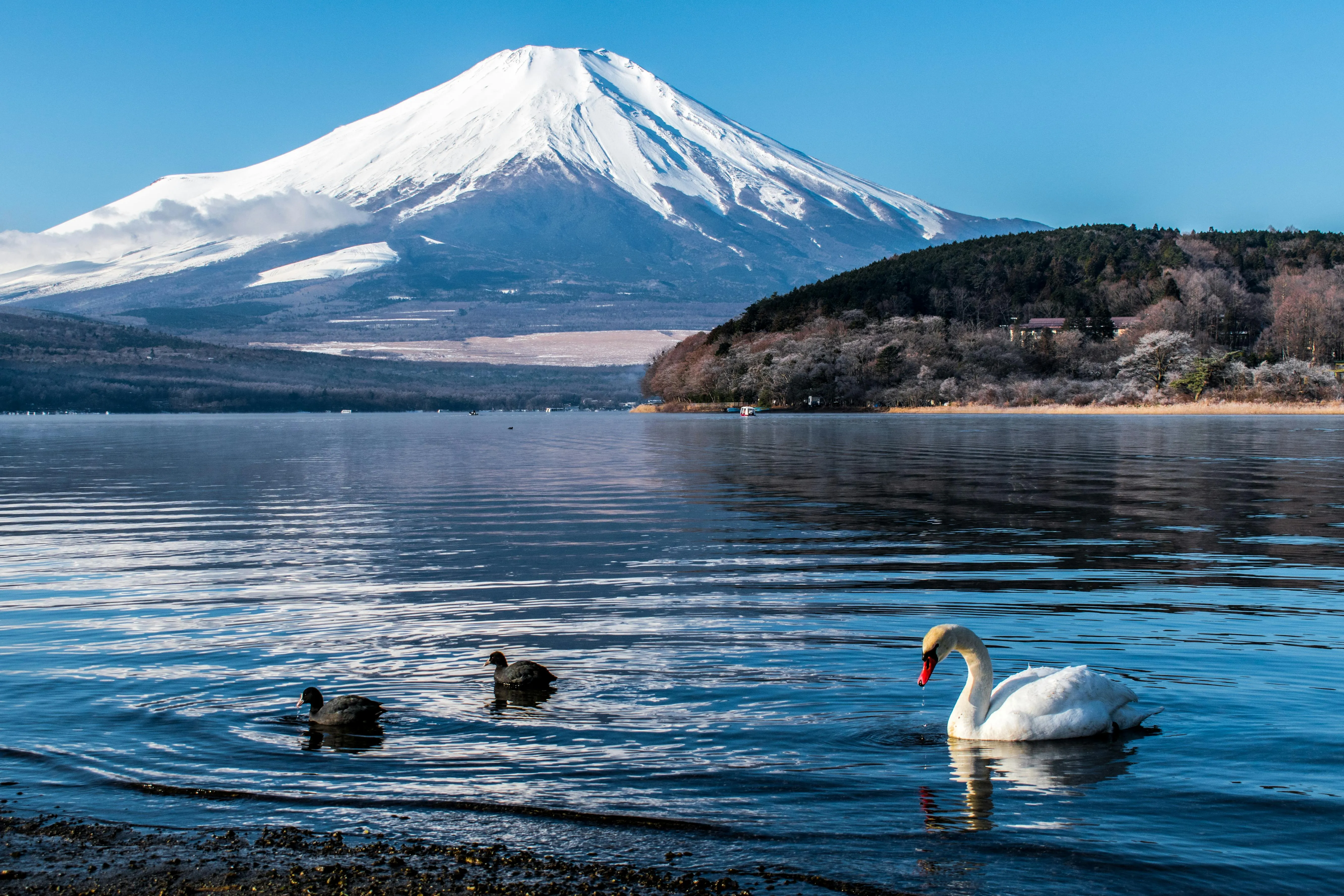
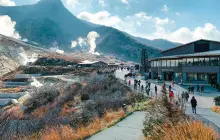
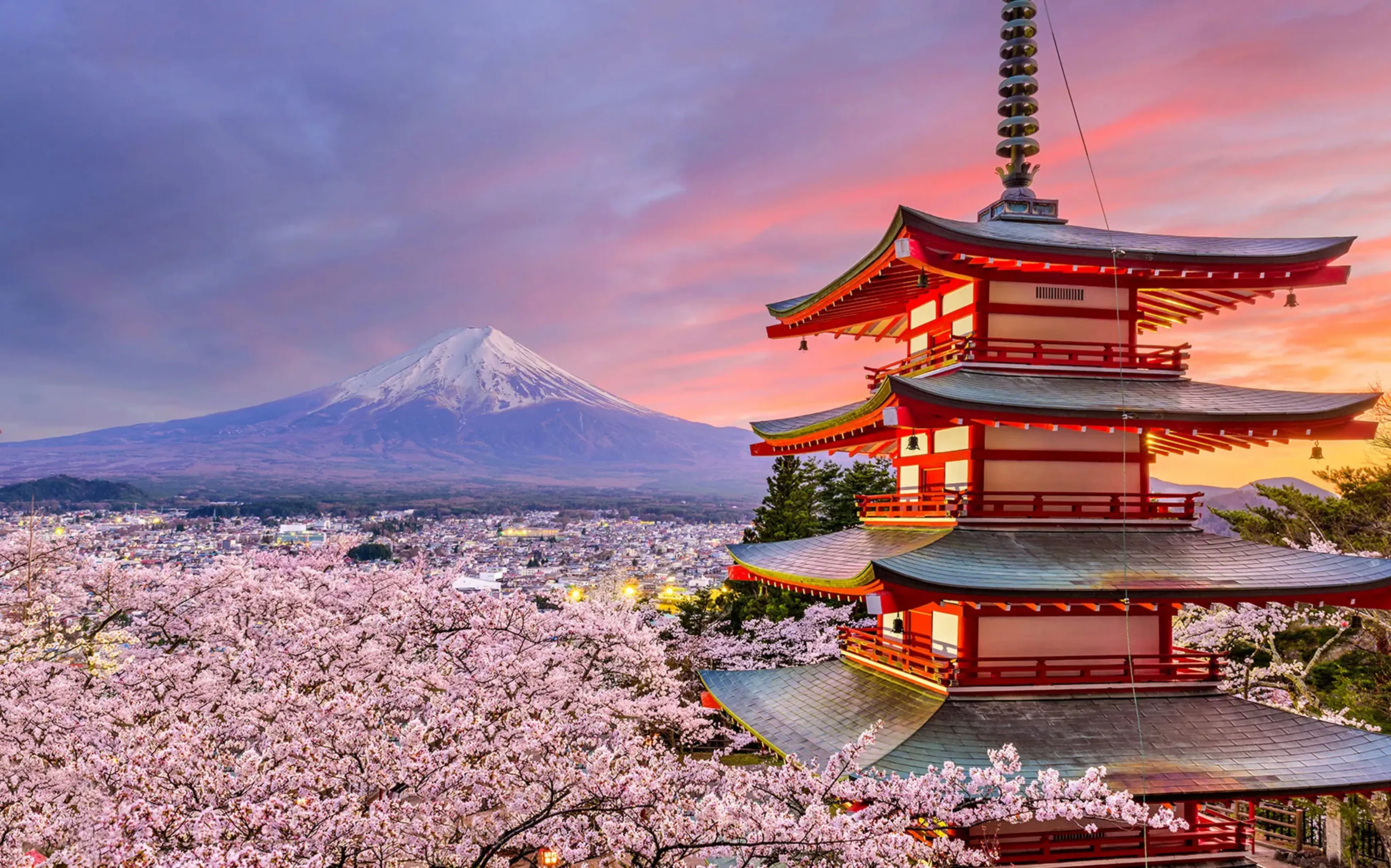
Fuji-Hakone-Izu National Park is a natural wonder that will take your breath away. The park is dominated by the majestic Mount Fuji, a sacred symbol of Japan whose perfect curves have inspired artists for centuries. In the Hakone area, you will discover the magical world of hot springs, where you can relax and recharge at the traditional onsen baths. A cruise on Lake Ashi will offer you breathtaking views of Mt. Fuji, while trails lead through dense forests beckoning you to explore. Whether you're looking for a spiritual experience, an active vacation or just an escape into nature, this park offers an unforgettable experience for every visitor.
Kamakura Historical Town
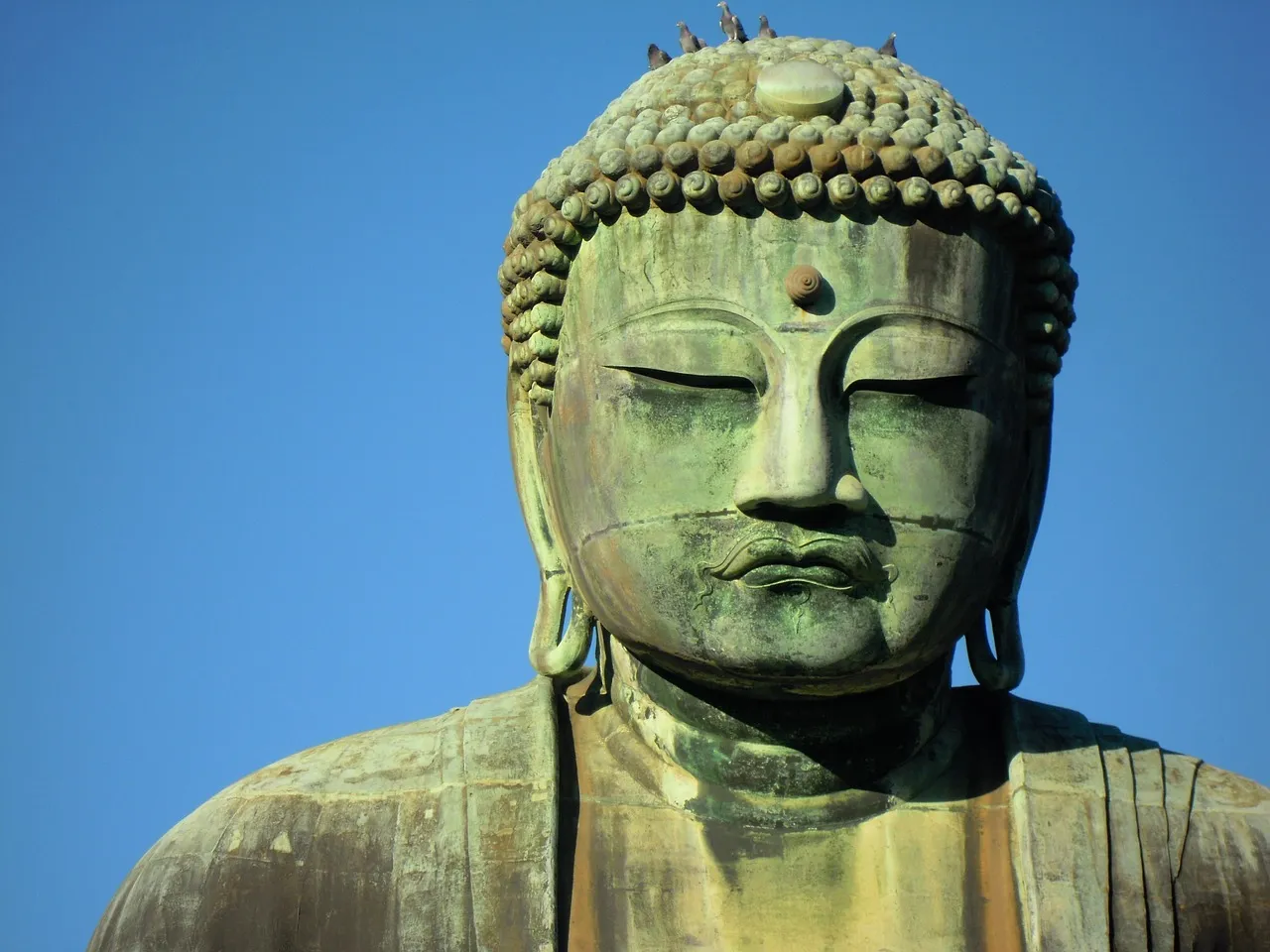
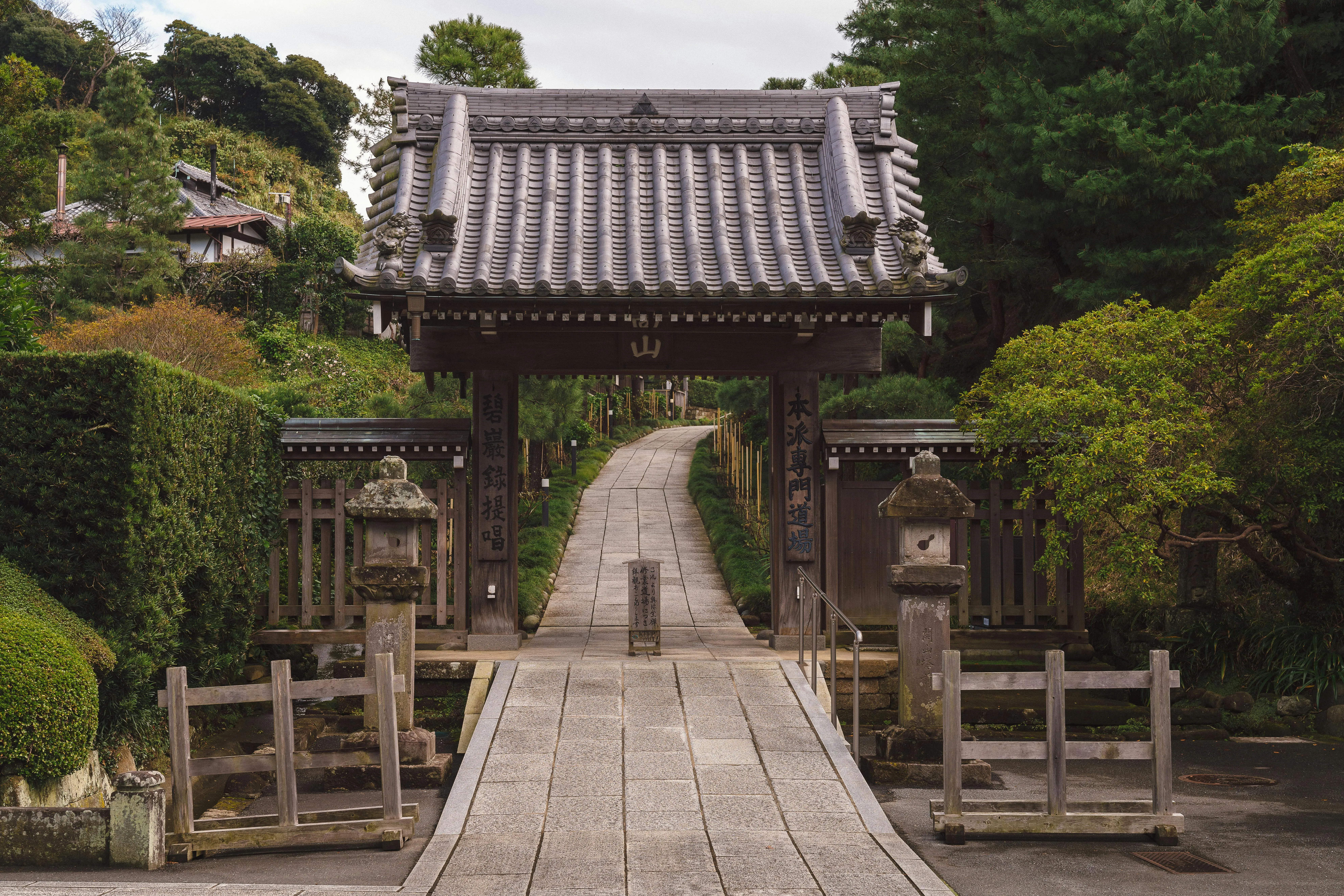
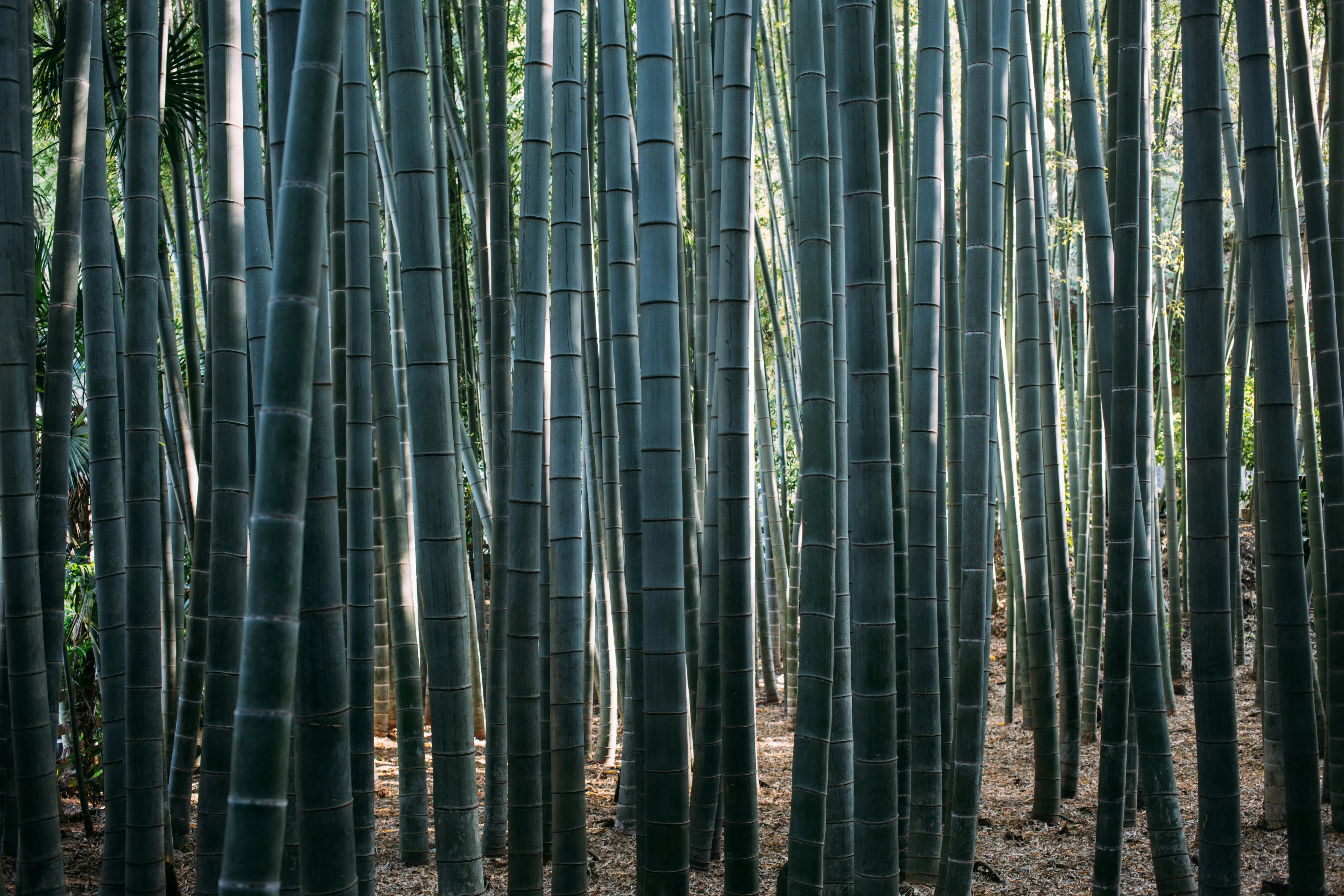
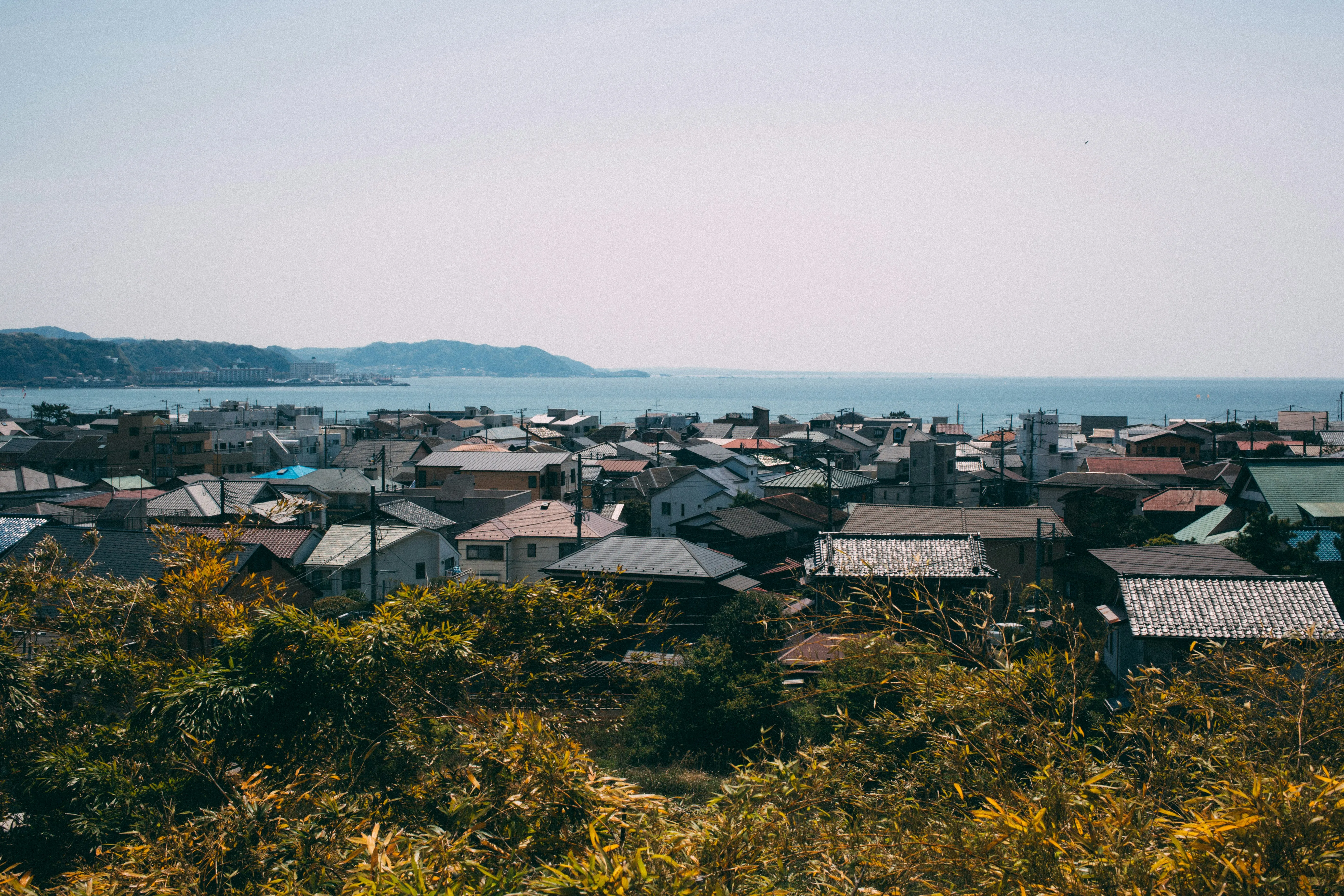
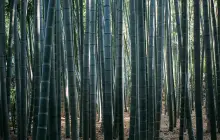
Kamakura, the former capital of medieval Japan, will enchant you with its rich history and peaceful atmosphere. Just an hour away from bustling Tokyo, you'll find yourself in a world of majestic temples, quiet gardens and imposing statues. Gaze at the iconic bronze statue of the Great Buddha, stroll through the bamboo grove at Hōkoku-ji Temple and enjoy the fresh sea air on the beaches lining the coast. Kamakura is the perfect place for those who want to experience the magic of traditional Japan.
4. day
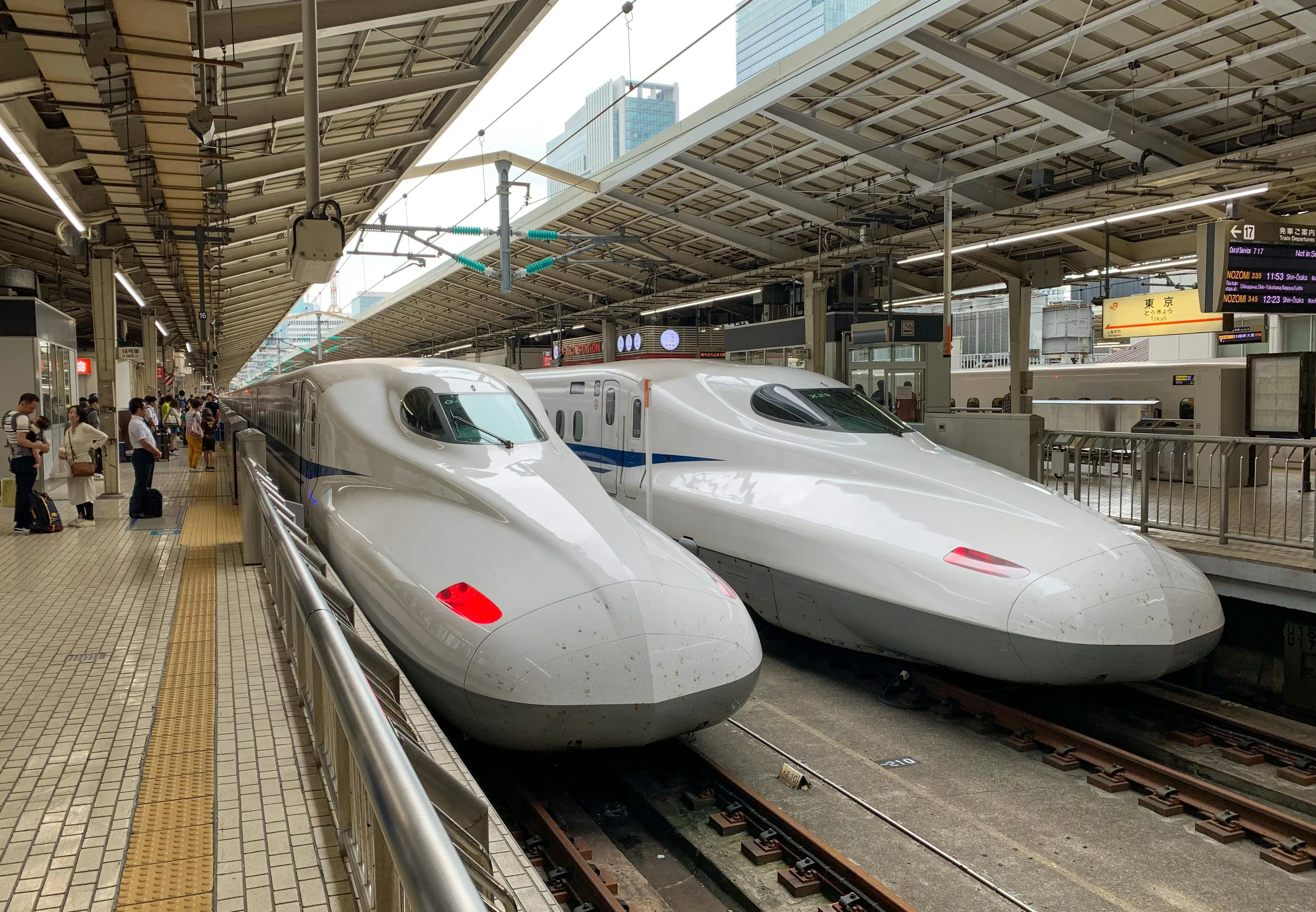
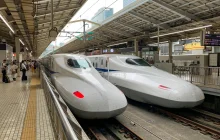
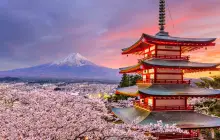
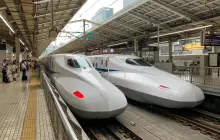
Second day in Tokyo after breakfast at the hotel day trip with a guide to Mount Fuji and shinkanzen train (included in the tour price). Bus trip to the area around the sacred volcano Mount Fuji, the symbol and highest mountain in Japan (3,776 meters). Japanese lunch (included) and return to Tokyo on the shinkanzen high-speed train, which reaches speeds of up to 320 km/h and is renowned for its reliability and safety. Return to hotel and individual dinner.
5. day
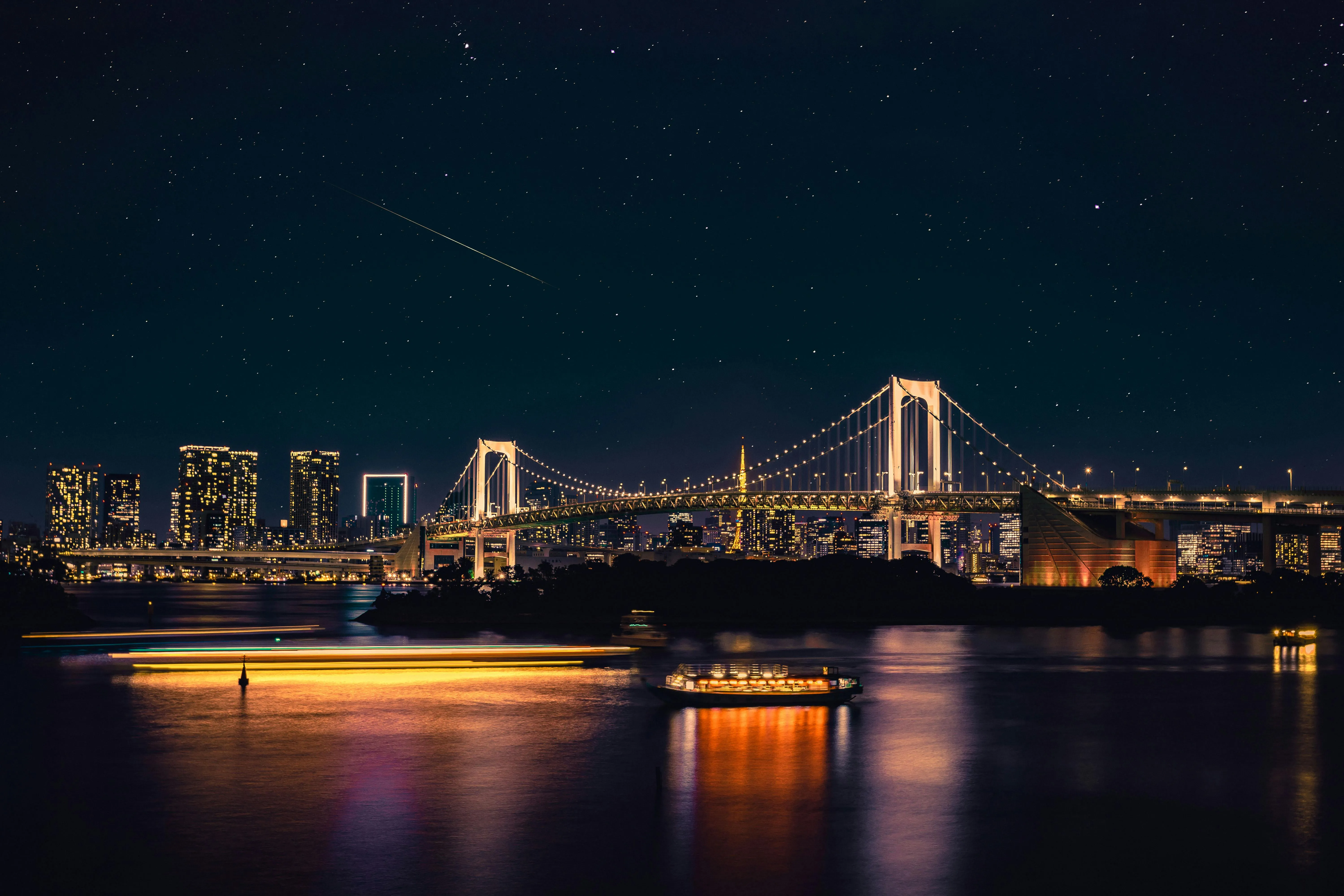
Third day in Tokyo breakfast, transfer to the port, loading and late lunch. Ship tour with delegate, safety drill, dinner and personal free time.
Tokyo's history is a fascinating story of transformation and resilience. Originally a small fishing village known as Edo, it became the seat of the Tokugawa Shogunate in the 17th century, beginning its journey to greatness. Under the rule of the shoguns, Edo developed into one of the world's greatest cities, filled with samurai, merchants and artists. This period, known as the Edo era, left the city with a rich cultural heritage that can still be admired today in historic districts such as Asakusa or in traditional gardens hidden among the skyscrapers.
In 1868, with the onset of the Meiji period and the transfer of the imperial seat from Kyoto, Edo was renamed Tokyo - "Eastern Capital". This era began the rapid modernization and westernization of Japan, of which Tokyo became the center. Despite the devastating earthquake of 1923 and the bombings of World War II, the city has always managed to rebuild itself, stronger than ever. This indomitability is evident in every aspect of modern Tokyo, which has become a symbol of Japanese innovation and progress without losing touch with its rich past. A walk through the streets of Tokyo is thus a time travel, where every corner tells the story of a city that is unafraid of change, yet honoring its roots.
Tokyo area: recommended to visit
Mount Fuji
Fuji-Hakone-Izu National Park is a natural wonder that will take your breath away. The park is dominated by the majestic Mount Fuji, a sacred symbol of Japan whose perfect curves have inspired artists for centuries. In the Hakone area, you will discover the magical world of hot springs, where you can relax and recharge at the traditional onsen baths. A cruise on Lake Ashi will offer you breathtaking views of Mt. Fuji, while trails lead through dense forests beckoning you to explore. Whether you're looking for a spiritual experience, an active vacation or just an escape into nature, this park offers an unforgettable experience for every visitor.
Kamakura Historical Town
Kamakura, the former capital of medieval Japan, will enchant you with its rich history and peaceful atmosphere. Just an hour away from bustling Tokyo, you'll find yourself in a world of majestic temples, quiet gardens and imposing statues. Gaze at the iconic bronze statue of the Great Buddha, stroll through the bamboo grove at Hōkoku-ji Temple and enjoy the fresh sea air on the beaches lining the coast. Kamakura is the perfect place for those who want to experience the magic of traditional Japan.
6. - 7. day
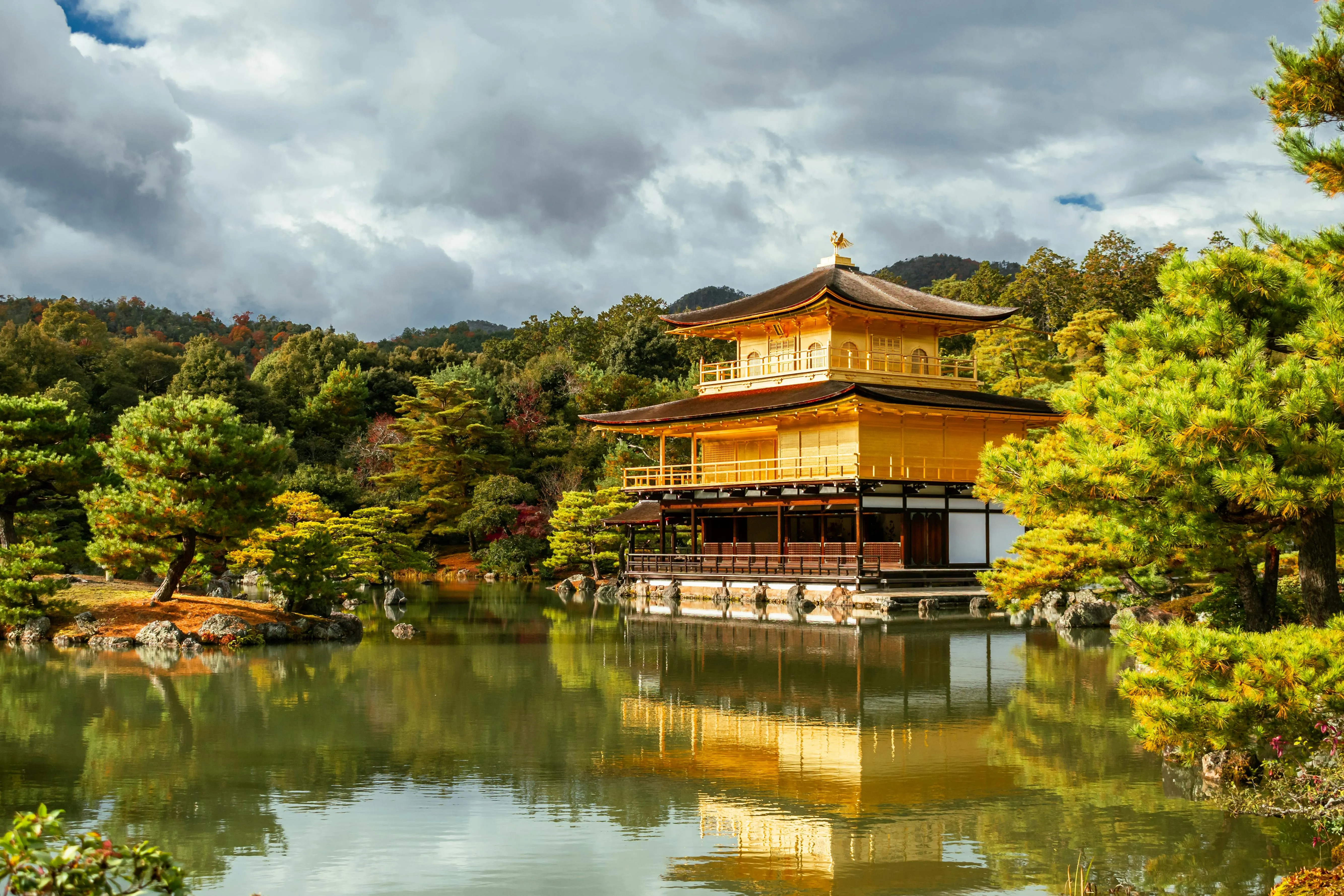
In the evening, sail through Osaka Bay to Kobe Port, one of Japan's most important ports. It is famous for its famous tender wagyu beef, considered one of the finest meats in the world. On the morning of the second day, we will depart with a local Czech-speaking guide for a day trip to Kyoto (included in tour price), the former capital of Japan. In Japan s most beautiful city, we will see iconic sights such as the Golden Kinkakuji Pavilion, Fushimi Inari Temple with its famous thousand red torii gates, and Kiyomizu-dera Temple on the mountain above the city. Visit the local market with lunch option and return to the ship.
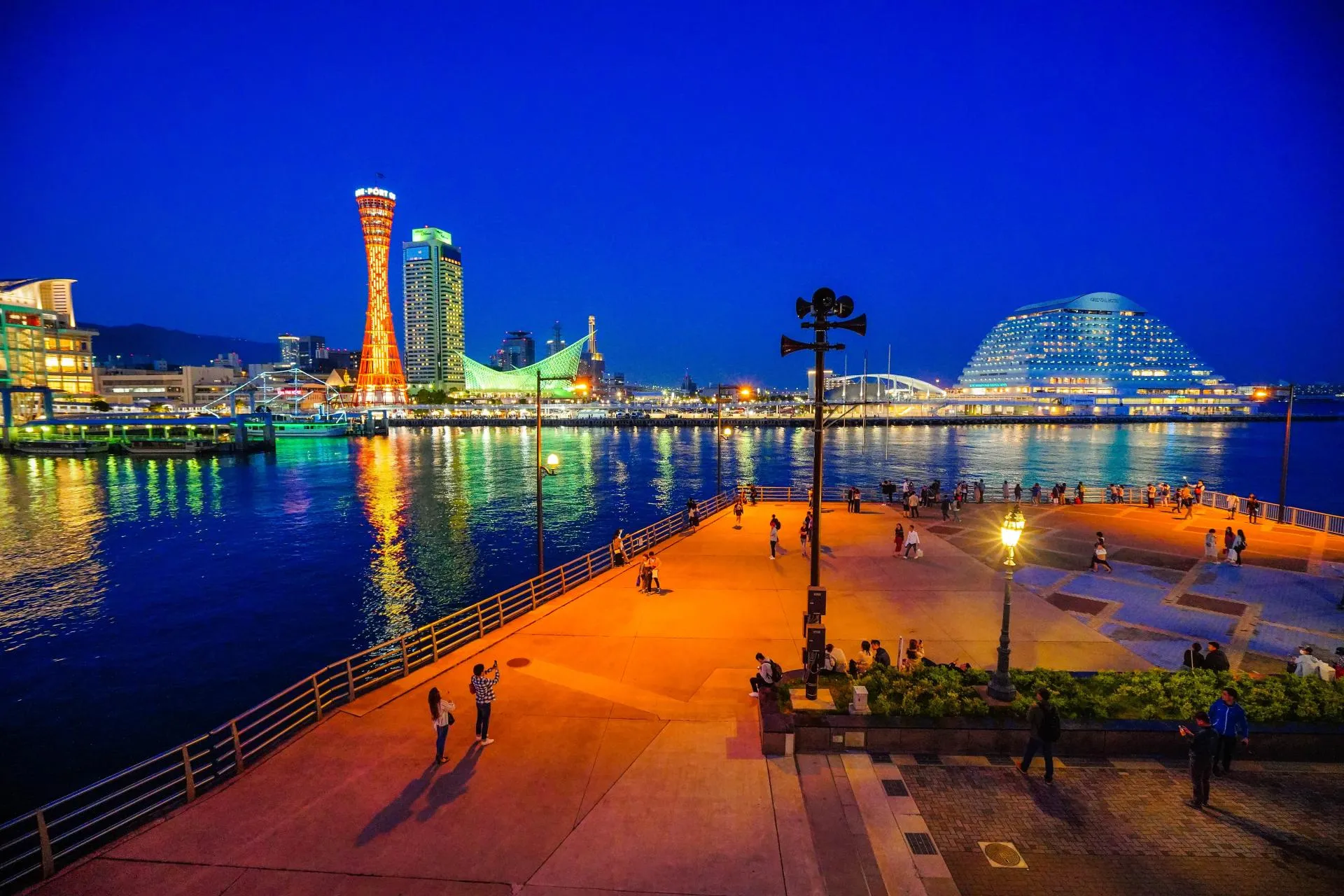
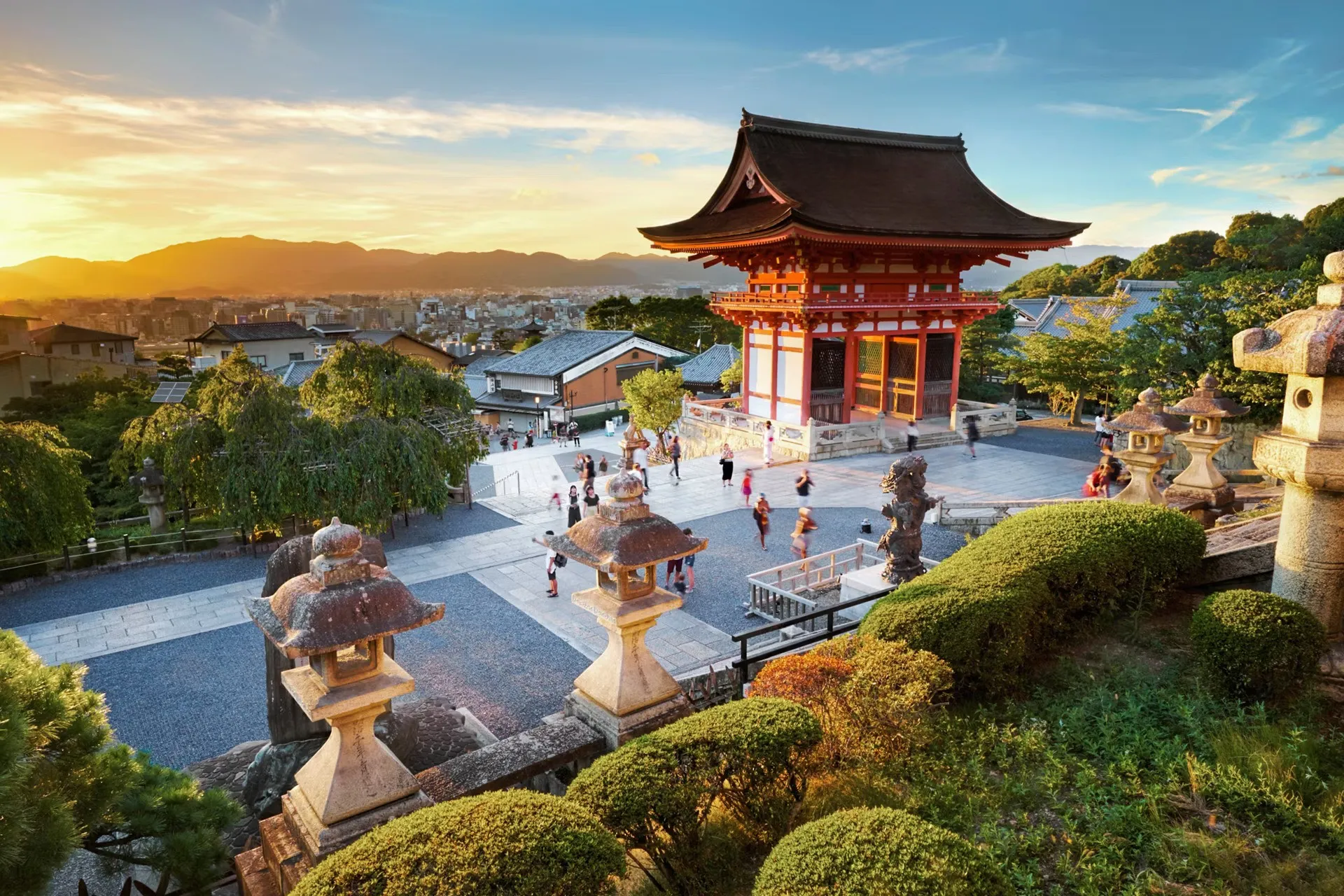
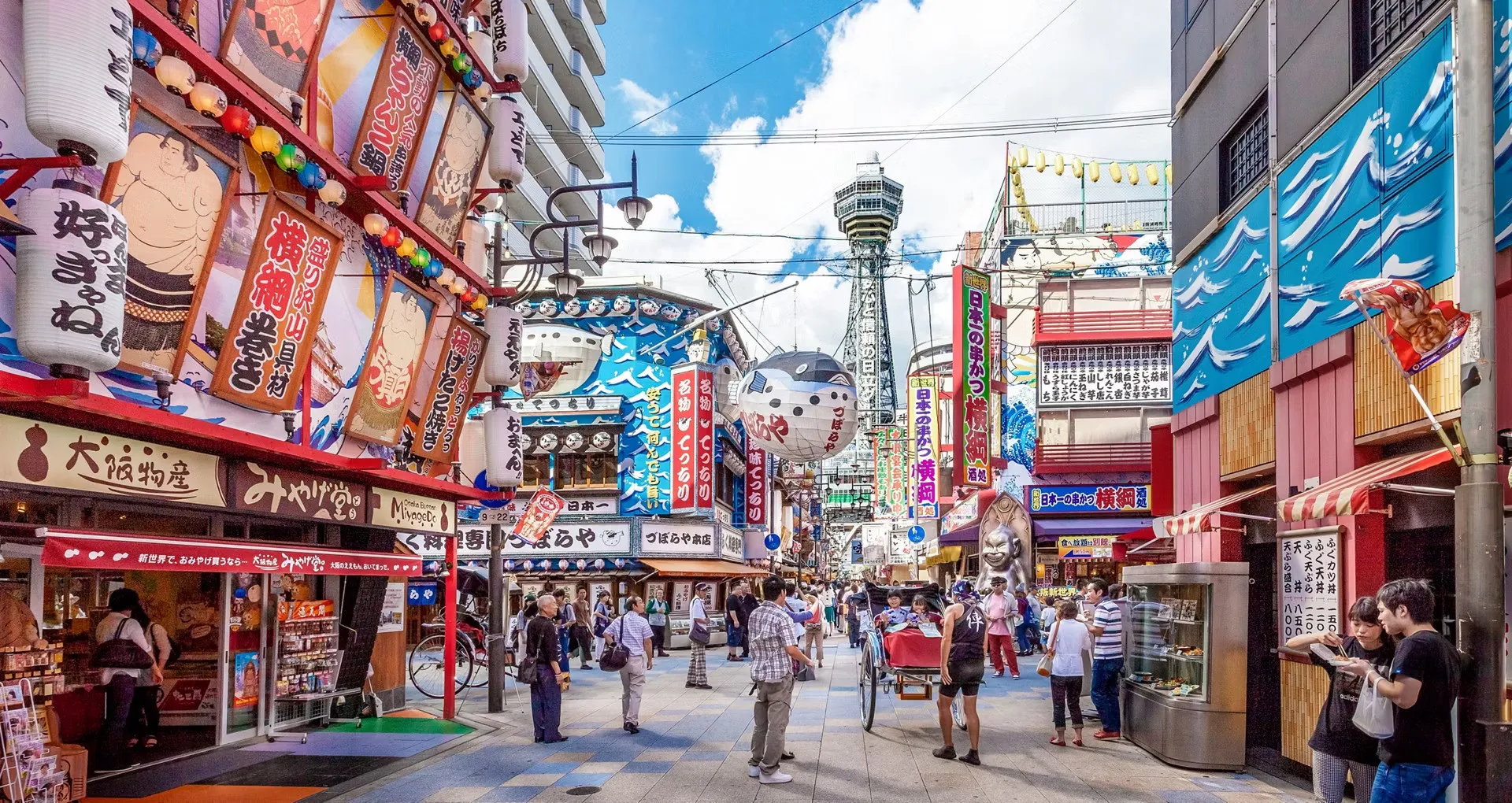
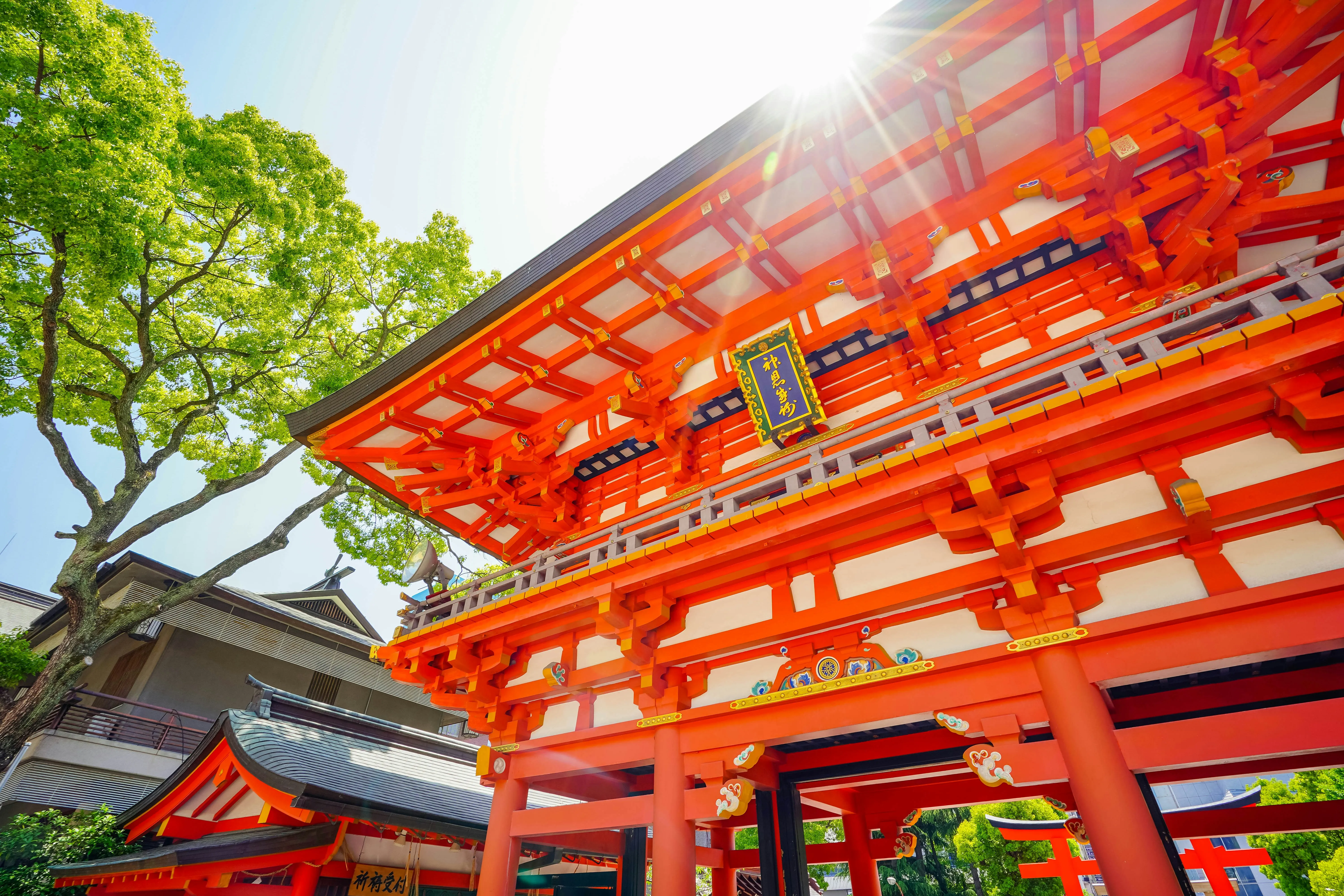
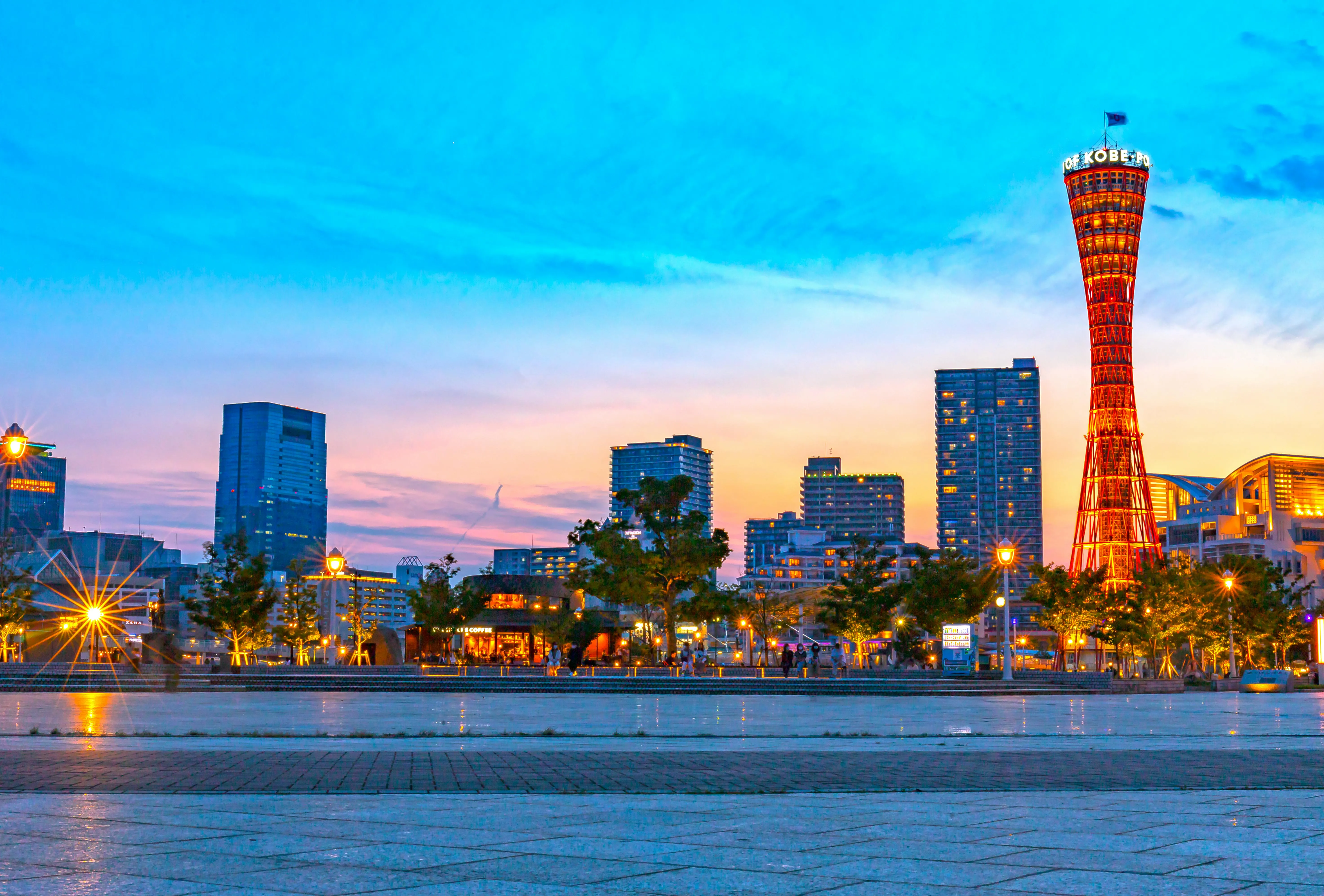
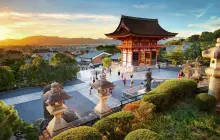
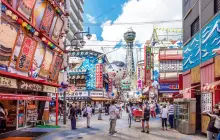
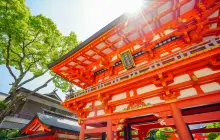
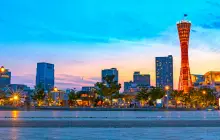
Kobe's natural harbor attracted settlers for millennia, but the city's modern character emerged in 1868 when it became one of Japan's first ports opened to foreign trade after centuries of isolation. European and American merchants established residences in Kitano-chō, transforming Kobe into a cosmopolitan hub where East met West. The city flourished through shipbuilding, steel production, and international commerce under the Meiji era's rapid modernization.
The devastating Great Hanshin Earthquake of January 17, 1995, measuring 7.3 magnitude, claimed over 6,400 lives and destroyed much of the city's infrastructure in just 20 seconds. Yet Kobe's spirit proved unbreakable—through extraordinary community effort and resilience, the city rebuilt itself within a decade, emerging stronger and more unified. Today's modern skyline, efficient infrastructure, and thriving culture stand as testament to Kobe's determination, while memorials ensure the lessons of 1995 guide future generations in this beautiful, resilient port city.
8. day
Kochi is the capital of Kochi Prefecture on the island of Shikoku in Japan. The city is known for its rich history and beautiful natural scenery. During your visit, you should not miss Kochi Castle, one of the few original Japanese castles that offers a spectacular view of the city. Another attraction is the Hirome Traditional Market, where you can sample local specialties such as katsuo no tataki, which is lightly seared tuna. For nature lovers, a walk along the Kagami River or a visit to the Makino Botanical Garden, home to many species of plants, is ideal.

The port of Kochi, located on the southern coast of Shikoku Island, Japan, has a rich history. The port was established in the late 17th century during the Edo period as an important trade center. Its strategic location made it a vital point for the distribution of goods throughout Japan. The port flourished with the export of Tosa Washi (traditional Japanese paper), rice, and other regional products.
In the Meiji era (1868-1912), the port underwent significant modernization to accommodate growing industrialization and western influences. The port of Kochi played a critical role during World War II, serving as a naval base and shipbuilding center for the Japanese Imperial Navy. Despite suffering heavy bombings, the port was quickly rebuilt in the post-war years. Today, Kochi remains an important hub for both industrial and passenger vessels, reflecting its enduring significance in Japan's maritime history.
9. day
Hiroshima, a city in the southwest of Japan, captivates with its history, culture and natural beauty. The biggest attractions are the Hiroshima Peace Memorial (Atomic Bomb Dome) and the Peace Park with its museum commemorating the events of 1945. Nature lovers should not miss Mijajima Island with the famous Floating Gate Torii of the Itsukushima Shrine. In addition, you can enjoy a local specialty, the traditional okonomiyaki pancake.
Included in the price of the tour is a day trip to Hiroshima with a local Czech-speaking guide.
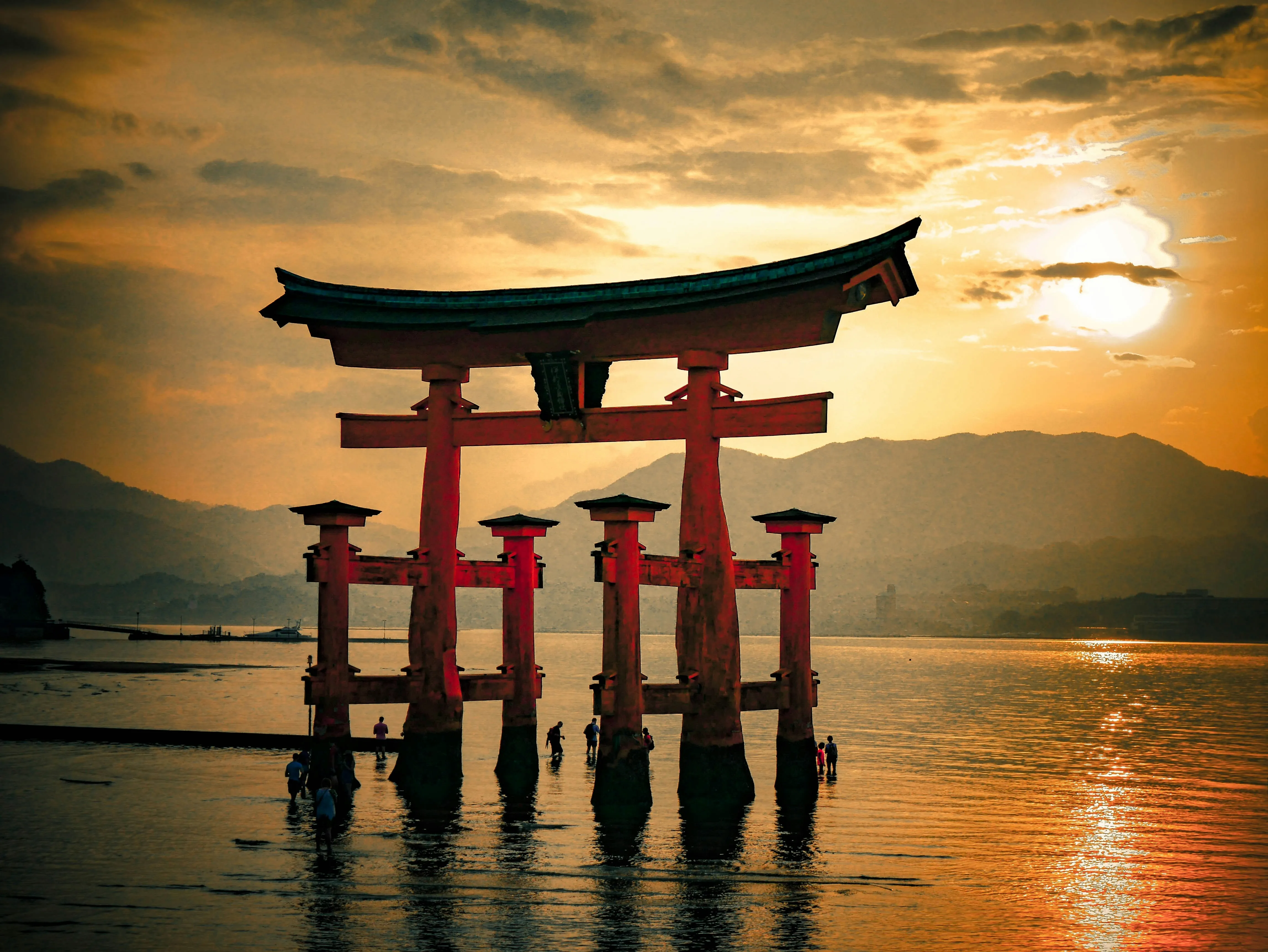
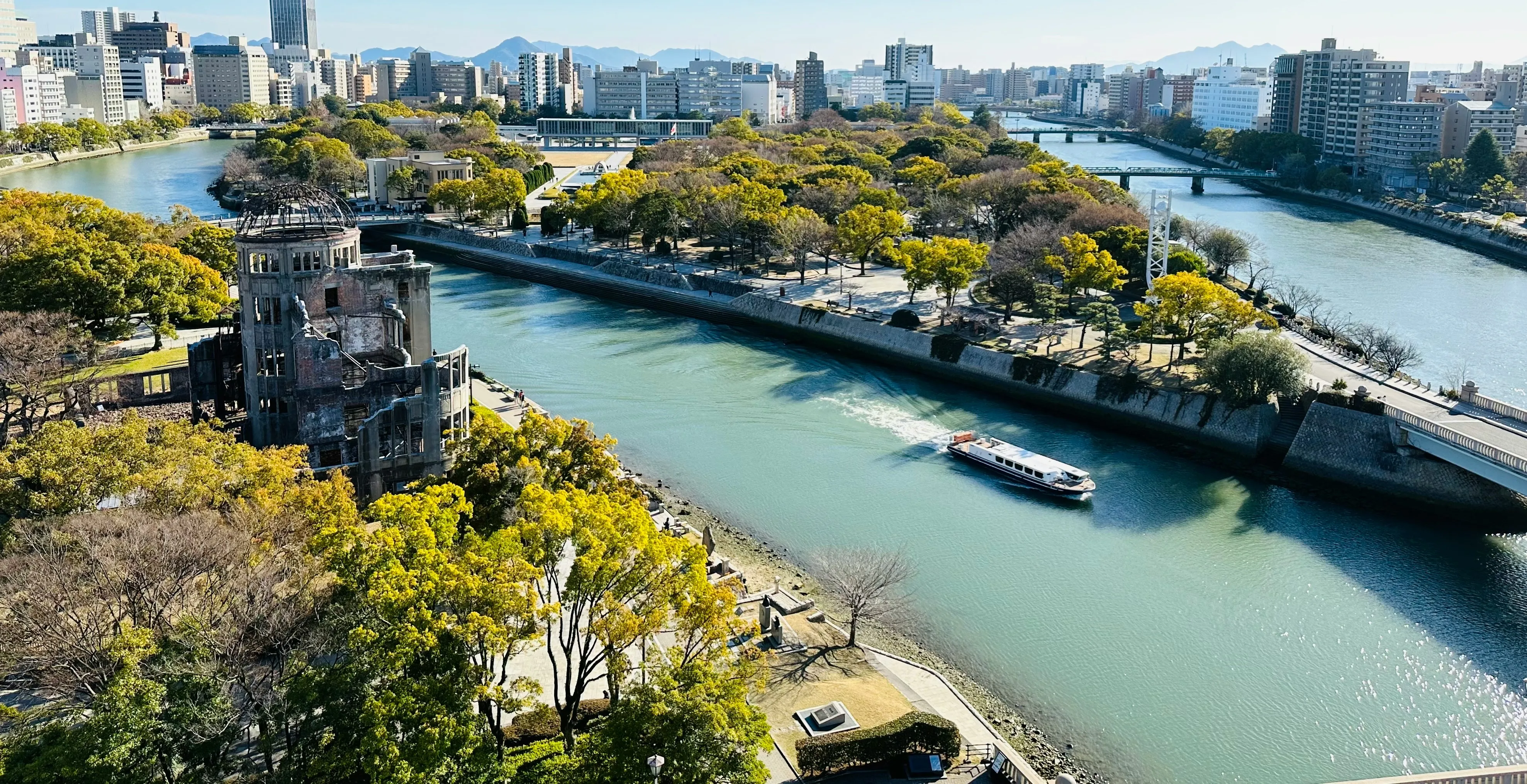
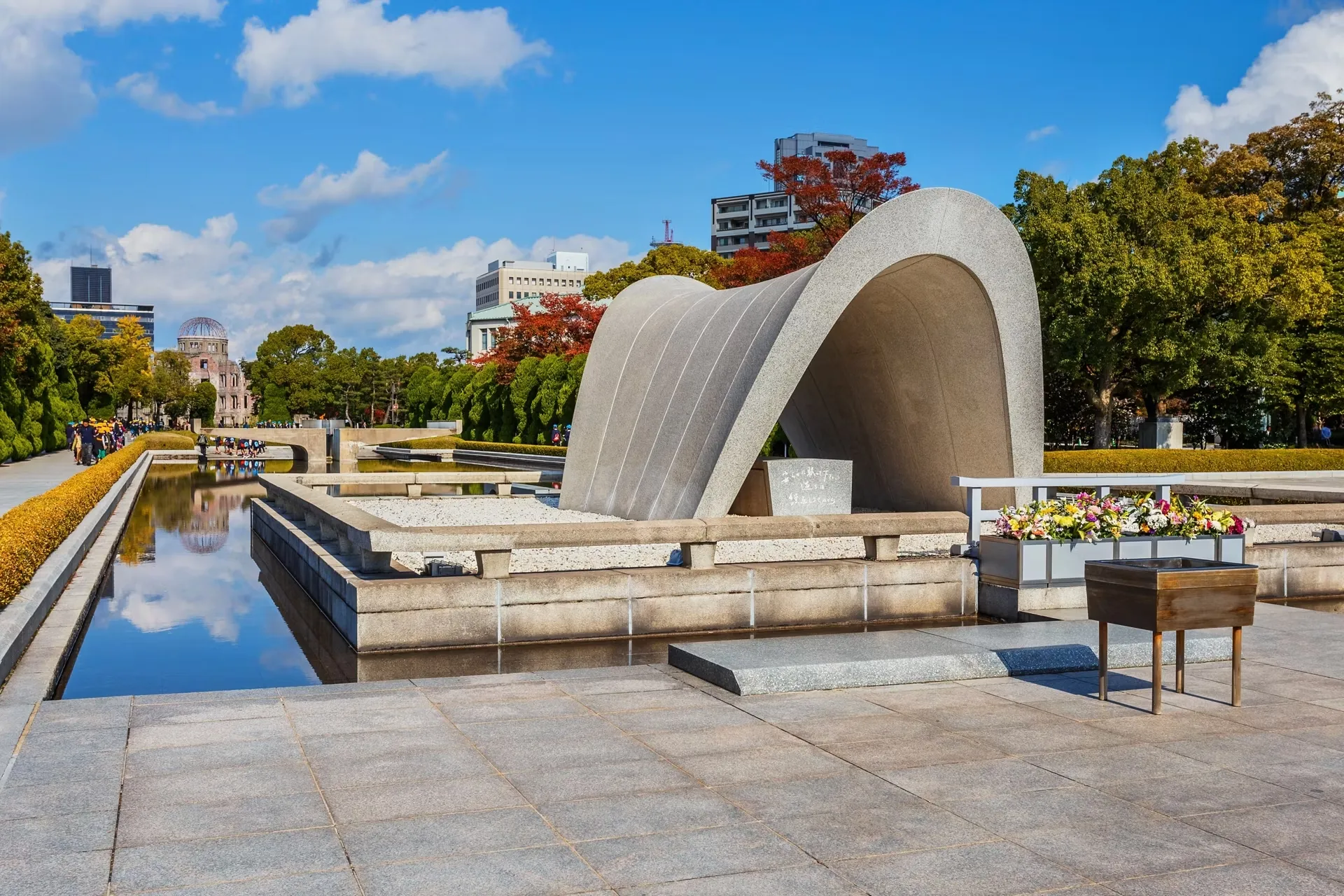
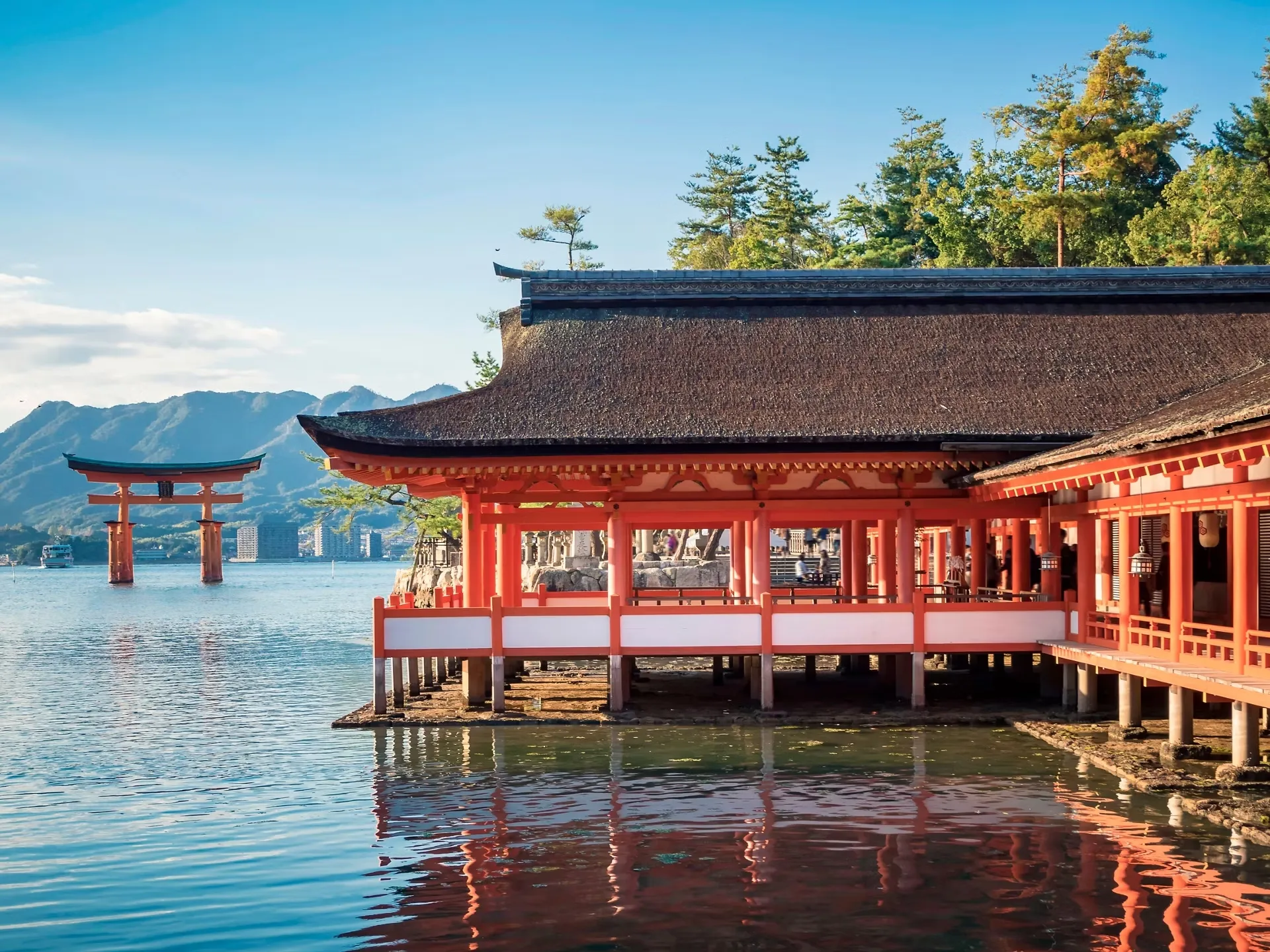
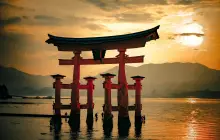
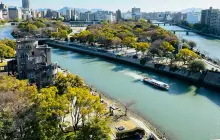
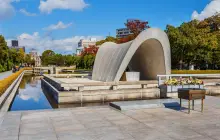
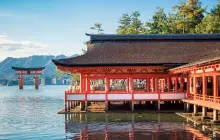
Hiroshima was originally founded as a castle town in 1589 by Mori Terumoto, a prominent feudal lord of the time. The city's strategic location on the delta of the Ota River helped it grow into a vital center for commerce and governance during the Edo period. As Japan modernized during the Meiji Restoration, Hiroshima expanded its industrial base, becoming a key military supply and logistics hub. Its prosperity continued into the 20th century, making it one of Japan's major urban centers.
The course of Hiroshima's history changed dramatically on August 6, 1945, when it became the first city to endure an atomic bombing, marking a pivotal moment in World War II and global military history. The immediate impact was catastrophic, with tens of thousands killed instantly and many more suffering the effects of radiation. In the aftermath, Hiroshima dedicated itself to peace and recovery, symbolized by the creation of the Hiroshima Peace Memorial Park. The park includes the Atomic Bomb Dome—a UNESCO World Heritage Site—and serves as a poignant reminder of the past while promoting a future of peace and nuclear disarmament. Hiroshima's transformation and resilience have made it an enduring symbol of hope and recovery.
10. day
The town of Beppu on the island of Kyushu is considered to be the main spa centre of Japan, where locals even cook their food in the steaming hot springs. It is home to the most famous "Boiling Hell" springs, some of which gush forth as geysers, others in the form of mud. The most interesting part is the "Nine Hells" circuit with mineral lakes, each of which has a different colour and mineral composition.
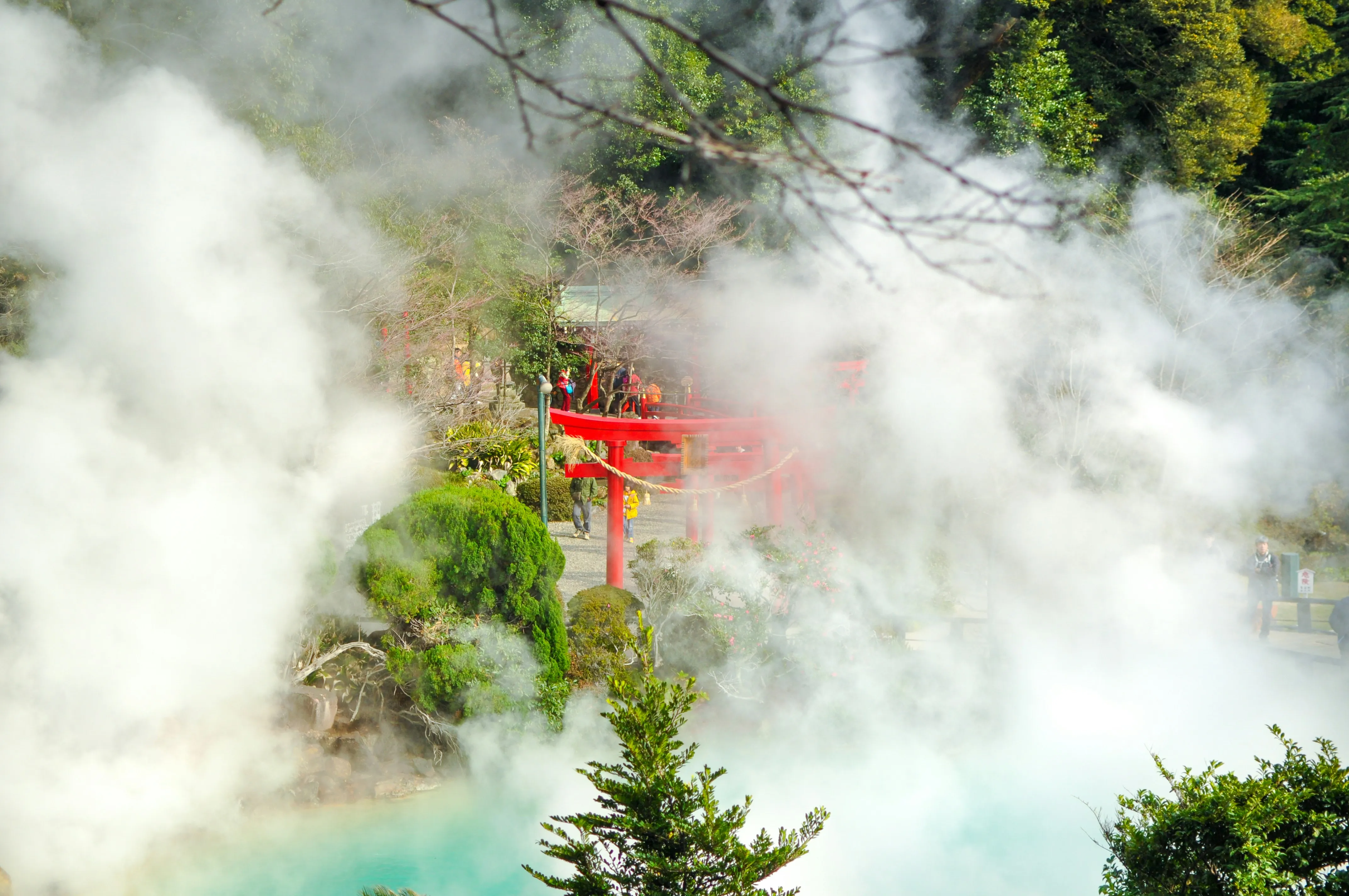
The Beppu Port in Japan has a long and rich history. It has been a significant hub of maritime trade since the Edo period (1603-1868). During this period, Beppu Port was a crucial point of contact between Japan and the rest of the world, particularly for the exchange of goods and information.
In the Meiji era (1868-1912), the port underwent significant development to accommodate the increasing demand for international trade. This included the construction of modern facilities, increasing the port's capacity, and expanding its trade routes. The port's strategic location, combined with its well-developed infrastructure, established Beppu Port as one of the leading international seaports in Japan.
11. day at sea
12. day
Naha, the capital of Okinawa Prefecture in Japan, is a fascinating destination that offers a unique insight into the region's rich history and culture. During your visit, you can start at Suri Castle, the former royal residence of the Ryukyu Kingdom, which is a UNESCO World Heritage Site and offers spectacular views of the city. Then head to Kokusai-dori Street, which is full of shops, restaurants and markets where you can sample local specialties and buy souvenirs. Don't miss a visit to the Makishi Traditional Market for local cuisine and hospitality. Naha is a city that combines historical sites with modern culture and a lively atmosphere.
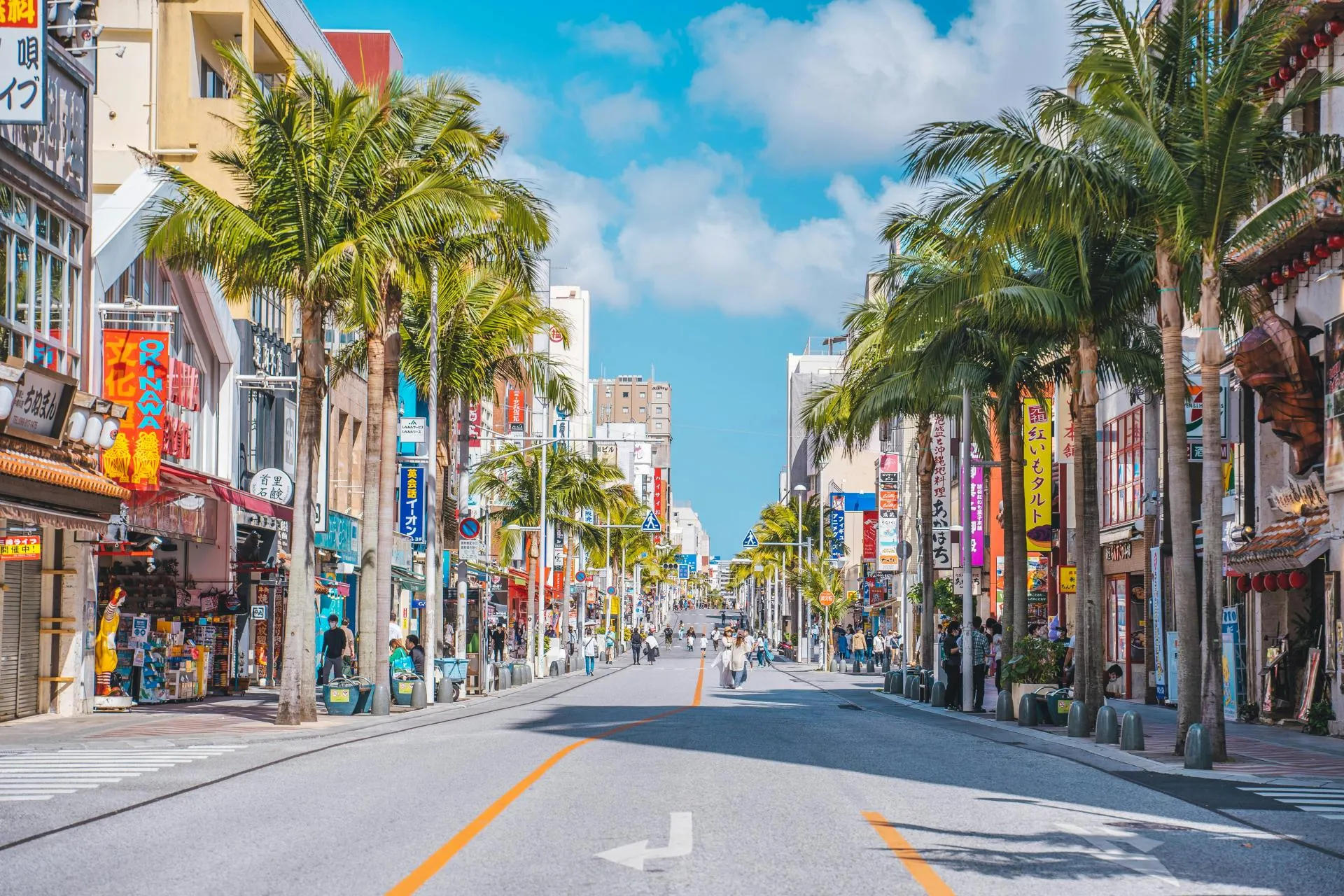
The port of Naha is a significant harbor located in Okinawa, Japan. It has a rich history that dates back to the 15th century, during the era of the Ryukyu Kingdom. Situated in a geographically strategic location, the port served as a crucial trade hub connecting various parts of Asia, thus playing a key role in the economic development of the region.
During the Second World War, Naha port witnessed intense battles and was severely damaged. After the war, it underwent extensive reconstruction, transforming into a modern, international port that it is today. It currently serves as the primary maritime gateway for Okinawa, handling a wide range of cargo, and is a popular stopover for cruise ships.
13. day
Miyakojima is a beautiful island in Japan's Ryukyu archipelago, known for its stunning beaches and crystal clear waters. We recommend starting your visit at Yonaha Maehama Beach, considered one of the most beautiful beaches in Japan. Another notable spot is the Kurima Bridge, which offers panoramic views of the surrounding islands and turquoise sea. For an experience of the local culture, visit a village with traditional Okinawan houses or sample local specialties such as soba from Miyako. Miyakojima is a place where natural beauty combines with the peaceful atmosphere and hospitality of the locals.

The port of Miyako is located on the eastern coast of Miyako Island, Okinawa Prefecture, Japan. The history of this port extends back to the Ryukyu Kingdom era, when it served as an essential hub for inter-island trade and communication. Its strategic location made it a crucial point for the kingdom's maritime activities.
With the modernization of Japan during the Meiji Restoration in the late 19th century, the port of Miyako continued to play a significant role in regional trade. After World War II, the port underwent significant reconstruction and development, transforming it into one of the most important fishing ports in Okinawa Prefecture. Today, the port continues to serve as a vital link for transportation, fishing, and marine tourism.
14. day
Keelung, a lively port city in northern Taiwan, is an ideal base for a day trip to Taipei. Visit the Iconic Taipei 101 skyscraper, the former tallest building in the world, the National Palace Museum, which houses one of the largest collections of Chinese artworks in the world, or the Traditional Longshan Temple with its stunning traditional Chinese architecture. Taipei is a fascinating blend of modern life and traditional culture.
Delegate will be in this port to take part in MSC Cruises' optional excursion to the capital city of Taipei.
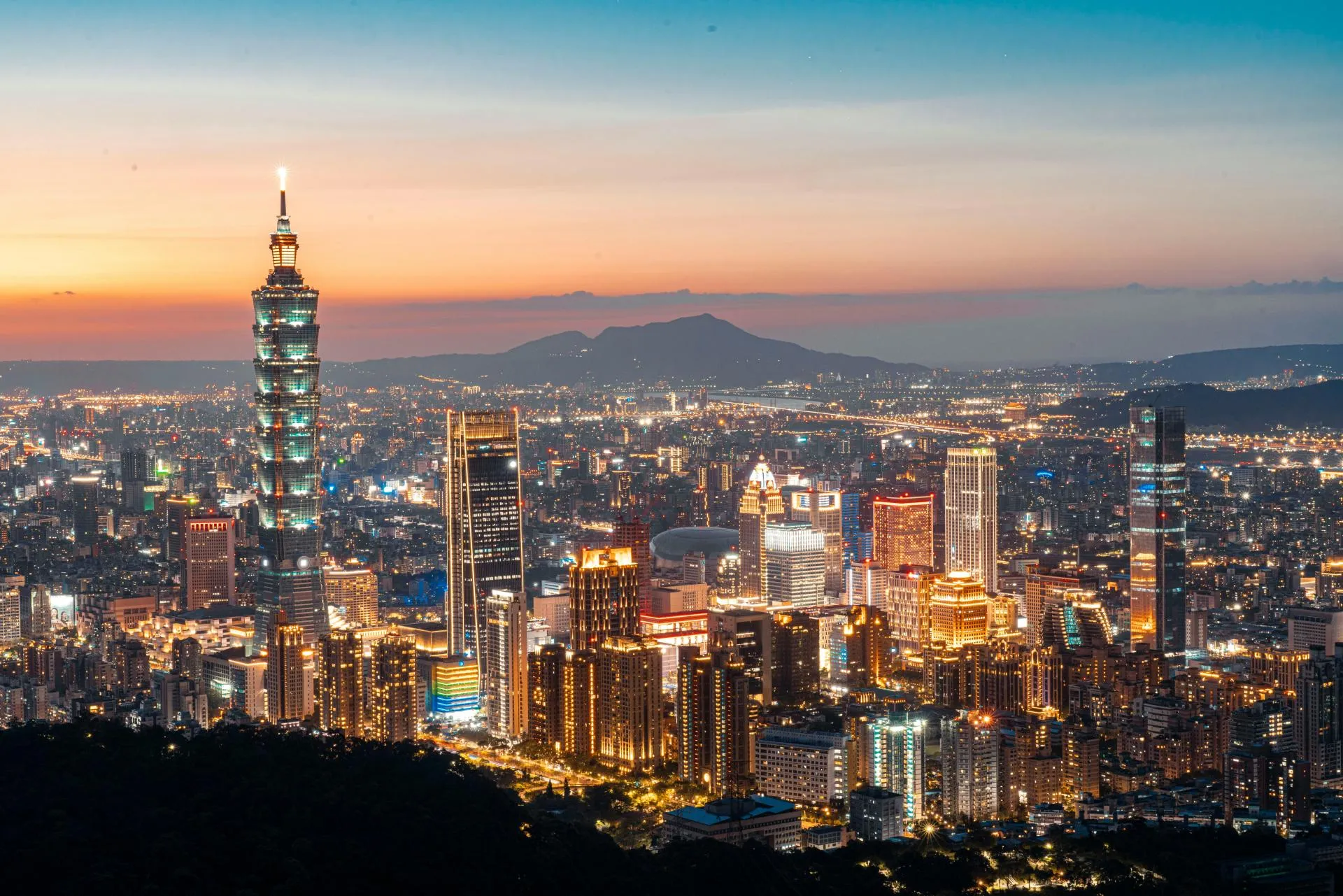
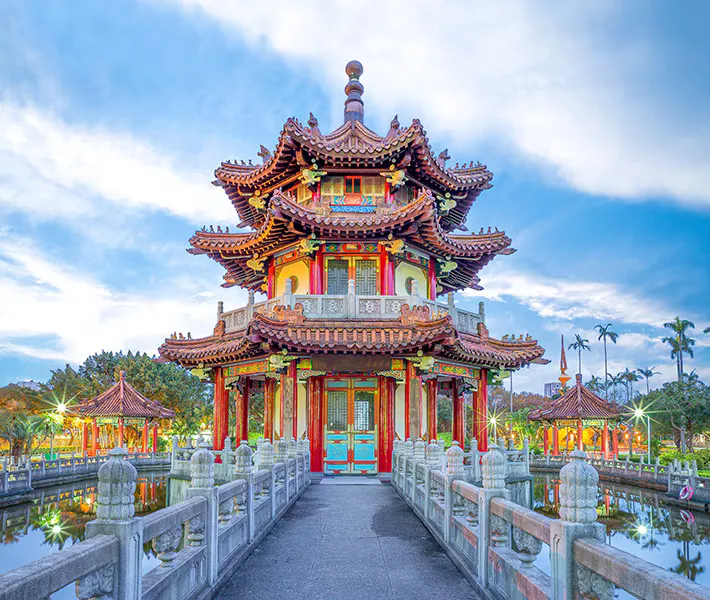
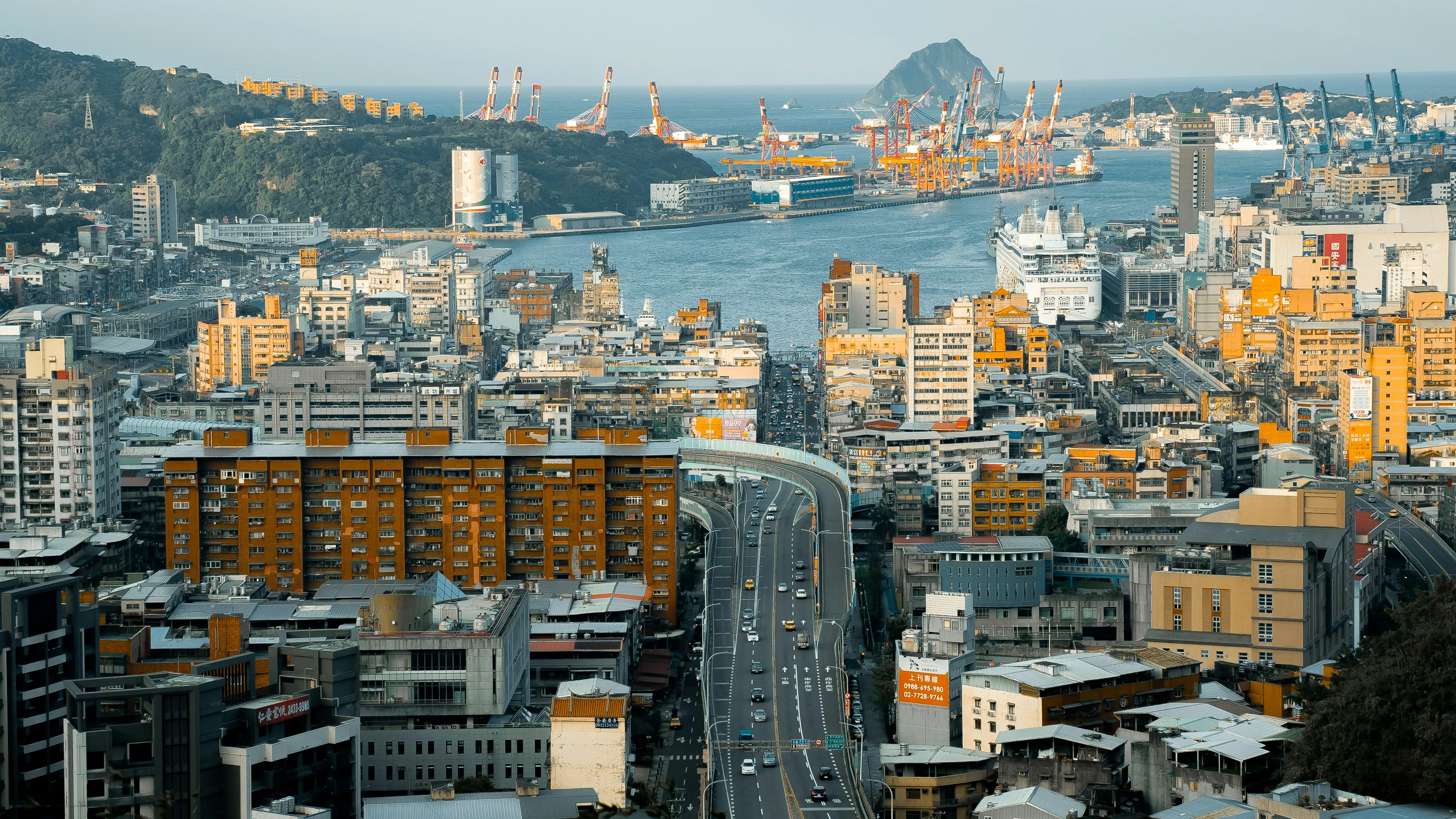
The history of Keelung, a major port city in Taiwan (China), dates back to the 17th century during the Ming Dynasty. However, it wasn't until the Qing Dynasty that the city was officially developed as a commercial port, primarily for the trade of tea, camphor, sulfur, and coal. The port played a crucial role as a strategic base for military and trade activities for the Qing government and was later occupied by the Japanese and the French during different periods.
During the Japanese rule from 1895 to 1945, Keelung underwent significant infrastructural development. The Japanese built the harbour, railways, roads, and established industries, which greatly boosted the city's economy. After World War II, Keelung was returned to China. In the present day, Keelung remains an important port for Taiwan's import and export trade, and it is known for its bustling night markets and rich cultural heritage.
15. day at sea
16. day
Kagoshima in southern Japan is known for its fascinating nature and volcanic landscape. The biggest attraction is the active volcano Sakurajima majestically dominating the local skyline, which has given the city the nickname "the Naples of Japan". The city also offers the quiet gardens of Sengan-en with views of the volcano and the rich history of the samurai era. Lovers of traditional cuisine will appreciate the local specialty kurobuta - tender meat from black pigs. Kagoshima combines natural beauty, history and unique flavours.
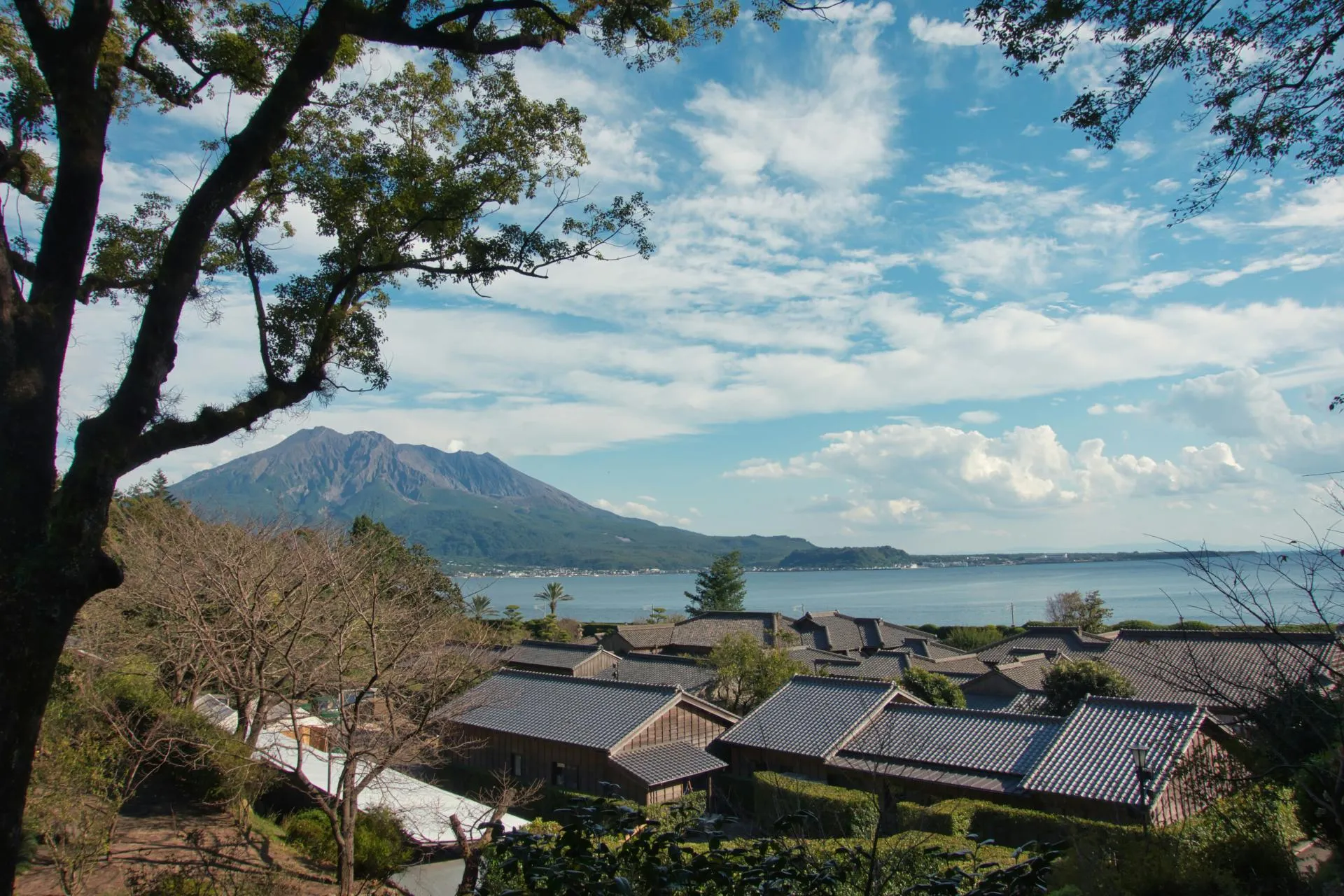
The port of Kagoshima, located in the southwestern corner of Kyushu, has a rich history that dates back to the 7th century. Known as the "Naples of the Eastern world" due to its bay location and scenic backdrop of an active volcano, Kagoshima was a significant naval base during the Sengoku period under the Shimazu clan. It was also a major center for Western learning and modernization during the Meiji period.
In 1549, the port was visited by Francis Xavier, a Roman Catholic missionary, marking the start of Christianity in Japan. Kagoshima's international influence grew when it opened as a foreign trade port in 1859. This allowed goods such as Satsuma ware (a type of pottery), Satsuma oranges, and shochu (a type of distilled alcohol) to be exported. In the late 19th century, it played a crucial role in the Meiji Restoration, a period of rapid modernization and westernization in Japan.
17. day at sea
18. day
After disembarkation, we will take a day tour of Tokyo with a local guide (included in the tour price). We will visit Ueno Park, famous for its sakura trees and panda zoo. We will visit the oldest part of Tokyo, the Asakusu district and its Buddhist temple Sensoji, where there will be an opportunity to shop for souvenirs in the adjacent alleys. Time permitting, we will also visit the Shopping Mall and the Tokyo Sky Tree Tower, which at 634 meters is the tallest tower of its kind and the third tallest structure in the world. Afterwards, transfer to the airport and fly home with a transfer.
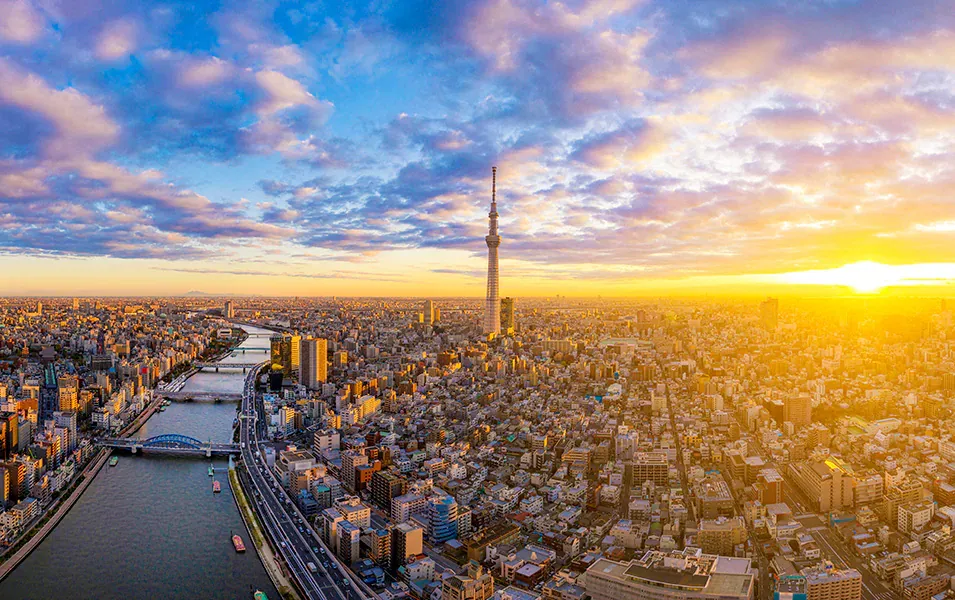
Tokyo's history is a fascinating story of transformation and resilience. Originally a small fishing village known as Edo, it became the seat of the Tokugawa Shogunate in the 17th century, beginning its journey to greatness. Under the rule of the shoguns, Edo developed into one of the world's greatest cities, filled with samurai, merchants and artists. This period, known as the Edo era, left the city with a rich cultural heritage that can still be admired today in historic districts such as Asakusa or in traditional gardens hidden among the skyscrapers.
In 1868, with the onset of the Meiji period and the transfer of the imperial seat from Kyoto, Edo was renamed Tokyo - "Eastern Capital". This era began the rapid modernization and westernization of Japan, of which Tokyo became the center. Despite the devastating earthquake of 1923 and the bombings of World War II, the city has always managed to rebuild itself, stronger than ever. This indomitability is evident in every aspect of modern Tokyo, which has become a symbol of Japanese innovation and progress without losing touch with its rich past. A walk through the streets of Tokyo is thus a time travel, where every corner tells the story of a city that is unafraid of change, yet honoring its roots.
Tokyo area: recommended to visit
Mount Fuji
Fuji-Hakone-Izu National Park is a natural wonder that will take your breath away. The park is dominated by the majestic Mount Fuji, a sacred symbol of Japan whose perfect curves have inspired artists for centuries. In the Hakone area, you will discover the magical world of hot springs, where you can relax and recharge at the traditional onsen baths. A cruise on Lake Ashi will offer you breathtaking views of Mt. Fuji, while trails lead through dense forests beckoning you to explore. Whether you're looking for a spiritual experience, an active vacation or just an escape into nature, this park offers an unforgettable experience for every visitor.
Kamakura Historical Town
Kamakura, the former capital of medieval Japan, will enchant you with its rich history and peaceful atmosphere. Just an hour away from bustling Tokyo, you'll find yourself in a world of majestic temples, quiet gardens and imposing statues. Gaze at the iconic bronze statue of the Great Buddha, stroll through the bamboo grove at Hōkoku-ji Temple and enjoy the fresh sea air on the beaches lining the coast. Kamakura is the perfect place for those who want to experience the magic of traditional Japan.
19. day
Arrival from Japan at the airport and departure to your homes.

Tour description
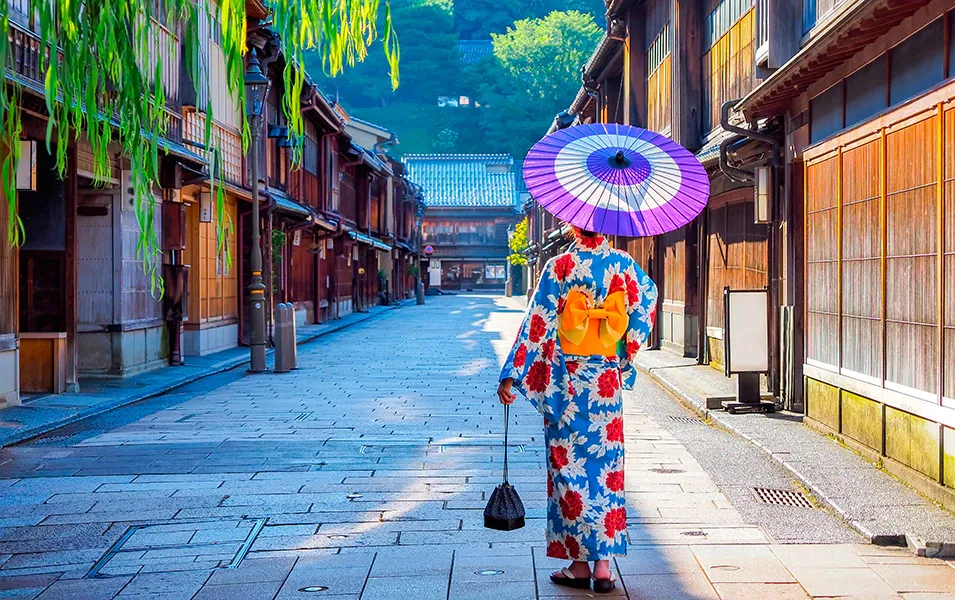
Join Riviera Tour on a unique Japan to Taiwan cruise aboard the MSC Bellissima with fascinating trips into the interior of the Japanese islands. You will visit fascinating destinations such as Tokyo, Kobe with a trip to Kyoto, Taiwan's capital Taipei or the spa town of Beppu.
Included are air transportation to and from the port, a day trip to Mt. Fuji with return by shinkanzen train to Tokyo, two full-day excursions in Tokyo, day excursions in Hiroshima and Taipei, and trip from Kobe to Kyoto.
During the cruise we will be accompanied by our Czech-Japanese guide who will tell us about the cities we will visit as well as about Japanese history and culture during the ENTIRE TOUR. Thanks to her presence, you can get to know Japan and its customs and traditions more than ever before.
NOW ONLY 10 000 CZK deposit on the cruise when you sign the travel contract! Second deposit 50% of the price until 30 September 2026, balance due 55 days before departure.

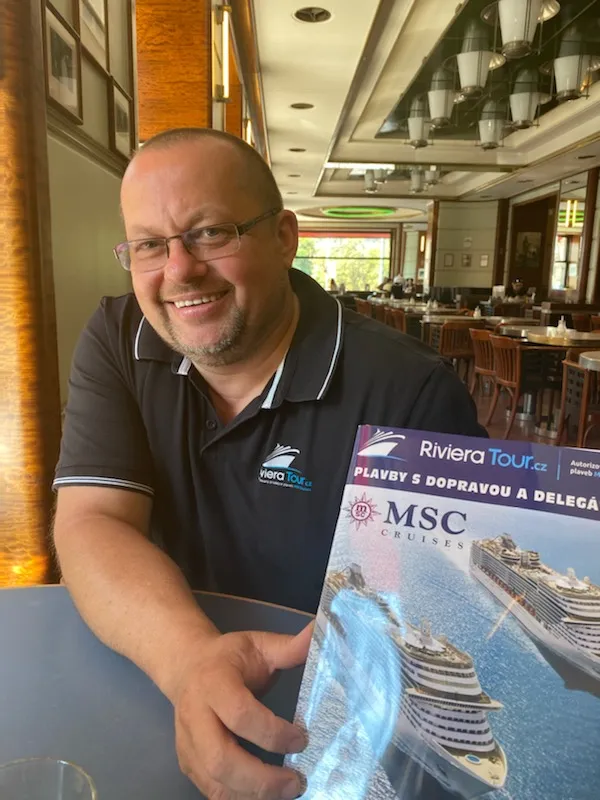
Dominik Číž
Ahoj, jmenuji se Dominik a pocházím z malé vesnice Lidečko na Valašsku. Na plavbách s MSC Cruises jsem vyrůstal, takže znám každé zákoutí lodě a provedu vás také většinou destinací.
V Rivieře pracuji od roku 2017, kdy jsem se na dálku věnoval správě sociálních sítí. Od jara 2022 jsem začal jezdit na plavby jako delegát a od podzimu 2023 působím také jako zástupce ředitele. Mám vystudovanou politologii na MUNI v Brně a v současnosti studuji dálkově laickou teologii na UPOL v Olomouci.
Jsem také hrdým účastníkem programu Erasmus+, se kterým jsem strávil půl roku na Università di Sapienza v Římě. Mezi mé zájmy patří cestování, studium jazyků a organizace volnočasových aktivit. Těším se, až se někdy potkáme na plavbě :)


Pavel Číž
Majitel cestovní kanceláře, kterého do dnešního dne můžete potkat na plavbách s RIVIERA TOUR. Od počátku svého podnikání byla jeho myšlenka vytvořit cestovní kancelář, která se nesnaží vytvořit jen nejvyšší obrat a zisk, ale vytvořit cestovní kancelář, kde se zákazník má chuť neustále vracet a dovolená musí být opravdu relax se vším všudy. Proto se u RIVIERA TOUR setkáte se službami, které Vás zcela jistě mile překvapí a zpříjemní Vám vaši dovolenou.
Přesto že se v současné době věnuje spíše speciálním zájezdům a exotickým destinacím, jeho srdeční záležitostí je především Itálie a to se vším všudy. O Itálii ,lidech, jídlech, zvycích ,vínu .... Vám dokáže povídat hodiny. A hlavně - o tom, co v průvodcích nenajdete. Osobní zkušenost je prostě nadevše.
Pavel je ženatý, má dvě děti a je doslova posedlý cestováním. V současné době připravuje knihu o zážitcích z cestování.


The cruise price includes
- Czech delegate throughout the tour
- Tours with local guide and delegate: Tokyo (3x), Kobe (Kyoto), Hiroshima, Keelung (Taipei)
- 3x night in a hotel in Tokyo with breakfast
- Airline service in Economy class* with a transfer
- Airport taxes and fuel surcharges
- Airport - hotel/port - airport transfers
- Sightseeing cruise in given date and ship MSC
- Accommodation in an inside cabin of the BELLA category
- Full board for the entire stay on the ship
- Port charges, porter service on boarding
- Daily cabin cleaning
- Captain's Gala Evening, Gala Cocktail
- Insurance against bankruptcy of CK
- Animation and entertainment programmes on board
- Theatres, swimming pools, whirlpools, pool service
- Service charge 15€/person/day
The cruise price does not include
- Optional cruise company excursions in destinations
- Drinks, alcoholic beverages in bars and restaurants
- Extra services for an extra charge (saunas, massages, cinema, circus...)
- Cruise company transfers in ports
For an additional fee we offer
- Transfer FM-Ostrava-Olomouc-Brno-airport (and back) for an extra 1.390 CZK
- Special travel and health insurance for cruises at sea
- Better cabin categories Fantastica, Aurea and MSC Yacht Club
- Window cabins, balcony cabins, suites and MSC Yacht Club
- Drink Packages and Packages in pre-sale with discount
- Internet packages on sale with discount
Other
- The airline will endeavour to place clients according to cabin accommodation, however Economy Class does not guarantee this service. In case you require seating next to each other, you must choose a higher class at an additional cost. Please note that transportation is provided by scheduled flight. It is therefore not possible to change the name of the person or cancel the flight free of charge.
The organizer of the cruise is: MSC CRUISES S.A., Avenue Eugene Pittard 40, Geneva, Switzerland. Travel agency RIVIERA TOUR and shipping company is authorized to make operational changes to the program and services provided before the trip and during the trip, if it is not possible to maintain the originally agreed program and services. In the case of trips to regions where the current security situation may require a change in the route or cruise, there is no breach of the travel contract if a deviation in the route does not exceed 50% of the originally planned cruise route. The customer acknowledges that each such deviation from the originally planned cruise route is made to maintain his safety and is included in the price of the trip. These provisions also apply to this situation and related services.
With Riviera Tour you get more:
With us, the complete price - you don't pay anything extra, everything is in the Czech language - you will receive from us printed, fully processed departure instructions containing the boarding pass, information about countries, destinations, information about services on the ship, a translated menu*. We have a 24/7 assistance service for solving crisis situations, we will help you in case of unexpected events, communication with doctors, insurance company, we will help you with accommodation, transport, you can solve all complaints through our CK and note that RIVIERA TOUR sells all cruises as a travel agency - guarantee and security for you

A gift for you with your order
With Riviera Tour you get more:
With us, the complete price - you don't pay anything extra, everything is in the Czech language - you will receive from us printed, fully processed departure instructions containing the boarding pass, information about countries, destinations, information about services on the ship, a translated menu*. We have a 24/7 assistance service for solving crisis situations, we will help you in case of unexpected events, communication with doctors, insurance company, we will help you with accommodation, transport, you can solve all complaints through our CK and note that RIVIERA TOUR sells all cruises as a travel agency - guarantee and security for you