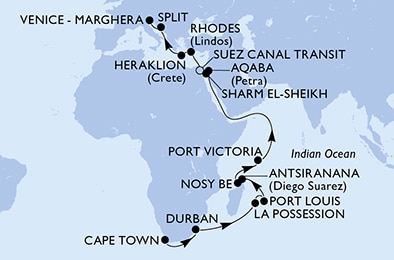
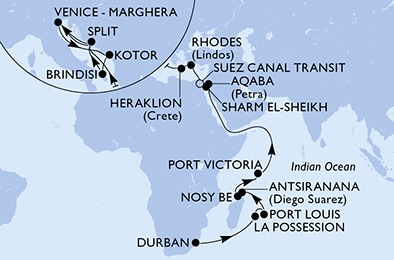
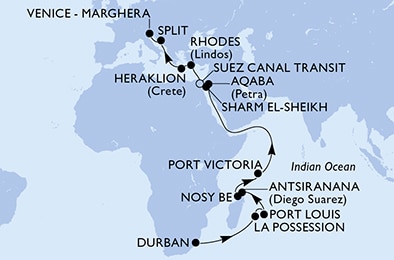
Port Antsiranana (Diego Suarez)
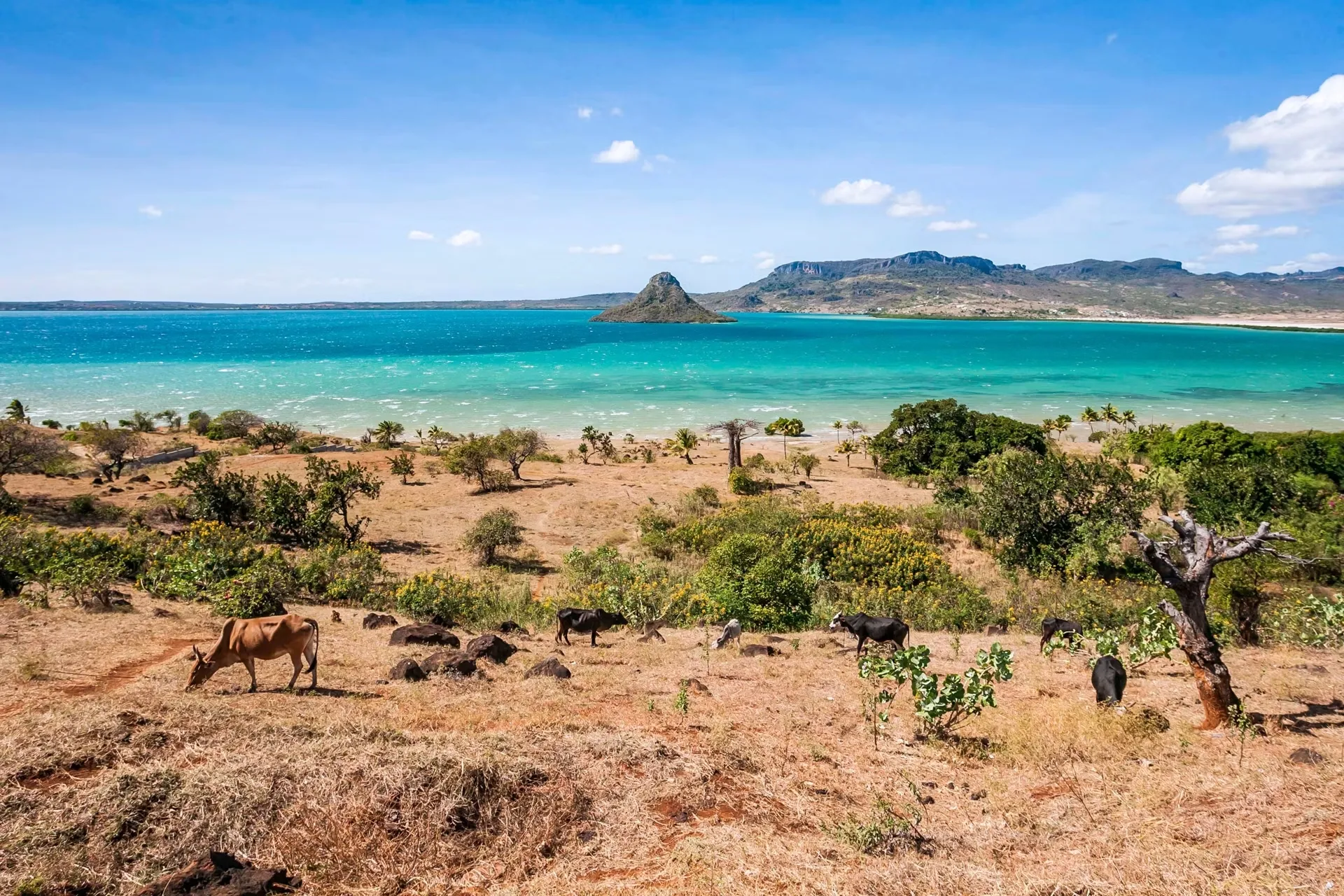


Antsiranana, known as Diego-Suarez until 1975, is located at the northernmost tip of Madagascar and boasts one of the largest natural bays in the world. Upon disembarking from the ocean liner you are immediately struck by the hot tropical climate, the strong ocean wind Varatraza, and the incredible hustle of bright yellow three-wheeled tuk-tuks. The main city arteries are lined with semi-ruined buildings with massive verandas, slowly being consumed by time, blending with the colorful African life. The symbol of these waters is the solitary green mound of Nosy Lonjo, which guards the entrance to the harbor.
The local lifestyle is a fascinating mix of Malagasy traditions and French influence, where everything happens in the spirit of the motto “mora mora” (slowly, slowly). In the streets around the central market, you will encounter stalls overflowing with vanilla, cloves, ylang-ylang, and colorful lambas clothing. The local gastronomy is driven by freshly caught lobster, grilled fish with coconut rice, and zebu hump steaks. Passengers can explore the lively city markets in a few hours, see iconic baobabs growing right on the coast, or head into the surrounding forests in search of endemic animals.
History
The history of Antsiranana is deeply intertwined with seafaring, strategic military planning, and piracy. The city got its original name Diego-Suarez from Portuguese navigators Diego Dias and Fernando Soares, who arrived in these waters in the early 16th century. According to legend, the area was even part of the utopian pirate republic Libertalia in the 17th century. A significant milestone was the year 1885, when the French rented the territory here as part of colonization and established an important coal and naval base.
During World War II, the port became the target of the Allied operation Ironclad, during which British forces captured the city controlled by Vichy France after heavy fighting to prevent its use by the Japanese navy. Modern history after gaining independence solidified Antsiranana's position as a key economic center of northern Madagascar. Today, this proud port is a window into the past, preserving its multicultural heritage and offering visitors a raw glimpse into life on the fourth largest island in the world.
Tips for excursions in Antsiranana
Montagne d'Ambre National Park (Amber Mountain): A full-day trip to a mountain rainforest, which is an oasis of coolness in an otherwise hot region. With a local guide, you will explore lush vegetation, discover hidden waterfalls, and observe wild lemurs, chameleons (including the smallest species in the world), and exotic birds.
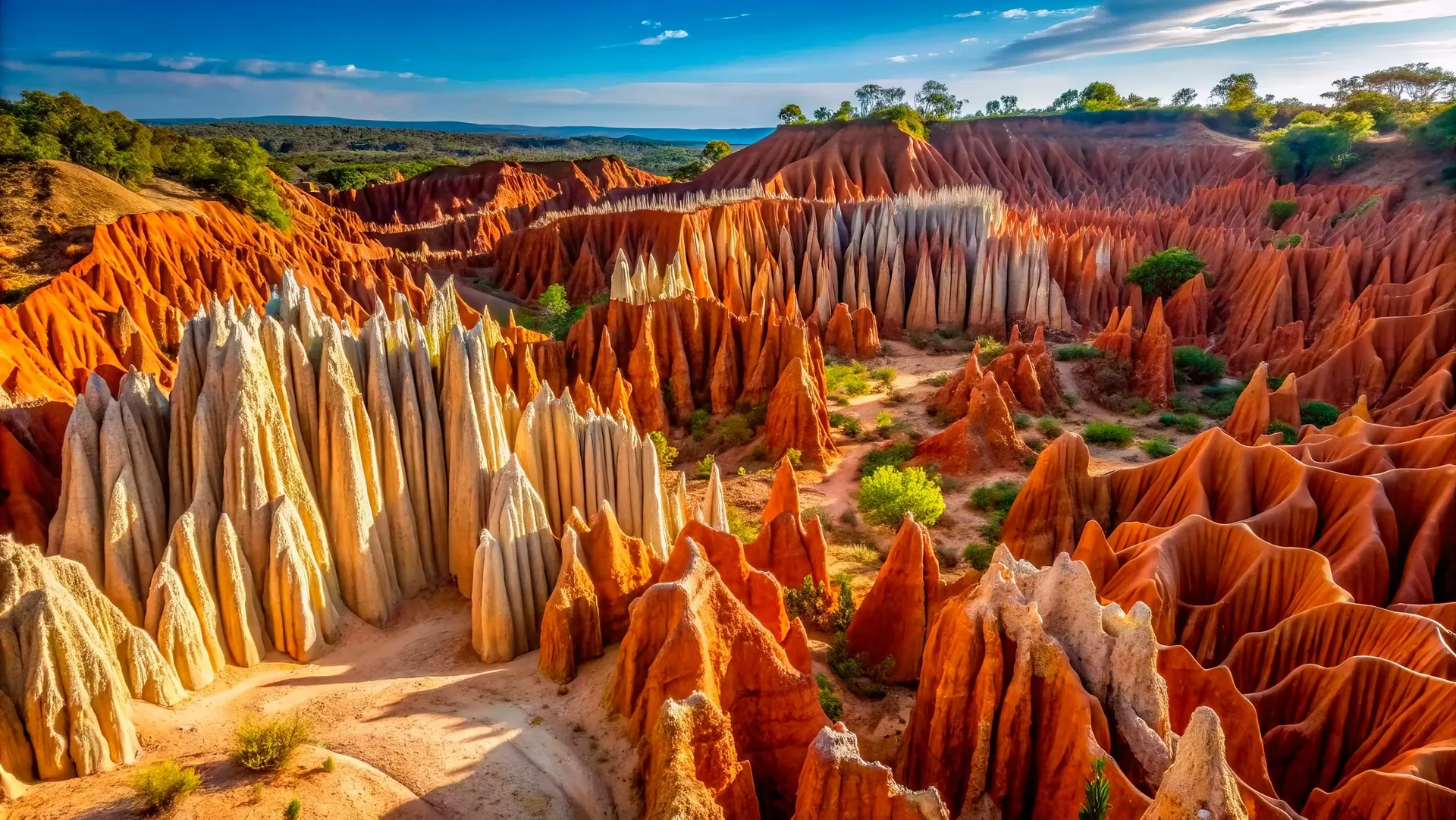
Fascinating Red Tsingy (Tsingy Rouge): An excursion to unique geological formations of red laterite and sandstone. These sharp, wind and rain-shaped rock needles create a canyon in the midst of green landscape with bizarre structures that you won't see anywhere else in Madagascar.
Three Bays (Les Trois Baies) and Windsor Castle: An expedition in off-road vehicles along the coast to the bays of Baie des Dunes, Baie des Pigeons, and Baie de Sakalava. The trip combines relaxation on white sandy beaches with a climb to the rock viewpoint Windsor Castle, from where a panoramic view of the entire bay and Nosy Hara island opens up.