7 reasons to take a cruise to Busan, South Korea
South Korea is a country of great cuisine, culture and extraordinary experiences. Many travellers head to the capital, Seoul, for adventure, but the second largest city, Busan, has much to offer even the most discerning. The sights around the coast or the local specialties are certainly worth it. There are certainly many reasons to visit the city that played a big role in the Korean War.Come with us to see the 7 biggest ones.
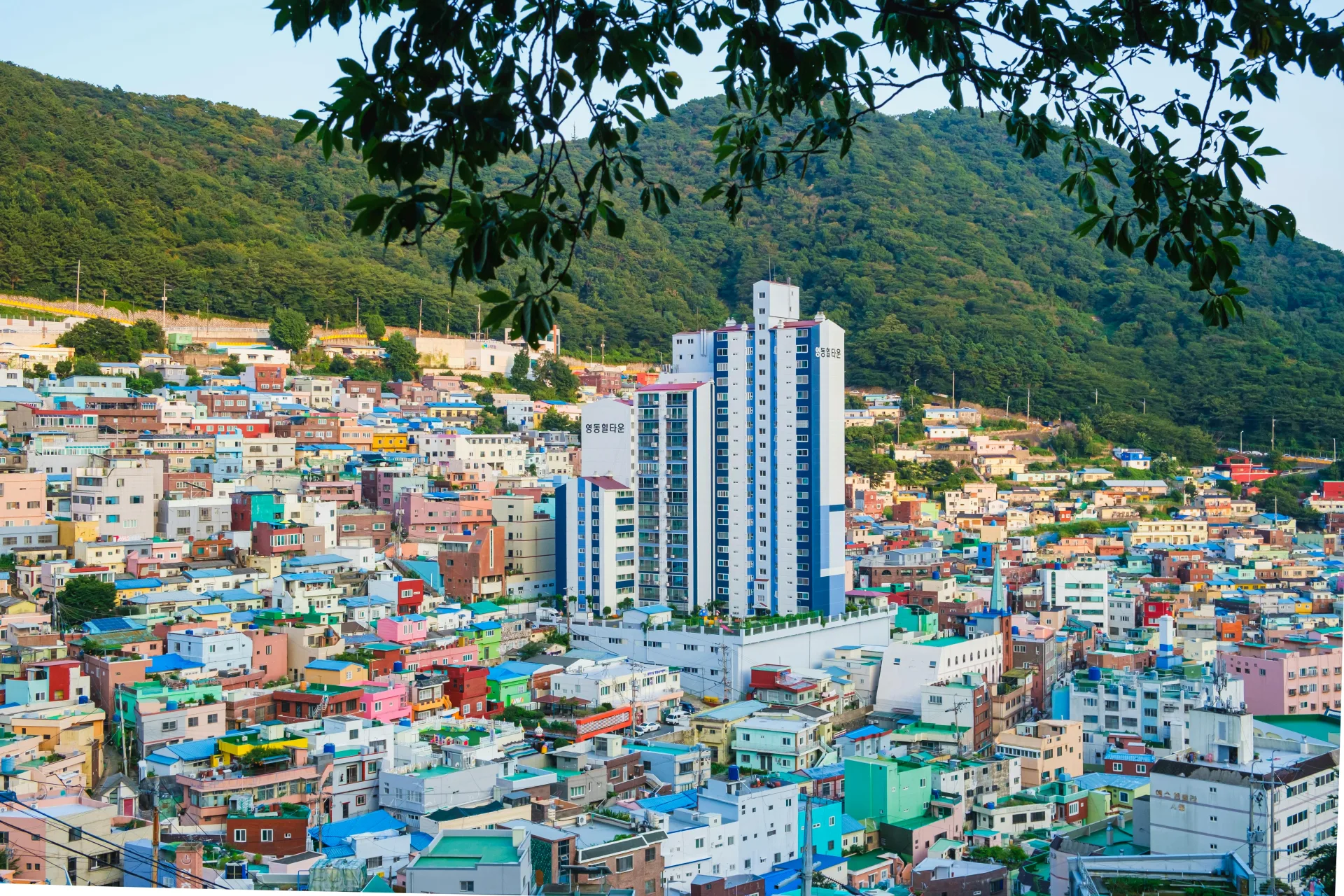
1. Gamcheon village playing with colours
Every house and colour is different, the alley is full of stories - this is Gamcheon village, one of the most charming places in Busan. It was originally a peasant neighbourhood, but after the Korean War it became a refugee haven. Every bit of space had to be used, so houses were built close together in layers.
But the village was decaying and for a long time nobody noticed it, until in 2009 a change came. Locals and artists started painting the houses with paint, adding sculptures, paintings and creating galleries, leading to the village now being one of the most visited areas in South Korea.
The terrain here can be a bit more challenging. Not only because the streets are narrow, but also because of the very hilly terrain in which the village is built. The view, however, is definitely worth it. And those who don't want to walk the alleys can go to the local cafes, which the Koreans are specialists in.

2. Modern beaches between skyscrapers and mountains
There are few places in the world where you can find a combination of skyscrapers, beautiful mountains and beaches full of life. Busan is home to South Korea's most popular and famous beach - Haeundae Beach. The beach is the center of summer events as it hosts film and music festivals or sporting events.
Gwangalli Beach is also popular, especially for the night view of the Gwangan Bridge, which is beautifully lit. For this reason, there are also many cafes or bars with a view of the sea, and the evening seating adds to the pleasant atmosphere. Fireworks and concerts are often held here.
However, Busan is also home to South Korea's historically first public beach, Songdo Beach, which opened in 1913. There's a glass observation deck that runs over the sea, or a cable car that takes you to the elevated park.


3. Buddhist temples
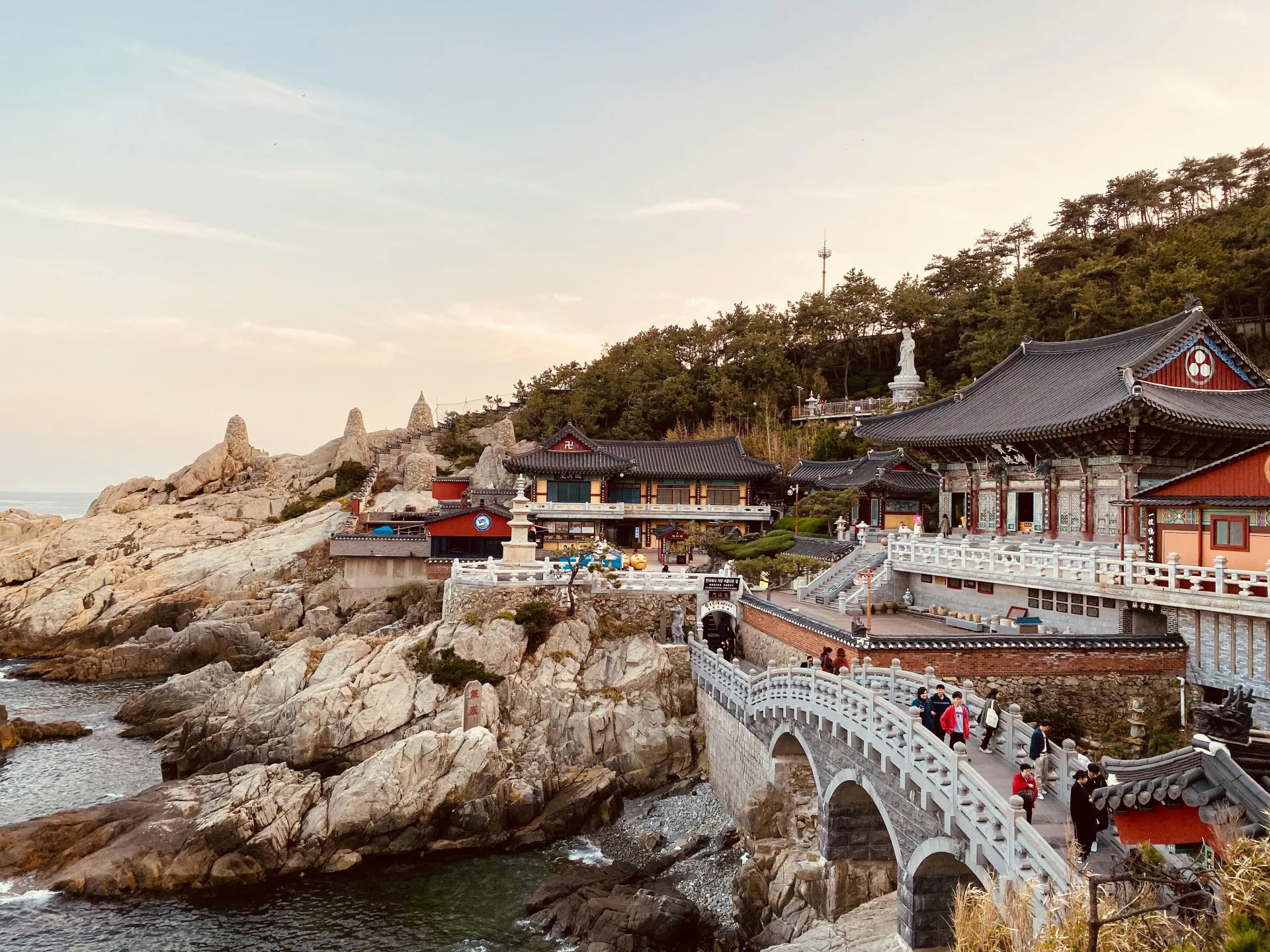
South Korea, in terms of religion, has the largest representation of Christians. But Busan is a Buddhist area and on the coast or in the mountains around the city you will find beautiful ancient Buddhist temples. One of them is the famous Haedong Yonggungsa. This temple is built on a cliff, which makes it a true rarity.
Its name can be translated as the Dragon Temple, and it is for this reason that it is protected by one dragon. In the temple there are also statues of 4 lions, which symbolize joy, sadness, happiness and anger.
The Beomeosa Temple, on the other hand, is located in the Geumjeongsan Mountains, and can be reached via trails that lead through smaller temples. Beomeosa is one of the most important Buddhist temples in South Korea and is the centre of the Jogye Order. The temple complex is large and consists of a main courtyard, pagodas, meditation halls and gates.
For example, the Jogyemun gate serves as a low door that can only be passed through when one bends down, emphasizing the need to remain humble. The gateway, where the stone columns match the wooden ones, shows the architectural style of the middle Joseon Dynasty and therefore plays an important role for the study of past wooden buildings.

4. Coast from riding capsules
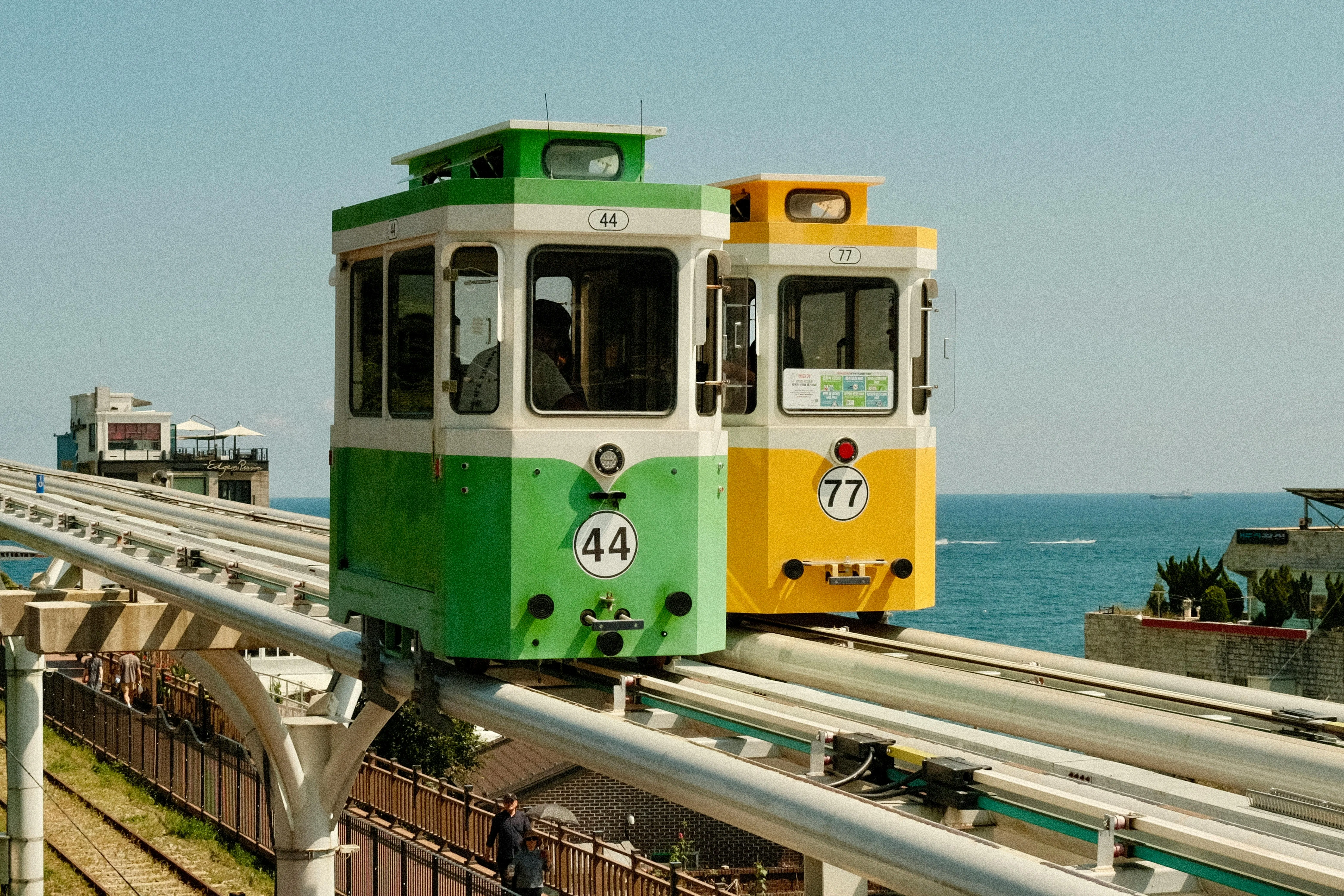
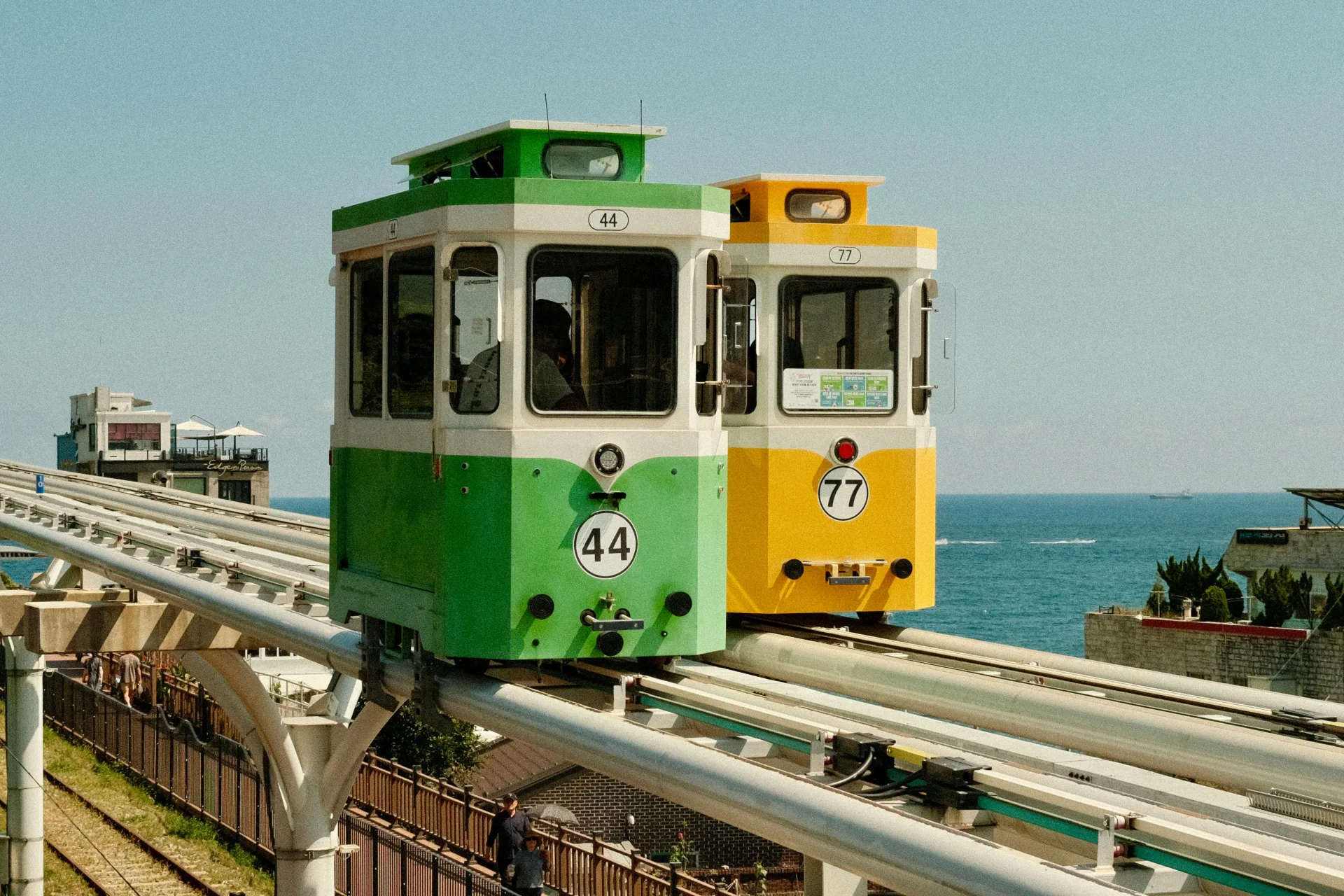
A unique view of Busan's coastline is offered by the colourful riding capsules. The romantic capsule ride on the elevated monorail along the coastline in Haeundae Blueline Park is approximately 2.3 km long, the capsules travel at around 4 km/h, making the ride approximately 30 minutes long.
It is advisable to make a reservation in advance and you do not have to share the capsule with strangers. The best views are at sunset, so these times sell out quickly. You can board at two stops: Mipo Station is at Haeundae Beach, Cheongsapo is further out of town. So if you want to experience the sunset over the coast, choose the route from Cheongsapo back to the city.
The train takes you across the coast to Seongjeong Station in a similar style. From there, it's just a short walk to the Haedong Yonggungsa Buddhist Temple.

5. Gastronomy playing with colours
Korean cuisine is not only supposed to impress with its taste, but it will definitely impress you with its appearance. The colours even have their symbolism. The cuisine is based on the principle of the five colours, which are rooted in Taoism and connect food with nature, health and overall harmony. Color always symbolizes the world side, natural element and organ:
White (west / metal / lungs) → rice, tofu, garlic, onions
Black (north / water / kidneys) → black beans, sesame, mushrooms, seaweed
Red (south / fire / heart) → chili peppers, gochujang (fermented paste), red dates
Green (east/wood/liver) → green vegetables, cucumbers, spinach, herbs
Yellow (center/earth/spleen and stomach) → pumpkin, soybeans, egg yolk, corn
In every restaurant you will surely see basic dishes that will always please every lover of Korean cuisine. These include:
Kimchi- fermented vegetables, usually cabbage or radish, flavored with chili, garlic and ginger. It is a staple of Korean cuisine and is served with almost every meal
Bibimbap- a bowl of rice with colorfully arranged vegetables, meat, ox eye and gochujang paste. Before eating, everything is mixed together to create a tastefully and visually harmonious mixture
Bulgogi - marinated beef grilled on a griddle or over a fire. The marinade is subtly sweet thanks to soy sauce, pear puree and sesame
Samgyeopsal- grilled pork belly that people prepare themselves at the table. The meat is wrapped in lettuce leaves with garlic, chilli paste and vegetables
Tteokbokki- spicy rice rolls in a red gochujang chilli paste sauce. A typical street food that is filling and slightly addictive
In Busan you will certainly find many street stalls or markets. As it is a large port city, you will see fish specialties at every turn. If you want a specific experience, be sure to head to the Jagalchi Fish Market.


6. Iconic Busan Tower
Another great view of the city can be seen from the Busan Tower, which rises 120 metres above Yongdusan Park. The tower was built in 1973, but today it is no longer used for broadcasting signals as it was in the past - it serves as a form of entertainment for tourists and locals alike. When it was built, it symbolized hope, progress and the unity of a city devastated by war.
The tower can be reached even at night, when it offers a great view of the living city. On the lower floors there are interactive attractions to keep visitors entertained before going up. In addition, traditional and unique souvenirs can be purchased or postcards can be sent from here.

7. Explore the alleys
South Korea is known for many things. Whether it's the themed cafes where you can have special drinks or food at an enclosure with, for example, sheep or meerkats, or the karaoke rooms where you can have a good time. You can get lost in interesting shops with accessories or clothes.
Everyone will be interested in the renowned Korean cosmetics, which are here really for a few crowns. The South Koreans have always been very inventive and are ahead of the curve in certain things. Even ordinary convenience stores are worth a try, because you can always find something special that is not on our market.
Relax in the park, listen to the local sounds or try the local metro, which is not as complicated as it sounds. But if you take the local bus service, be careful. Minibuses really do fly everywhere and experienced drivers go fast.


Riviera Tour cruises with transportation and delegate to Busan
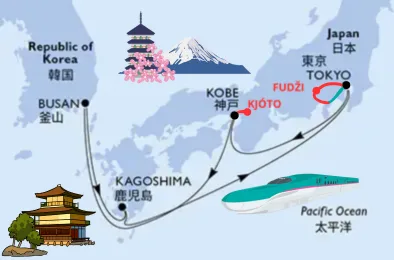
Join us on a cruise to Busan. This year and next year you can go there with us on the following cruises:
715 - May Cruise Japan and South Korea (FIRST MINUTE news)
Date: 6 May - 18 May 2026
Price: 97 990 Kč