922 - Svalbard and the Arctic Circle
Northern Europe, 8/5/2027 – 8/21/2027


922 - Svalbard and the Arctic Circle
Northern Europe , August 5, 2027 - August 21, 2027
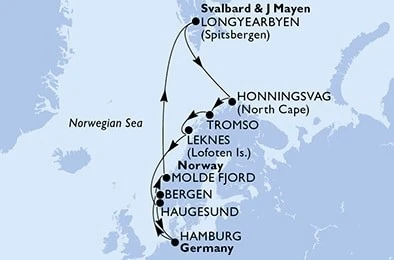
Your cruise route
1. day
Departure by RIVIERA TOUR coach to the port. On the way, our delegate will introduce you to life on board MSC Cruises ships, organizational instructions and the tour programme. During the journey, we have a cold dinner, hot breakfast and refreshments ready for you.
Boarding points: Vsetín, Nový Jičín, Frýdek-Místek, Ostrava, Hranice, Olomouc, Prostějov, Vyškov, Brno, Velké Meziříčí, Jihlava, Humpolec, Praha, Ústí nad Labem

2. day
Upon arrival at the port, check-in and boarding follows. In the afternoon, a tour of the ship, accommodation and a safety drill before departure. Don't miss the first departure from the port. Also, don't miss the first served dinner to enjoy the superb Italian cuisine. After dinner, we will visit the ship's theatre and finish the evening with a drink at the bar.
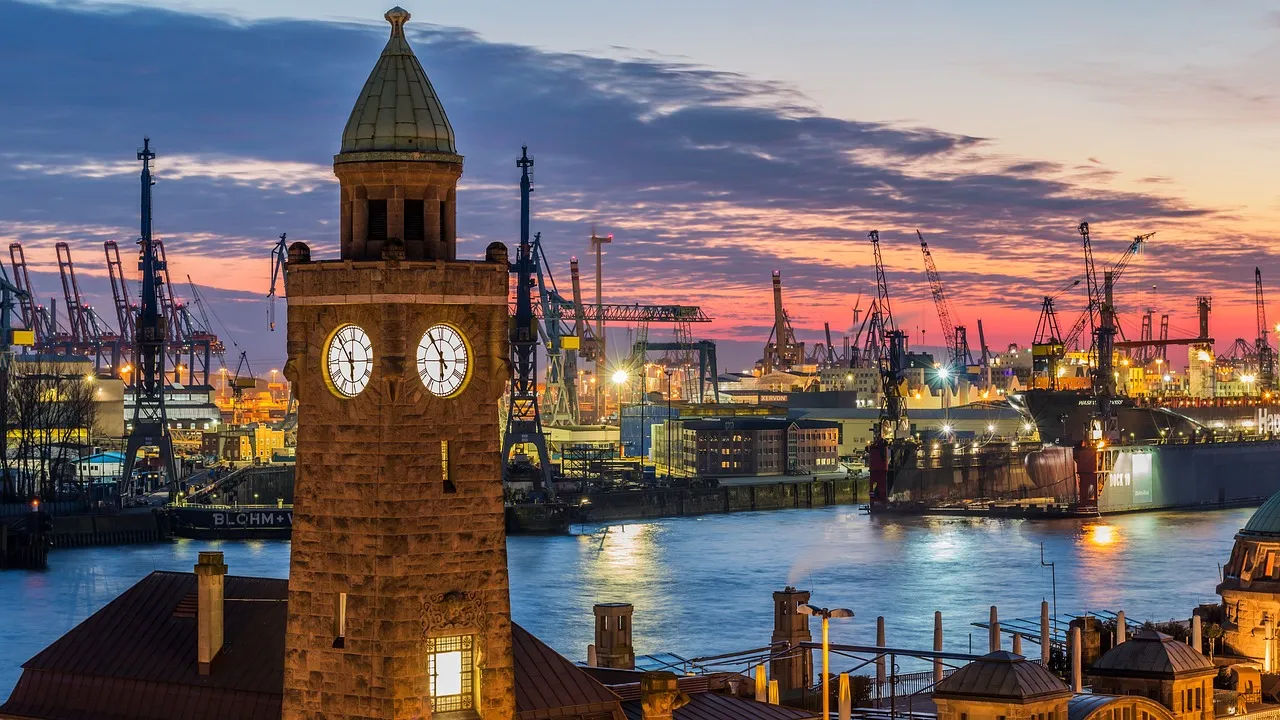
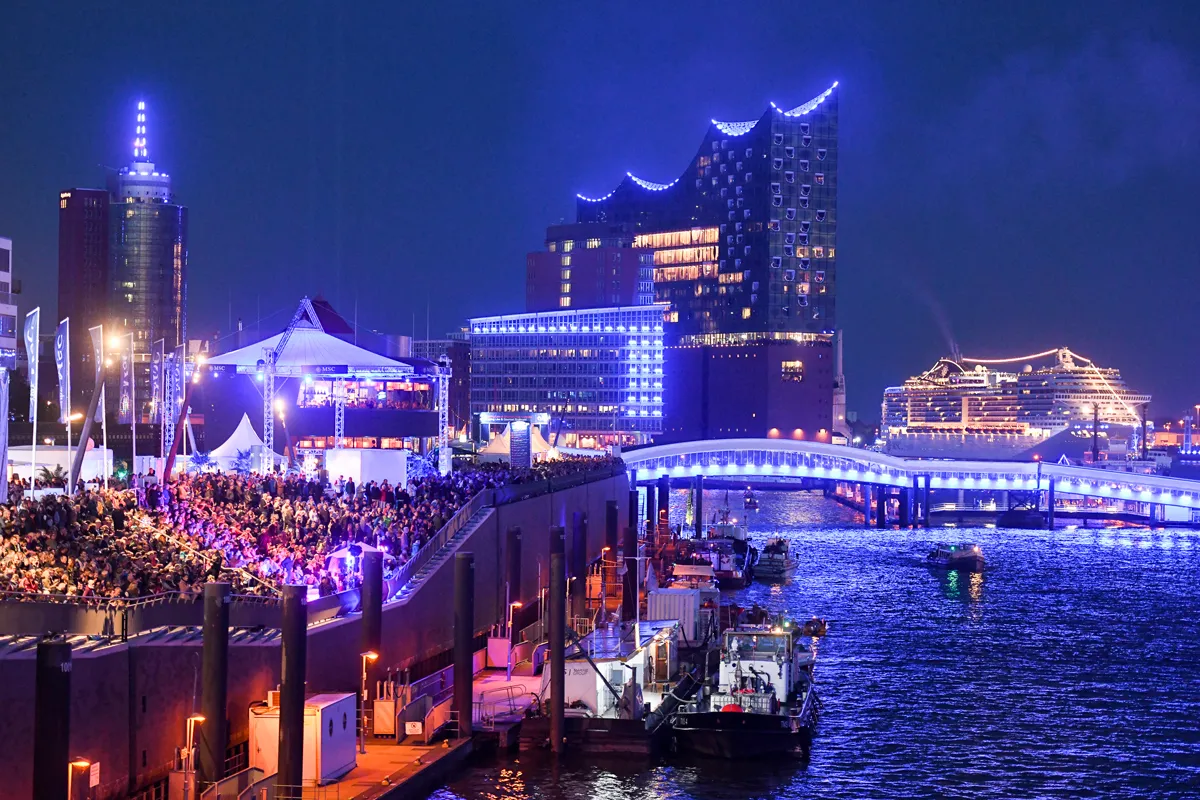


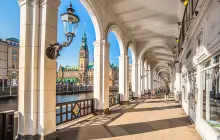
Hamburg, officially known as the Free and Hanseatic City of Hamburg, is Germany's second-largest city and has a rich history as a significant port and trading hub. Established as part of the Holy Roman Empire in the 9th century, Hamburg gained prominence in the medieval period as a key member of the Hanseatic League, a powerful commercial and defensive confederation of merchant guilds and market towns in Northwestern and Central Europe. The city's strategic location on the River Elbe, which flows into the North Sea, allowed it to flourish as a center for trade, attracting merchants from across Europe and facilitating the exchange of goods and culture.
Throughout its history, Hamburg has demonstrated resilience in the face of adversity. The city endured significant destruction during World War II, with extensive bombing raids causing widespread damage. Despite this, Hamburg rebuilt and modernized in the post-war period, restoring its status as a prominent global port and commercial center. The city's maritime heritage and economic prowess have continued to thrive, supported by its expansive port facilities, which are among the largest in Europe. Today, Hamburg is celebrated for its vibrant cultural scene, historic architecture, and enduring legacy as a free city that has maintained its independence and unique character throughout centuries of change.
3. day at sea
4. day
Bergen, whose unofficial name is "the gateway to the fjords", has been predestined by its location since time immemorial to be a meeting point for trade in northern Europe. In the 11th century, it was admitted to the Hanseatic League of cities in the North Sea and Baltic Sea region, which at the height of its power claimed a trade monopoly in this area. A tourist attraction is the cable car ride that takes you 320 metres above the city rooftops. You will find yourself on Mount Fløyen, from where you can enjoy a magnificent view of the fjord, Bergen and its mountainous surroundings. In the city, you can also find the 12th-century Church of Our Lady or the harbour fortress Bergenhus, which was damaged during World War II when a German warship exploded at its walls. An interesting feature is the Leprosy Museum, housed in a former sanatorium where this disease was still treated in the 20th century. The local aquarium or the harbour fish market, renowned for selling whale meat, are also worth a visit.


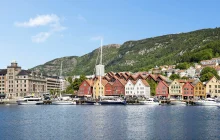


Bergen, located on the southwestern coast of Norway, is one of the country’s oldest and most historically significant cities. Founded in 1070 by King Olav Kyrre, Bergen quickly became a center for trade, particularly in fish and other goods. During the Hanseatic period (14th–16th centuries), Bergen was a vital hub for the Hanseatic League, a powerful medieval trading confederation. The Bryggen Wharf, now a UNESCO World Heritage Site, was the heart of this trade and is a lasting symbol of Bergen’s rich maritime history.
Over the centuries, Bergen has faced challenges such as fires, which frequently tore through its wooden architecture, and German occupation during World War II. Despite this, the city has retained its cultural and historical charm. Today, Bergen is known as the “Gateway to the Fjords” for its proximity to Norway’s stunning fjord landscapes, and it remains a vibrant cultural hub. With its blend of medieval heritage, scenic beauty, and modern city life, Bergen continues to captivate visitors and locals alike.
5. day
Molde is a picturesque town on the west coast of Norway, renowned for its location between fjords and mountains. It is nicknamed the "City of Roses" and its greatest attraction is the Varden viewpoint, from where the famous panoramic view of more than two hundred mountain peaks opens up, as well as Molde Cathedral, the pleasant town centre by the harbour and the proximity of natural wonders such as the Atlantic Road and the dramatic landscape of the Norwegian fjords.
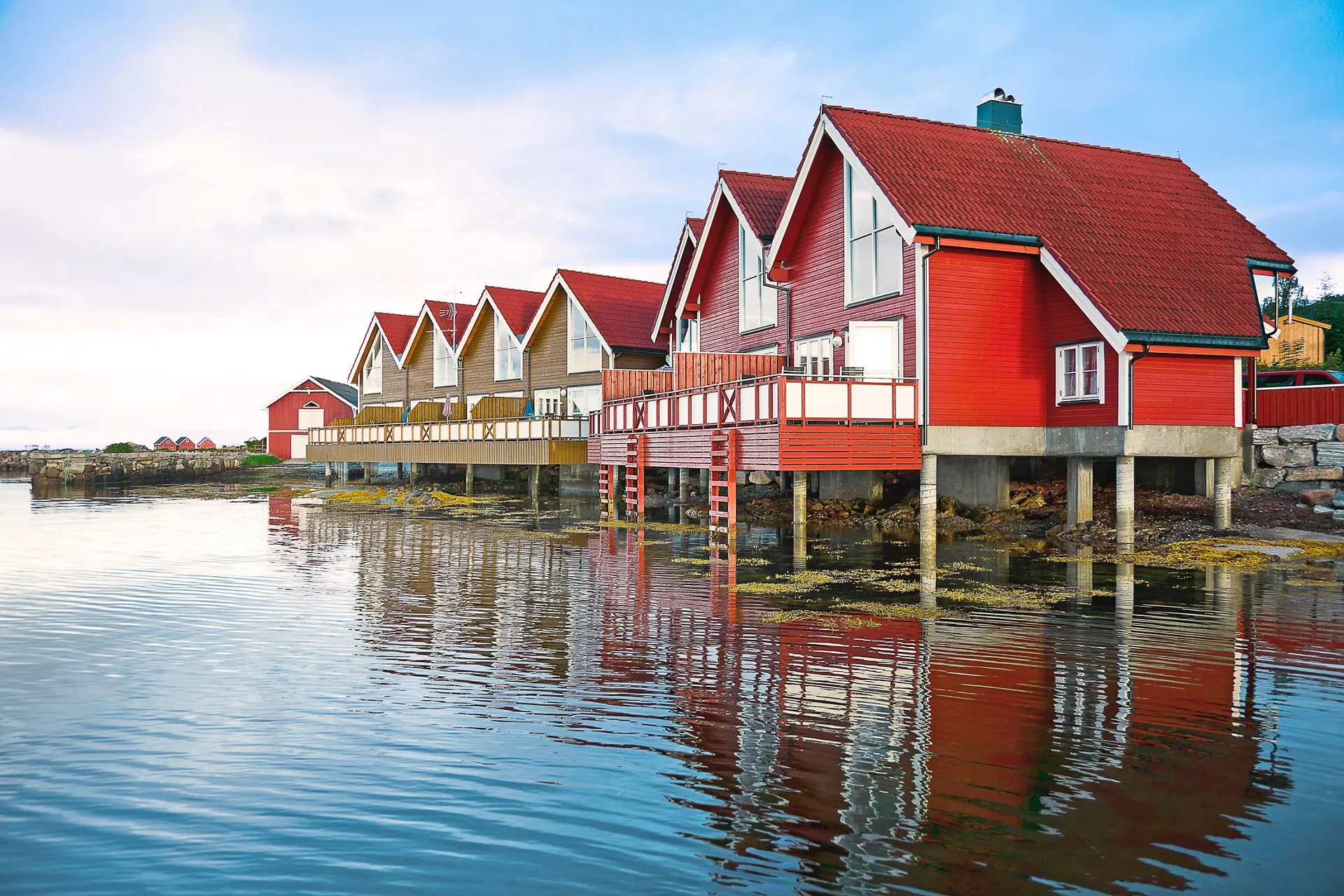

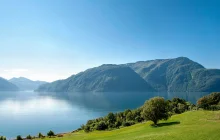
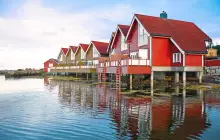
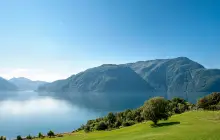
The Port of Molde, also known as Molde Fjord, is situated in Romsdal, Norway. Its history dates back to the late 19th century when it was established as a trading post. The port was initially used for the export of timber and fish, which were the main economic activities in the region. Over the years, it has expanded and developed into a major hub for cargo and passenger services.
In the 20th century, the Port of Molde saw significant growth, becoming a key gateway for the export of goods from Norway to international markets. The port played a crucial role during World War II, serving as a strategic location for the Allies. In the contemporary era, it serves as a crucial stopover point for cruise ships, reflecting its importance in Norway's tourism industry. The port is also known for its stunning views of the Molde Fjord and the surrounding mountains, making it a popular tourist destination.
6. - 7. day at sea
8. day
Longyearbyen is the largest town on Svalbard, situated between the Arctic Circle and the North Pole. It lies on the largest island, Spitsbergen. It is located in an inlet of the Isfjorden fjord, on the shore of the Adventfjorden fjord, named after the word advent, Latin for arrival. The town stretches along the coast and partly fills the Adventdalen valley along the Longyearelva river, which flows from two glaciers. Thanks to the Gulf Stream, the fjord never freezes. The town has around 2,144 inhabitants, mostly Norwegians and Russians. It is the northernmost town in the world, and nearby is also the northernmost village in the world. The delegate participates in the optional MSC excursion. The excursion must be booked when signing the travel contract.
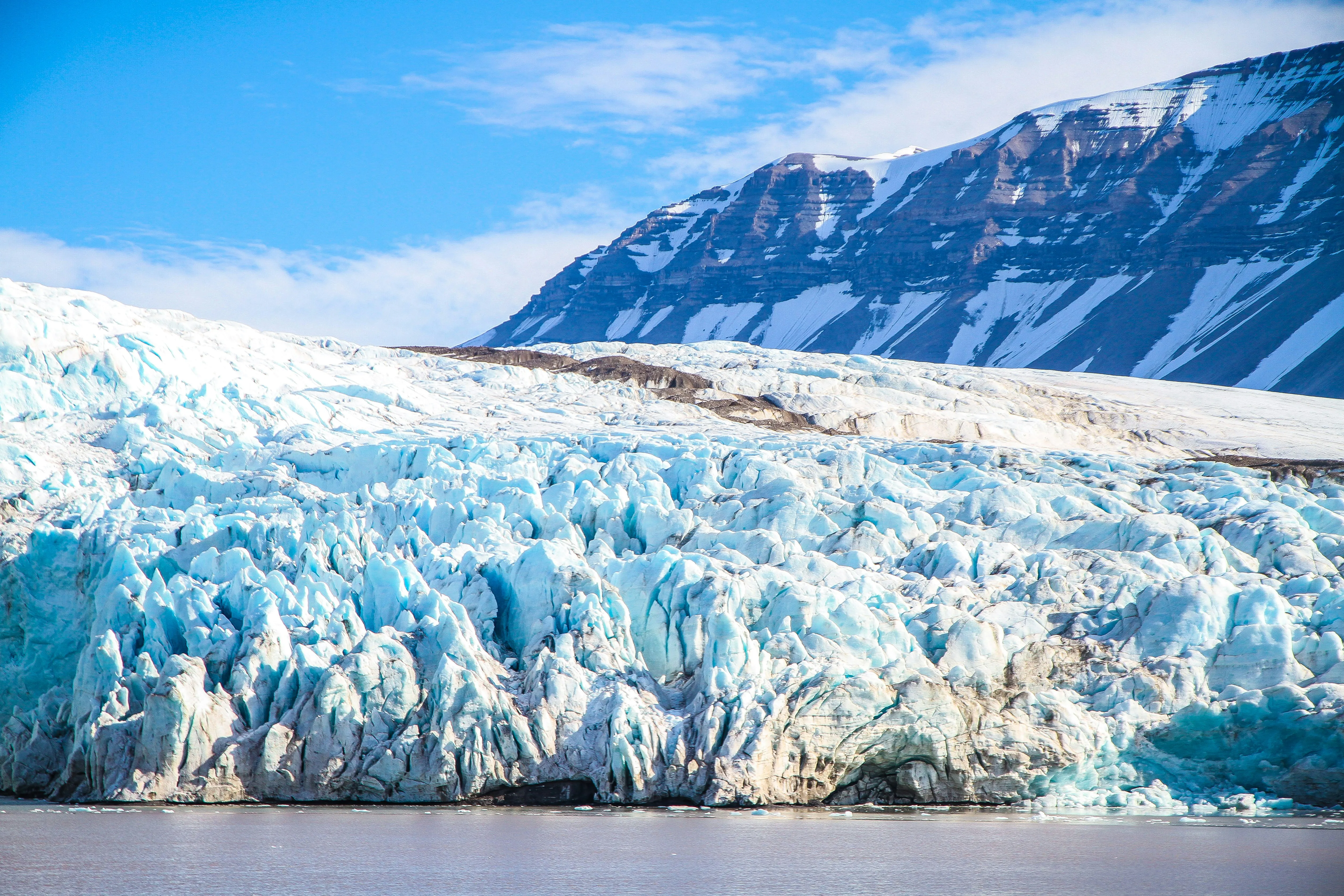
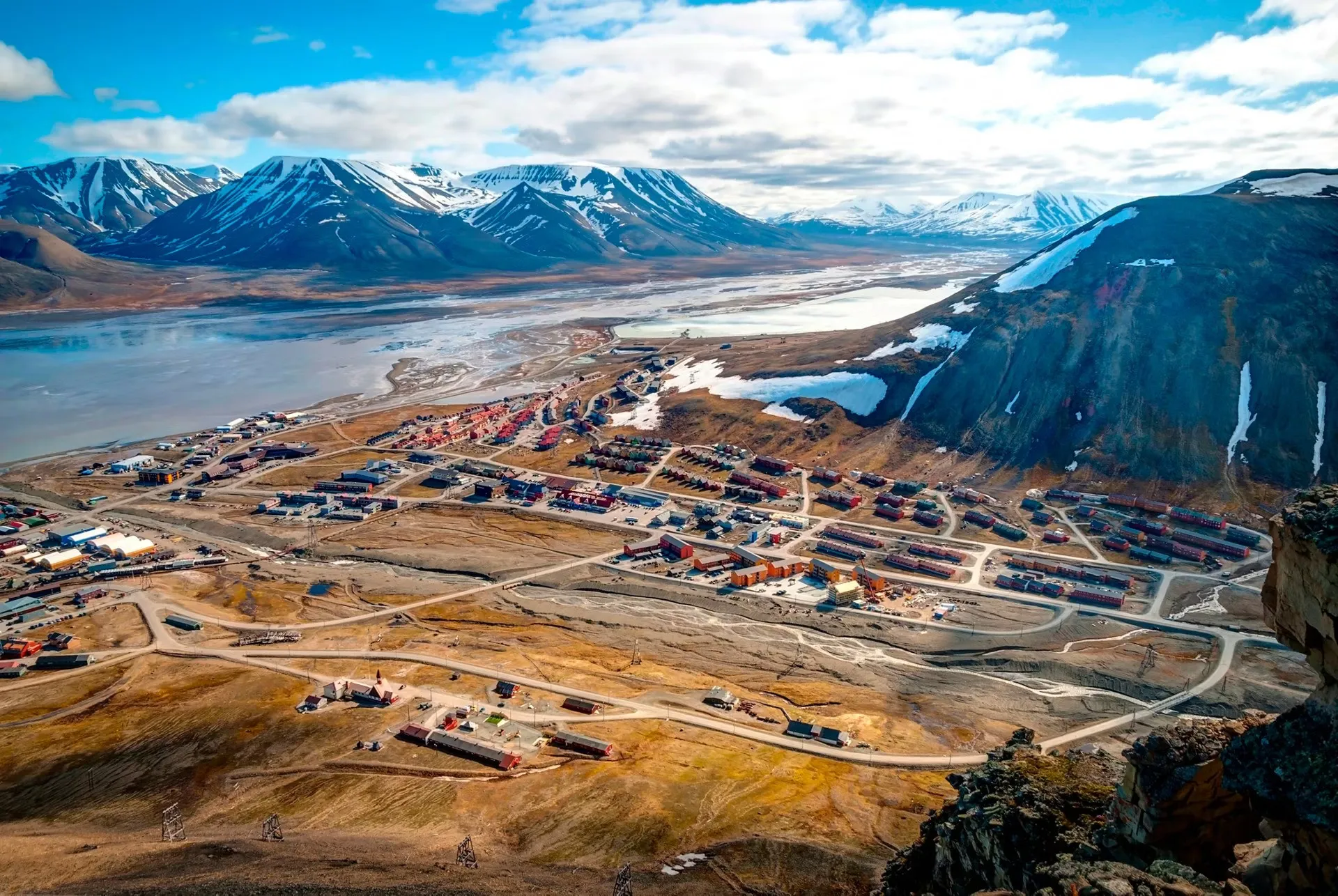

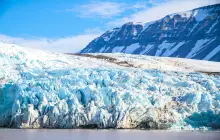

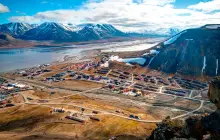
The port of Longyearbyen in Svalbard, named after its founder John Munro Longyear, was established in 1906 as part of the Arctic Coal Company. Its primary purpose was to serve as a base for coal mining activities in the region. The port played a pivotal role in the economic development of the town, facilitating the export of coal and the import of mining equipment and supplies.
During World War II, the port was destroyed by German forces in 1943, but was later rebuilt. With the decline of coal mining in Svalbard, the port has evolved to support other economic activities, primarily tourism and scientific research. Today, the port of Longyearbyen is a vital link for people and goods moving in and out of the Arctic region.
9. day at sea
10. day
The North Cape is an area of 924 km² featuring fascinating and rugged nature on the coast of the Barents Sea. Nordkapp is the place where the waters of the Norwegian Sea, part of the Atlantic Ocean, and the Barents Sea, part of the Arctic Ocean, meet. The entire area is approximately 2,000 km from the North Pole. It owes its name to Captain Richard Chancellor from 1553. The area contains the settlements and tourist centres of Honningsvåg, Nordvågen, Kamøyvær, Skarsvåg, Gjesvær, Repvåg and Skipsfjorden. Nordkapp is usually presented in tourist guides merely as a cape, a promontory in the northern part of Norway, and is mistakenly considered the northernmost point of continental Europe (which is actually located a few kilometres away). The delegate participates in the optional MSC excursion. The excursion must be booked when signing the travel contract.

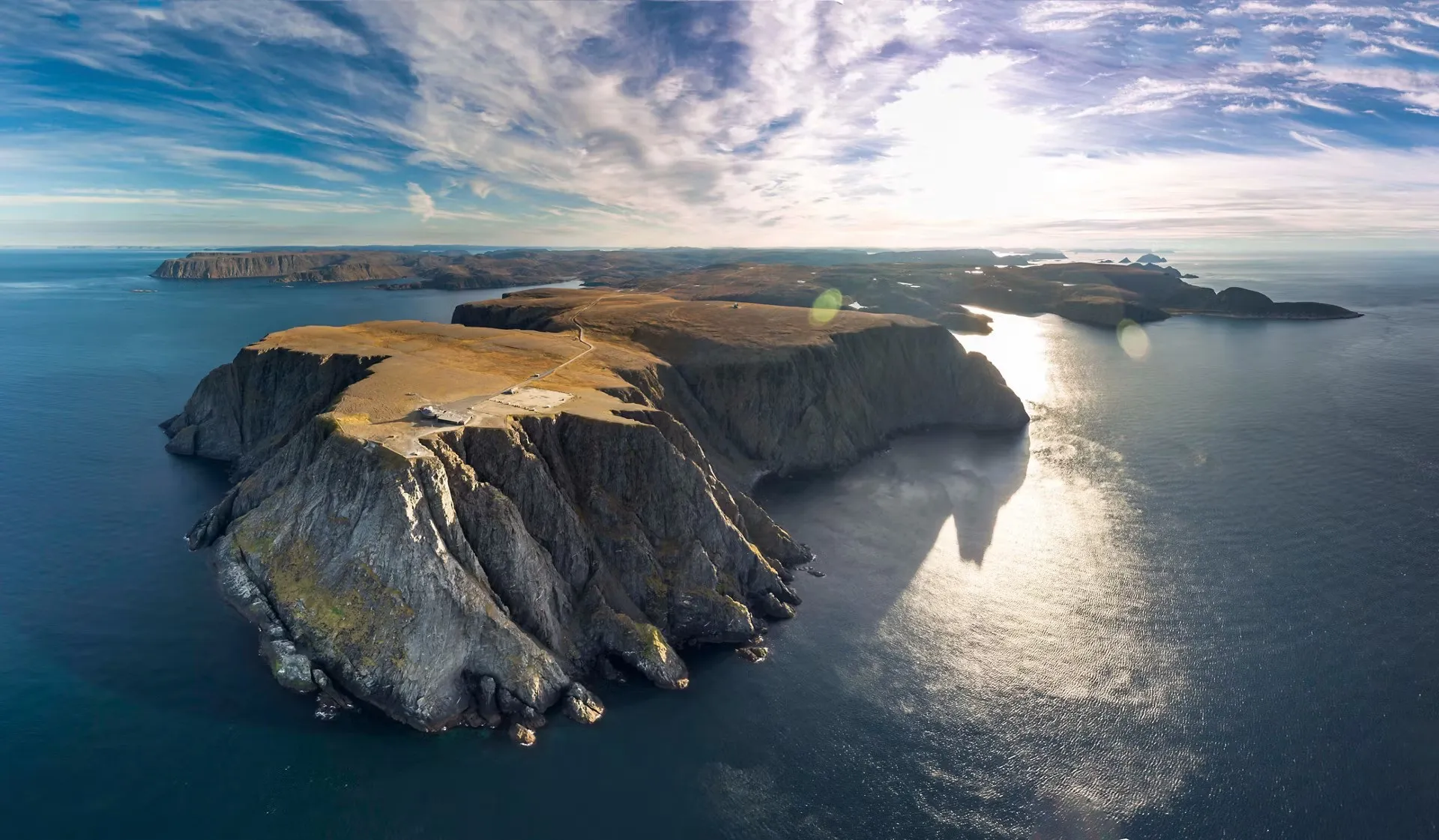
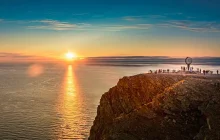
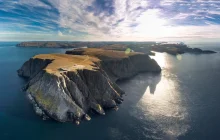
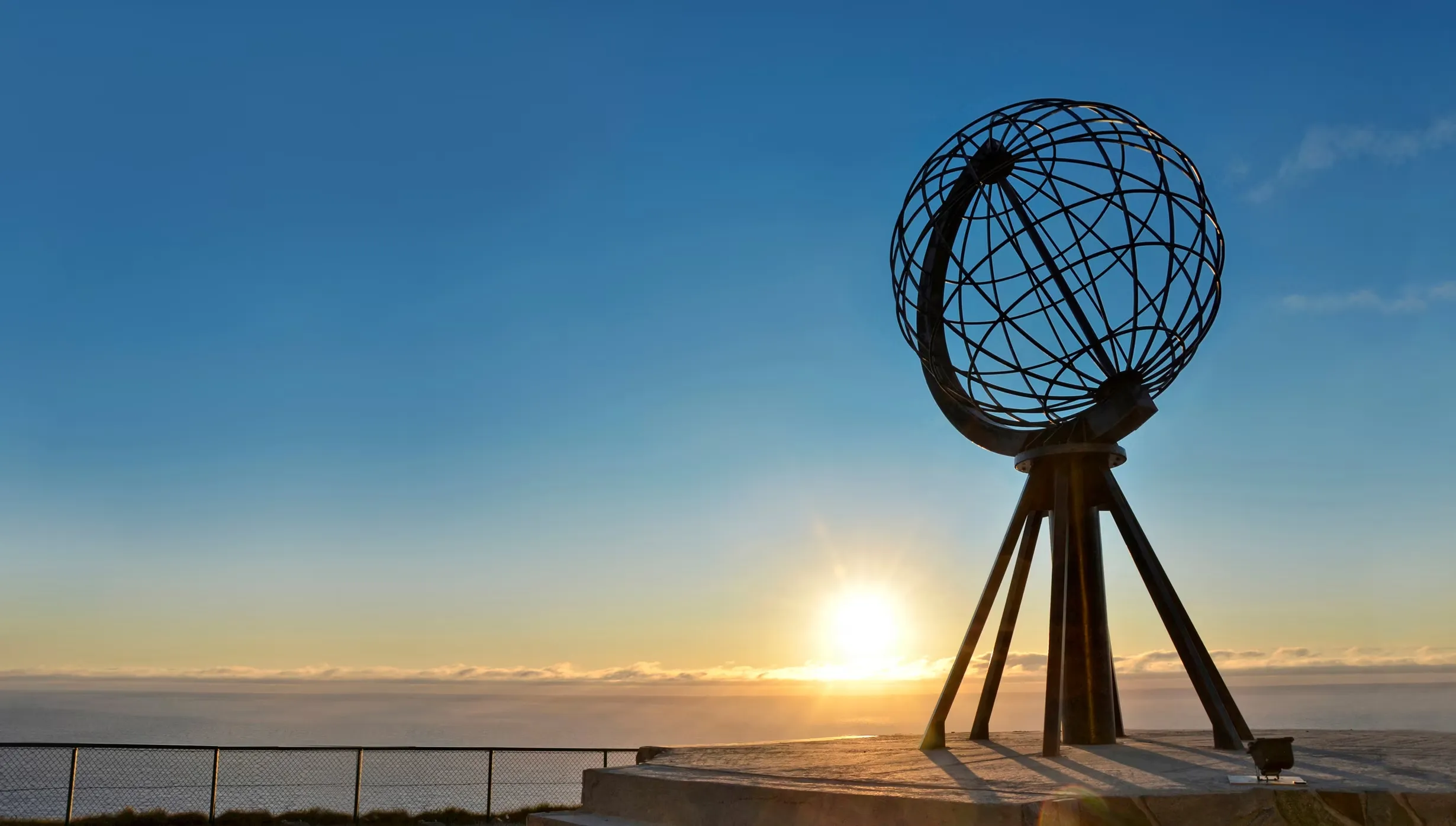
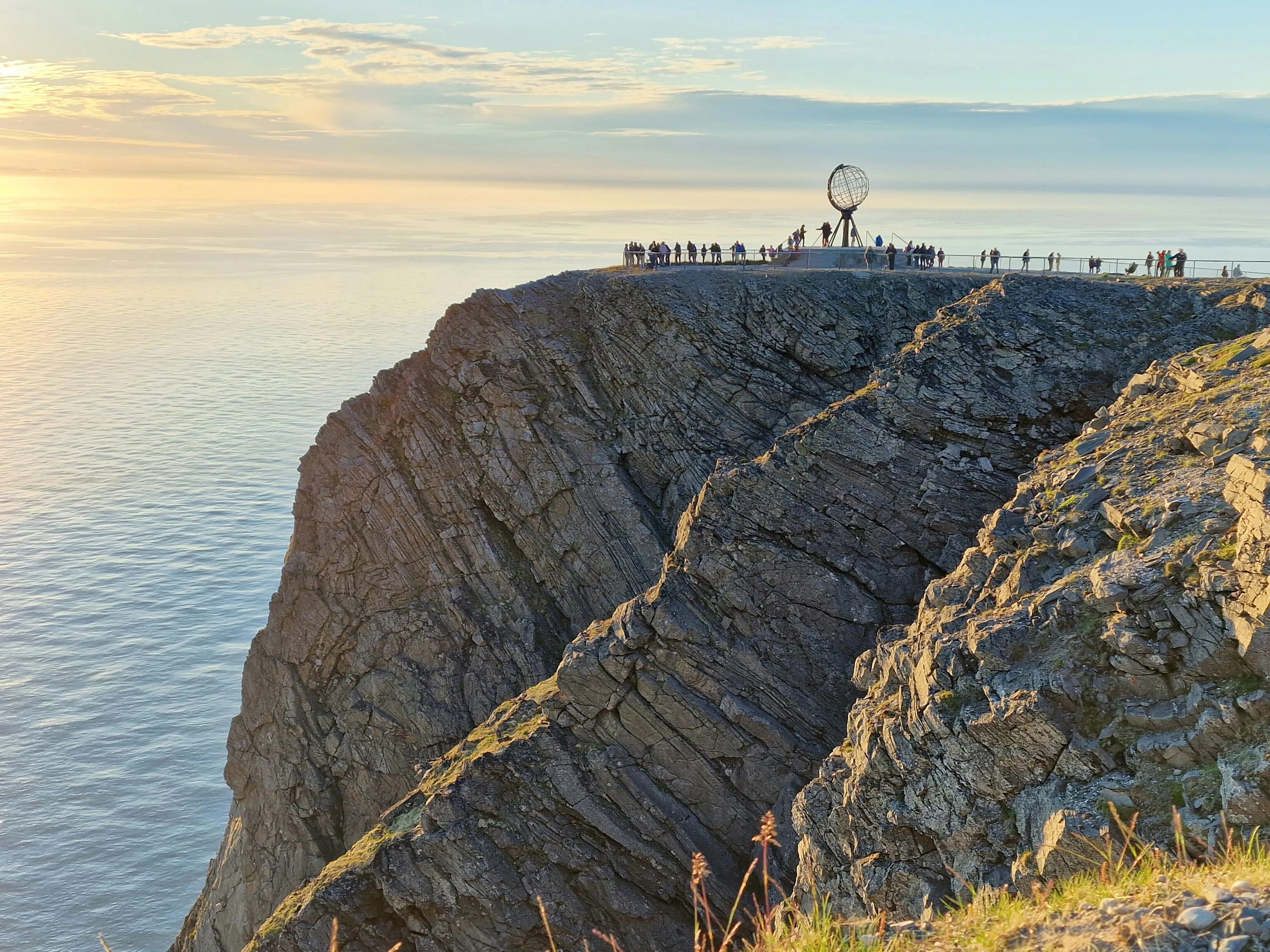
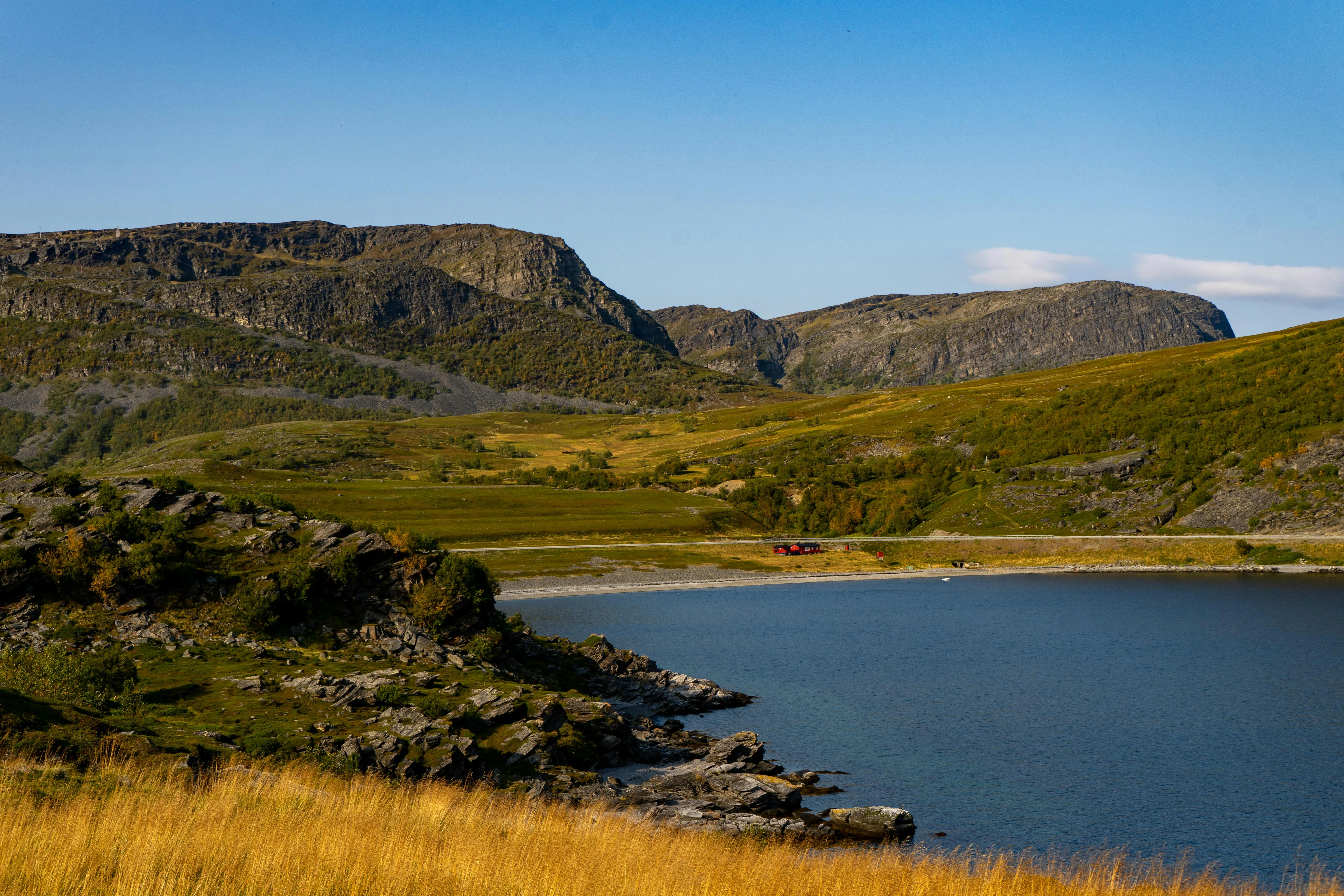
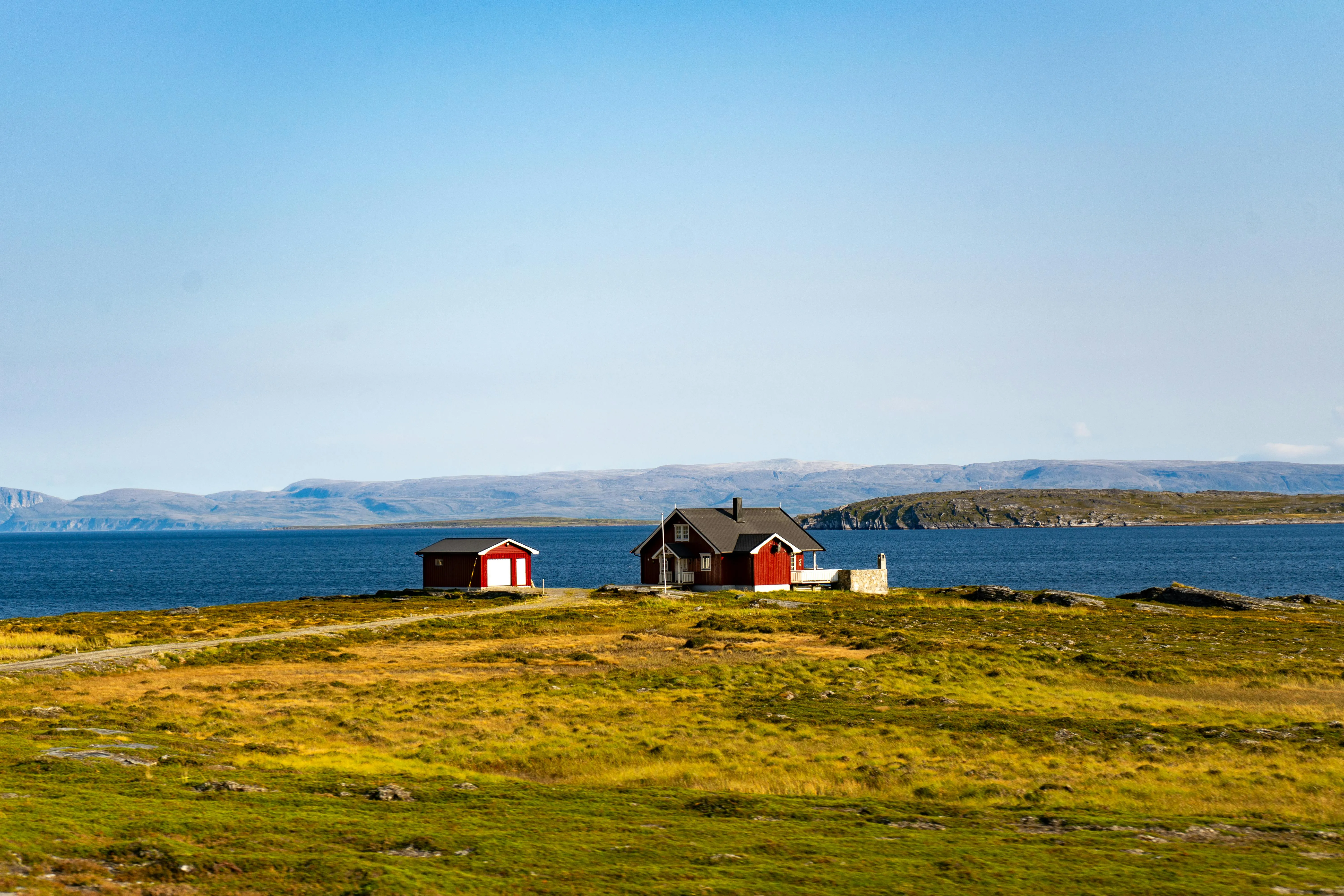
Honningsvåg, located in the Nordkapp Municipality of Norway, has a history deeply intertwined with its maritime environment and the fishing industry, which have been vital to the community's livelihood for centuries. Situated on the island of Magerøya, this remote location has long served as a crucial point for maritime activities in the Arctic region. Its position along traditional fishing routes made it an essential hub for seasonal fishing expeditions and trade, supporting a resilient local economy despite the harsh Arctic conditions.
The town faced significant challenges during World War II due to the German scorched earth policy, which led to the near-total destruction of Honningsvåg. As part of this strategy, retreating German forces destroyed buildings and infrastructure to prevent their use by advancing Allied troops. The town was painstakingly rebuilt after the war, with efforts focusing on restoring its role as a central hub for fishing and community life. Today, Honningsvåg stands as a testament to resilience, combining modern amenities with a rich historical legacy, and continues to serve as a gateway to the North Cape, attracting visitors from around the world.
11. day
Far beyond the Arctic Circle lies the city of Tromsø, the largest city in the vast polar regions of Scandinavia. The city is situated at the same latitude as Alaska, which is why it boasts several records – it is home to the northernmost university, brewery and cathedral in the world. Since the 1820s, the city has served as a maritime port in the Arctic Ocean. It was from here that explorers Amundsen and Nansen set out on their polar expeditions. Today, the city has around 65,000 inhabitants and is often called the Paris of the North for its beauty. The most prominent landmark of the city is the Ishavskatedralen, or Arctic Cathedral. It was built only in 1965 from concrete, designed by architect Jan Inge Hovig.
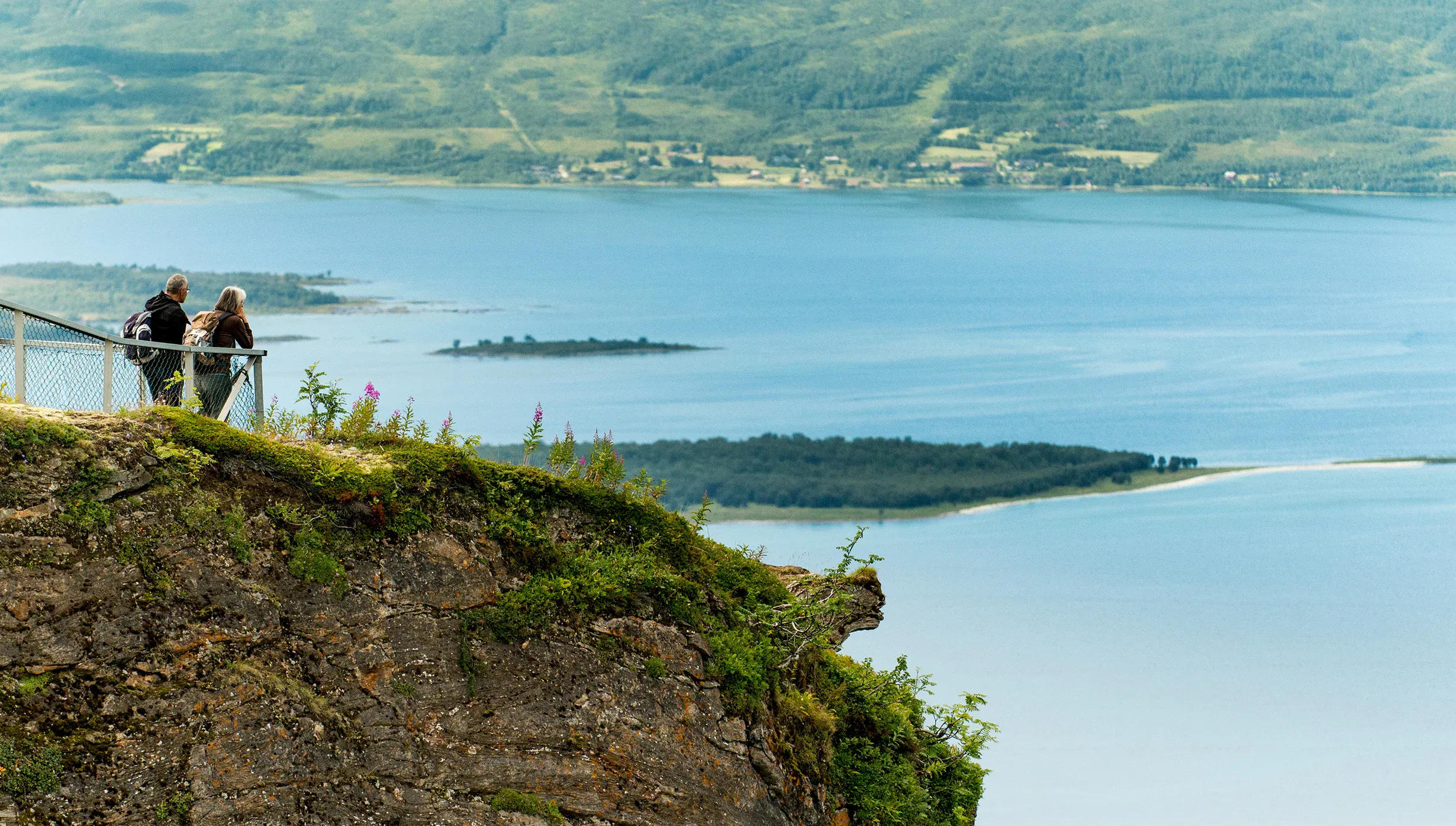
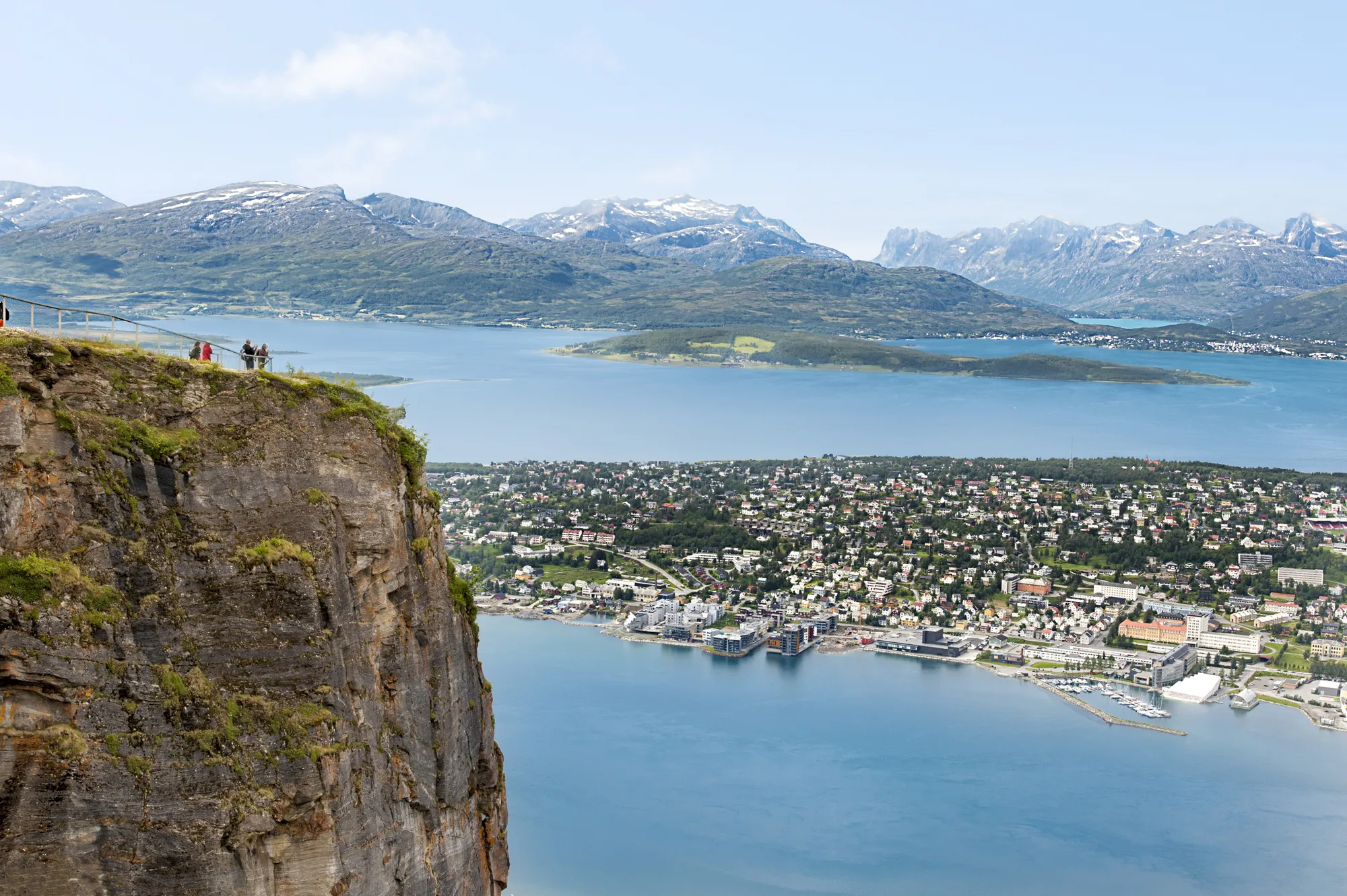
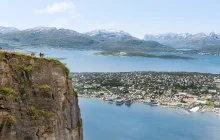
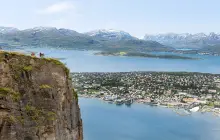
The port of Tromso, Norway, has a rich history that dates back to the 13th century when it was first established as a fishing village. In the 18th century, Tromso became an important base for Arctic expeditions, leading to its growth as a significant maritime hub. The strategic location of Tromso, well above the Arctic Circle, made it a crucial gateway for polar exploration and trade.
In the early 20th century, Tromso's port expanded further with the growth of the whaling industry. The industry's subsequent decline had a significant impact on the port, but it soon rebounded with the rise of the oil industry in the 1960s. Today, the port of Tromso continues to be a significant economic hub, with a focus on fishing, shipping, and tourism.
12. day
The port of Leknes, officially recognised since 1918, lies in the geographical centre of the Norwegian Lofoten archipelago and serves as a starting point for some of the most beautiful natural scenery in Scandinavia, including the renowned Haukland Beach with its white sand and turquoise water. From the port, you can set out on a hike to the highest peak of the island of Vestvågøy – Himmeltinden (964 m), from where a breathtaking view of the entire archipelago and the endless ocean unfolds. Near the port, you will also find the fascinating Lofotr Viking Museum in Borg, where you can explore a reconstruction of a Viking longhouse and taste traditional Viking dishes. Leknes is an ideal place for observing the midnight sun in summer and the Northern Lights in winter, making it a popular destination for cruise ships and recreational yachters alike.

The port of Leknes, located in the Nordland county of Norway, has a rich history that dates back to the 19th century. Leknes, as a port, was officially recognized in the year 1918. Being the trading and shopping center in the municipality of Vestvågøy, it rapidly developed as an important harbor for the local fishing industry and for the region's maritime trade.
Even though Leknes is not an ancient city with a long history, it has grown rapidly due to its strategic location. Its harbor is situated in the geographical middle of the Lofoten archipelago, which has made it a popular hub for transportation and logistics. Today, Leknes harbor is one of the busiest ports in Norway, catering to both cargo and passenger traffic. It has grown to become a key part of the local economy and a lifeline for the towns and communities in the region.
13. day at sea
14. day
The town of Haugesund in Rogaland county is a fascinating gateway to Viking history, where you can visit the national monument to the unification of Norway, Haraldshaugen, as well as the nearby authentic settlement in Avaldsnes. The town centre is adorned by one of the most beautiful Norwegian town halls in neoclassical style and the Dokken open-air museum, which faithfully depicts life in a 19th-century fishing port. The overall atmosphere is complemented by a stroll along the Smedasundet waterfront, where history naturally intertwines with the modern pulse of the city.
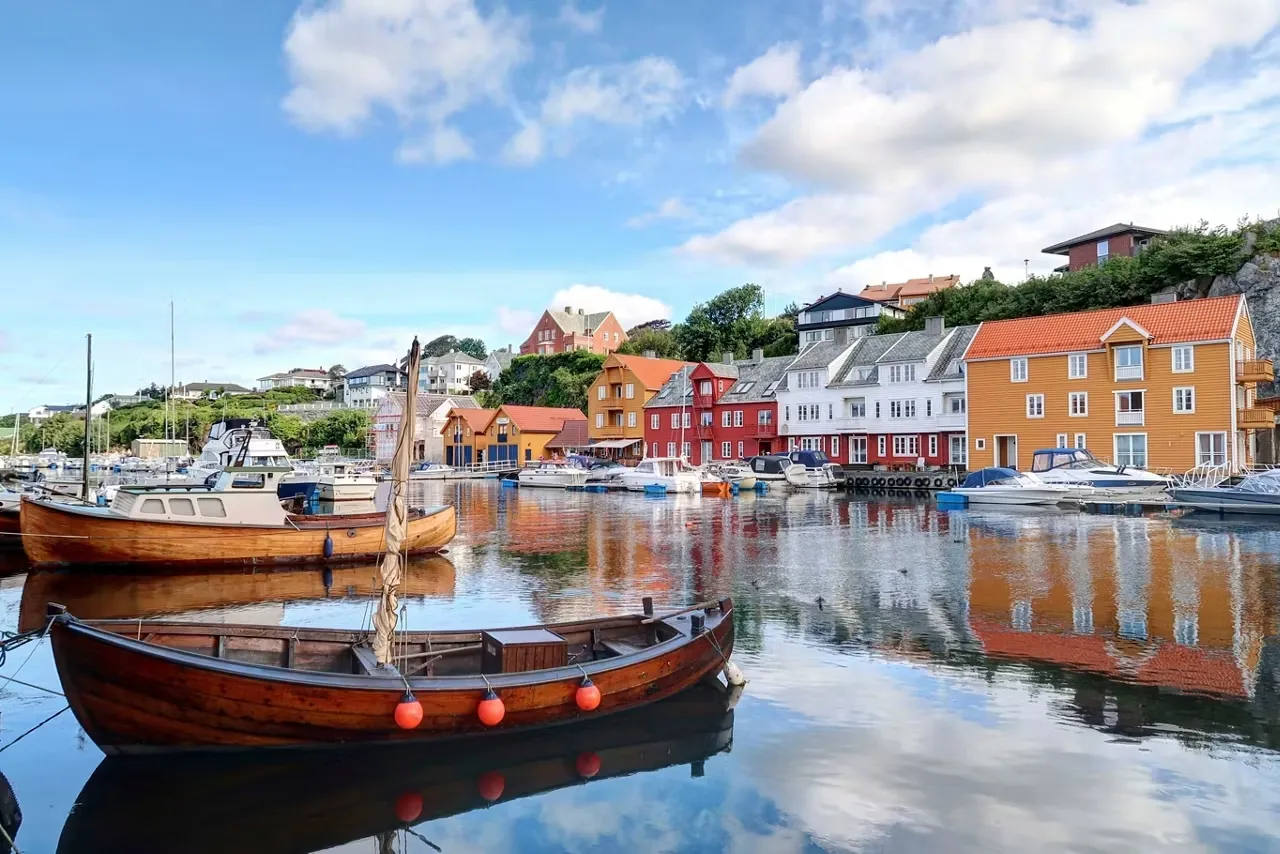
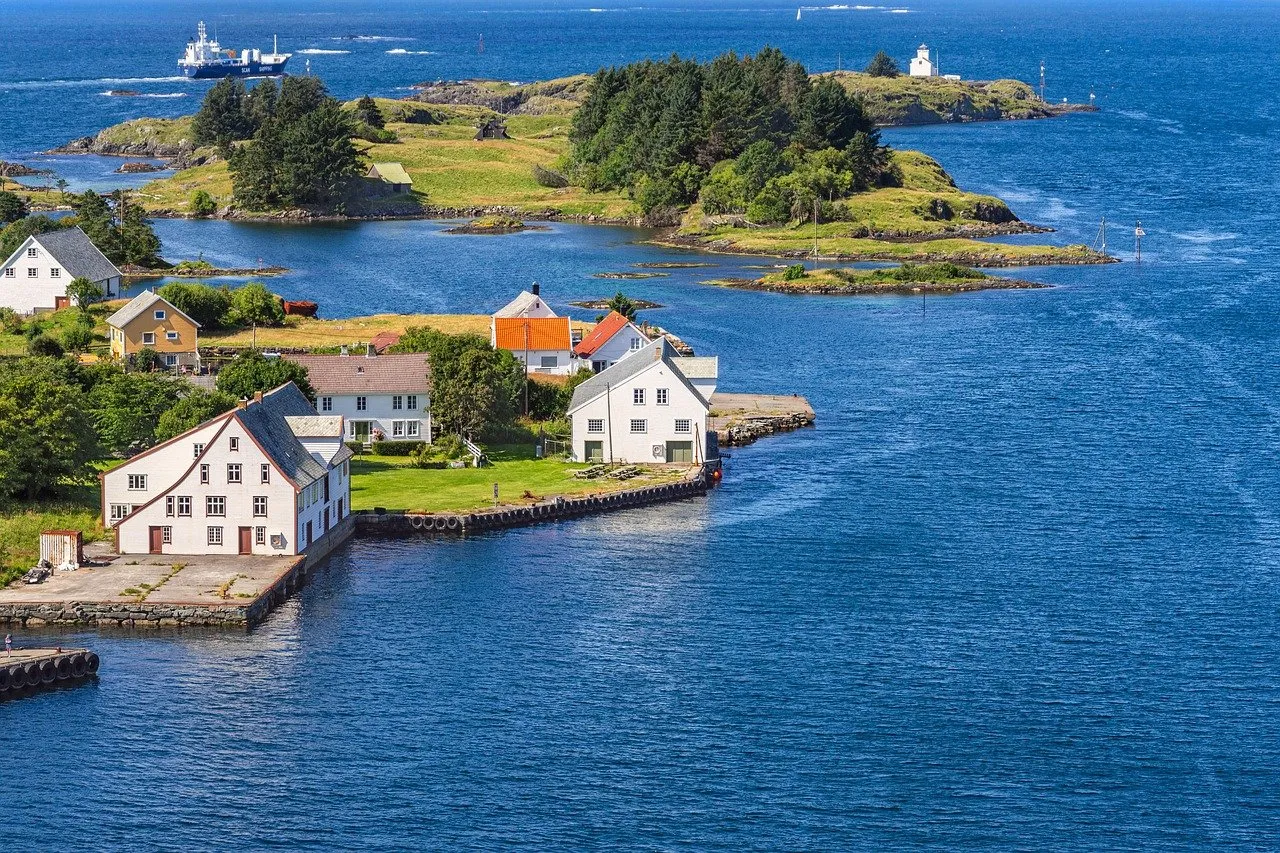
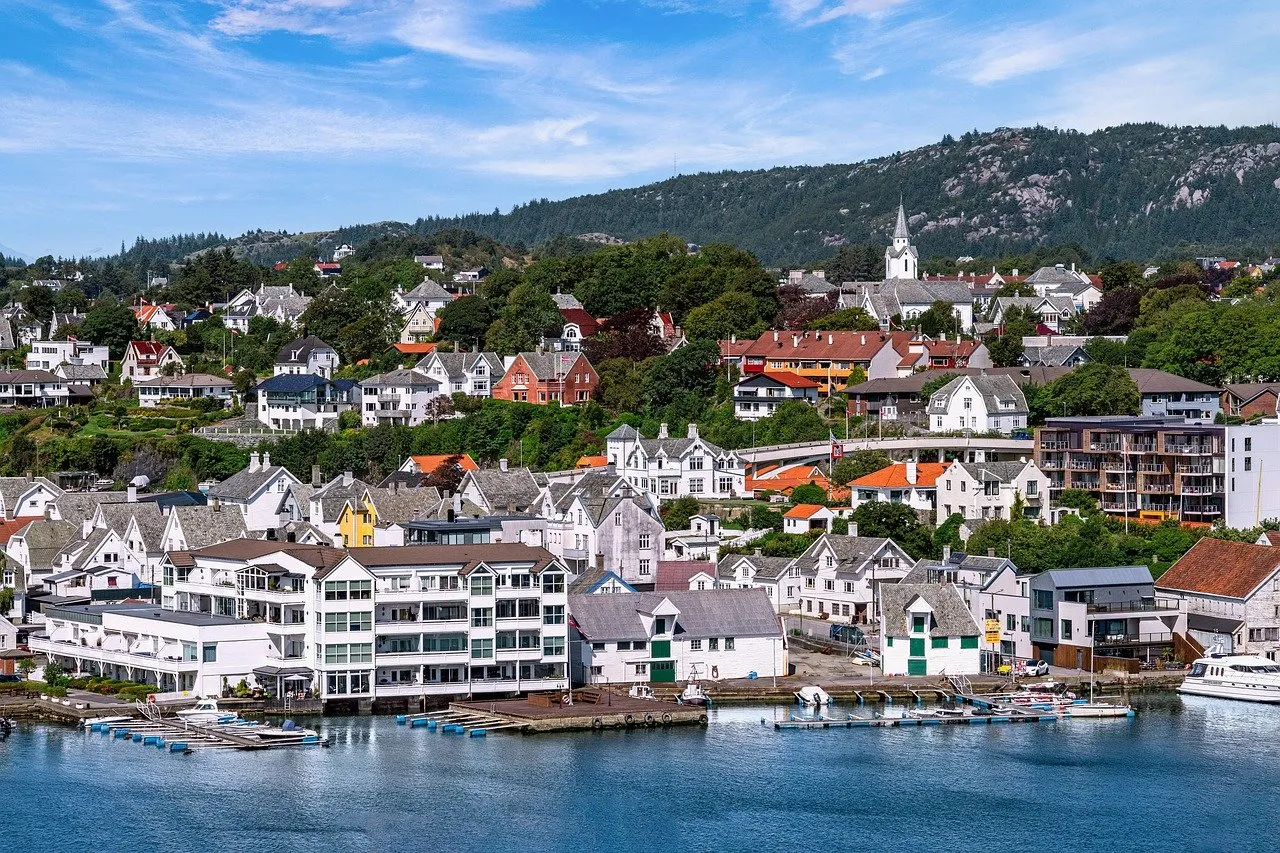

Haugesund is a town with a rich history located on the southwestern coast of Norway. Its roots date back to the Viking Age, as the region around Haugesund, known as Haugalandet, was a significant area for Viking activity. This region is historically important as it was the base for Harald Fairhair, the first King of Norway, who is credited with unifying the country in the late 9th century. His legacy is an integral part of the local culture, and Haugesund celebrates its Viking heritage through events such as the annual Viking Festival, which attracts visitors interested in this storied past.
In the 19th century, Haugesund experienced considerable growth as it became a major center for the herring fishing industry. This industry provided significant economic benefits and helped shape the town’s development during this period. The prosperity from herring fishing allowed the town to expand and modernize, establishing Haugesund as a key maritime hub. Today, while the fishing industry has diminished, Haugesund retains its maritime character, serving as an important center for shipping and offshore oil activities, thus continuing its legacy as a critical part of Norway's coastal economy.
15. day at sea
16. day
Breakfast in the morning, then disembarkation and departure from the port back to the Czech Republic. During the return journey, you will learn about new ships and upcoming destinations. The return transport includes two hot snacks, coffee, tea, cappuccino and hot chocolate. Arrival in Prague approx. 21:00, Brno approx. 23:30.
Hamburg, officially known as the Free and Hanseatic City of Hamburg, is Germany's second-largest city and has a rich history as a significant port and trading hub. Established as part of the Holy Roman Empire in the 9th century, Hamburg gained prominence in the medieval period as a key member of the Hanseatic League, a powerful commercial and defensive confederation of merchant guilds and market towns in Northwestern and Central Europe. The city's strategic location on the River Elbe, which flows into the North Sea, allowed it to flourish as a center for trade, attracting merchants from across Europe and facilitating the exchange of goods and culture.
Throughout its history, Hamburg has demonstrated resilience in the face of adversity. The city endured significant destruction during World War II, with extensive bombing raids causing widespread damage. Despite this, Hamburg rebuilt and modernized in the post-war period, restoring its status as a prominent global port and commercial center. The city's maritime heritage and economic prowess have continued to thrive, supported by its expansive port facilities, which are among the largest in Europe. Today, Hamburg is celebrated for its vibrant cultural scene, historic architecture, and enduring legacy as a free city that has maintained its independence and unique character throughout centuries of change.
17. day
Arrival in the Czech Republic depending on the current traffic situation.

Tour description
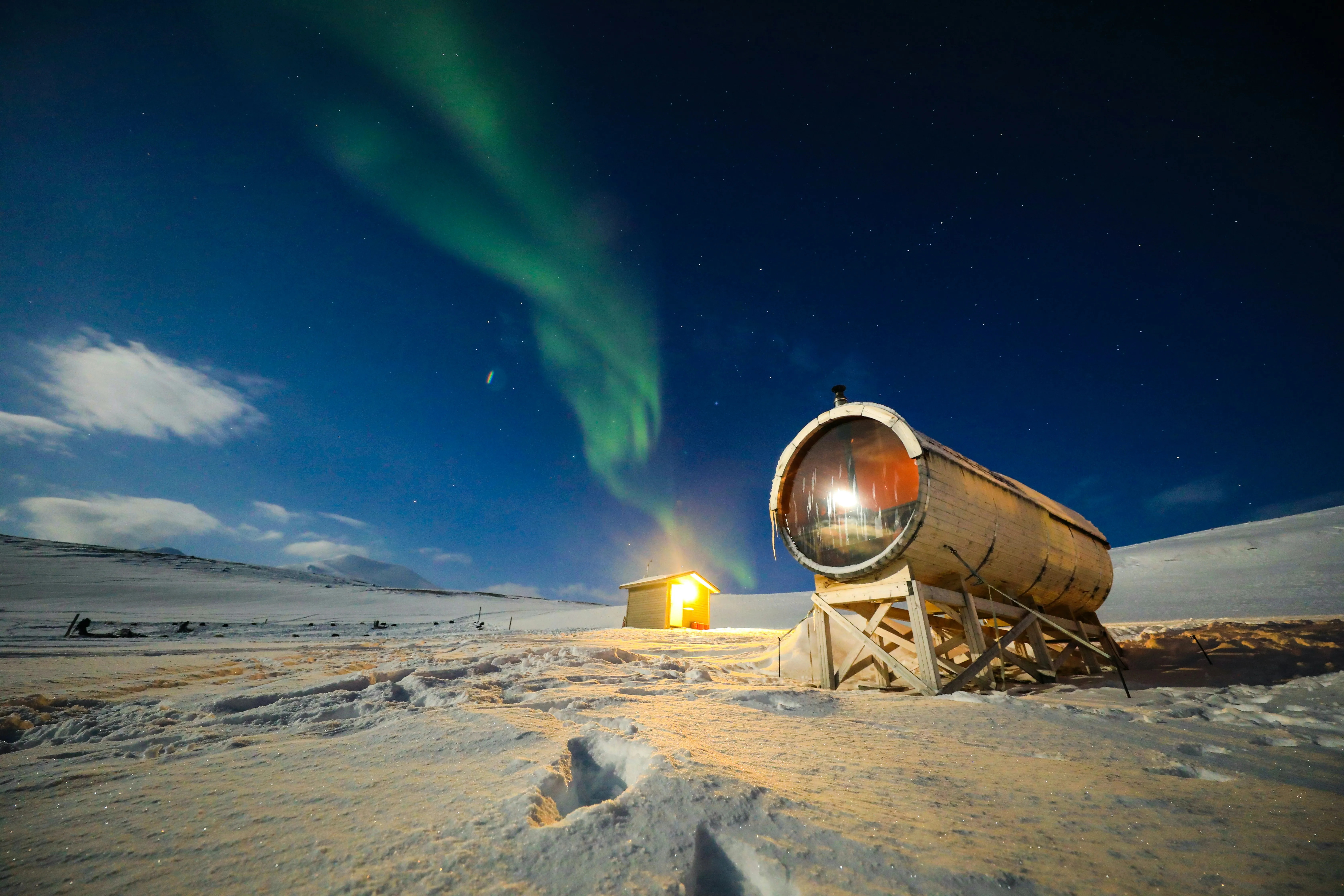
Experience a unique cruise to the fascinating regions of Northern Europe aboard the elegant MSC Preziosa. Visit picturesque Bergen, the Moldefjord area with stunning fjord views, the Arctic town of Longyearbyen on the Svalbard archipelago, the northern port of Honningsvåg near the legendary cape Nordkapp, vibrant Tromsø, the fishing town of Leknes in the Lofoten Islands and the charming port of Haugesund.
This cruise will take you to a land of dramatic fjords, Nordic nature and polar scenery that ranks among the most breathtaking in Europe. The price includes coach transport to the port and back, as well as the services of a Czech delegate who will be at your disposal throughout the entire cruise.
Discover the magic of the North with Riviera Tour!

Dominik Číž
Ahoj, jmenuji se Dominik a pocházím z malé vesnice Lidečko na Valašsku. Na plavbách s MSC Cruises jsem vyrůstal, takže znám každé zákoutí lodě a provedu vás také většinou destinací.
V Rivieře pracuji od roku 2017, kdy jsem se na dálku věnoval správě sociálních sítí. Od jara 2022 jsem začal jezdit na plavby jako delegát a od podzimu 2023 působím také jako zástupce ředitele. Mám vystudovanou politologii na MUNI v Brně a v současnosti studuji dálkově laickou teologii na UPOL v Olomouci.
Jsem také hrdým účastníkem programu Erasmus+, se kterým jsem strávil půl roku na Università di Sapienza v Římě. Mezi mé zájmy patří cestování, studium jazyků a organizace volnočasových aktivit. Těším se, až se někdy potkáme na plavbě :)


DVD
Transport
Your cruise with Riviera Tour begins in the Czech Republic. Our modern, spacious coaches depart from major cities towards ports in the Mediterranean and the North Sea.
On board the coach, an experienced Czech delegate will take care of you, providing all the information you need about life on board and the places you will visit. Hot drinks, breakfast and snacks are included in the price of transport. Additional drinks can be purchased from our drivers at attractive prices.
Our aim is for you to enjoy your holiday from the very first moment. That is why we create a pleasant, family atmosphere already during the coach journey. Our delegate will make the trip more enjoyable with interesting stories from previous cruises and practical tips for your stay on board.
And as a bonus, a special "surprise" awaits you during the journey, one of the favourite hallmarks of Riviera Tour trips.
The cruise price includes
- RIVIERA TOUR delegate
- Coach transport to and from the port
- Sightseeing cruise on the MSC ship on the given date
- Accommodation in an interior cabin, BELLA category
- Full board for the entire stay on the ship
- Drinks from vending machines in the buffet restaurant
- Port taxes, service charges and porter services
- Daily cabin cleaning
- Themed evenings according to the cruise programme
- Insolvency insurance
- Animation and entertainment programmes on board
- Theatres, swimming pools, whirlpools, pool service
The cruise price does not include
- Optional excursions by the cruise company at destinations
- Drinks and alcoholic beverages at bars and restaurants
- Premium services for an extra charge (saunas, massages, cinema, circus...)
- Cruise company transfers in ports
For an additional fee we offer
- Special travel and health insurance designed for sea cruises
- Higher cabin categories Fantastica, Aurea and MSC Yacht Club
- Window cabins, balcony cabins, suites and MSC Yacht Club
- Beverage packages and bundles at a pre-sale discount
- Internet packages at a pre-sale discount
- Seat reservation on the coach (surcharge 150 CZK)
- Prices of all excursions will be confirmed approx. 40 days before departure
The organizer of the cruise is: MSC CRUISES S.A., Avenue Eugene Pittard 40, Geneva, Switzerland. Travel agency RIVIERA TOUR and shipping company is authorized to make operational changes to the program and services provided before the trip and during the trip, if it is not possible to maintain the originally agreed program and services. In the case of trips to regions where the current security situation may require a change in the route or cruise, there is no breach of the travel contract if a deviation in the route does not exceed 50% of the originally planned cruise route. The customer acknowledges that each such deviation from the originally planned cruise route is made to maintain his safety and is included in the price of the trip. These provisions also apply to this situation and related services.
With Riviera Tour you get more:
With us, the complete price - you don't pay anything extra, everything is in the Czech language - you will receive from us printed, fully processed departure instructions containing the boarding pass, information about countries, destinations, information about services on the ship, a translated menu*. We have a 24/7 assistance service for solving crisis situations, we will help you in case of unexpected events, communication with doctors, insurance company, we will help you with accommodation, transport, you can solve all complaints through our CK and note that RIVIERA TOUR sells all cruises as a travel agency - guarantee and security for you

A gift for you with your order
With Riviera Tour you get more:
With us, the complete price - you don't pay anything extra, everything is in the Czech language - you will receive from us printed, fully processed departure instructions containing the boarding pass, information about countries, destinations, information about services on the ship, a translated menu*. We have a 24/7 assistance service for solving crisis situations, we will help you in case of unexpected events, communication with doctors, insurance company, we will help you with accommodation, transport, you can solve all complaints through our CK and note that RIVIERA TOUR sells all cruises as a travel agency - guarantee and security for you